
Summer savory (Satureja hortensis) rewards observation more than a rigid universal calendar. This practical guide follows the identifiable plant, its correct growth stage, and the next action a home gardener should take. Pay attention to which tissues are alive, what should remain above the soil, and whether leaves, pods or flowers have developed enough for the intended task. A garden in a cool northern spring and a warm southern winter may use very different sowing dates for the same crop. The illustrations are teaching views rather than promises that every cultivar will have identical colors, sizes or maturity dates. Use your seed packet, a local Extension calendar and actual growing conditions to make the final decision.
Separate annual summer savory from winter savory
Summer savory is Satureja hortensis, an annual herb with small narrow, often paired, lance-shaped leaves and a peppery aroma. Its branching green stems can produce clusters of very small pale flowers in summer. Do not mistake it for winter savory, Satureja montana, which is a more persistent, somewhat woody perennial. They share culinary uses but do not share exactly the same long-term maintenance or winter survival expectations.
Read the species name on the packet and match it to your growing goal. For a one-season supply of leafy stems, annual summer savory is the appropriate choice. RHS describes compact plants, rather than a tall trellised vine or broadleaf basil. This distinction also prevents errors in seedling illustrations: the true leaves stay comparatively slim, not wide and frilled like lettuce.

Pick a sunny place with a free-draining root zone
The best planting site has useful sun and soil that does not stay saturated after rain. Where heavy clay persists wet, move the herb into a raised bed or a small pot with open drainage holes rather than repeatedly adding water in hope of faster growth. A container at least around eight inches wide and deep is practical for small batches, with suitable potting mix and a little mineral grit if your medium is too retentive.
Keep the container steady and easy to water without flooding. Newly established roots need moisture, while mature plants tolerate some drying better than a perpetually swampy pot. A USDA zone label does not tell you when to sow a warm-season annual; frost risk and local daytime conditions matter. In regions with intense heat, watch whether a small container is drying faster than roots can replenish leaves.
Surface sow the tiny seeds in warm light
RHS advises sowing summer savory thinly onto the surface of damp seed-starting mix without covering with compost. Level the tray first, distribute the small seeds on the dark medium and gently press them into contact. A shallow clear cover can reduce evaporation during germination, but allow air exchange and remove it when shoots appear. Strong irrigation can bury seeds in one corner or wash them away.
Place in bright warm conditions; RHS notes germination is successful around 68°F, often within two or three weeks. That is a guide, not a guarantee for every packet or indoor room. After emergence, move plants into adequate light and maintain even but not sodden moisture. Tiny cotyledons appear before the paired slender true leaves that identify the herb.

Move rooted seedlings without burying stems
Once seedlings have several leaves, thin or transfer them so each growing shoot has room and light. Use a spoon or label to lift a plug from below, keeping fragile roots together. If several seeds were sown into one cell, clip unwanted seedlings instead of pulling through the shared root zone. Pot on at the prior soil level, keeping the shoot crown free of wet soil.
Gradually harden indoor seedlings to moving air and outdoor sunlight. Small plants may scorch if taken from a window directly into harsh midday sun. Wait until frost danger has passed to set a warm-season herb outdoors in cool regions. The right transplant date is a weather observation, not merely a calendar month copied from an unrelated state.
Recognize healthy leaf pairs and budding stems
Summer savory forms slender shoots carrying short, narrow leaves, commonly in opposite pairs along the stem. Small nodes between leaf pairs can give rise to new growth after a light cut. If allowed to flower, the plant bears small pale blossoms; those are normal reproductive structures, not a sign of insect eggs. Learn these details to distinguish savory from young oregano, thyme or mint seedlings growing nearby.
Pale stretched plants usually indicate poor useful light or excessive crowding. Yellow lower foliage may have several causes, so check drainage, pot weight, rooting and light before fertilizing. Plants that remain soggy can suffer root decline. There is no reason to apply chemicals to a seedling simply because it grows slowly during a cold cloudy week.
Clip tender shoot tips above living nodes
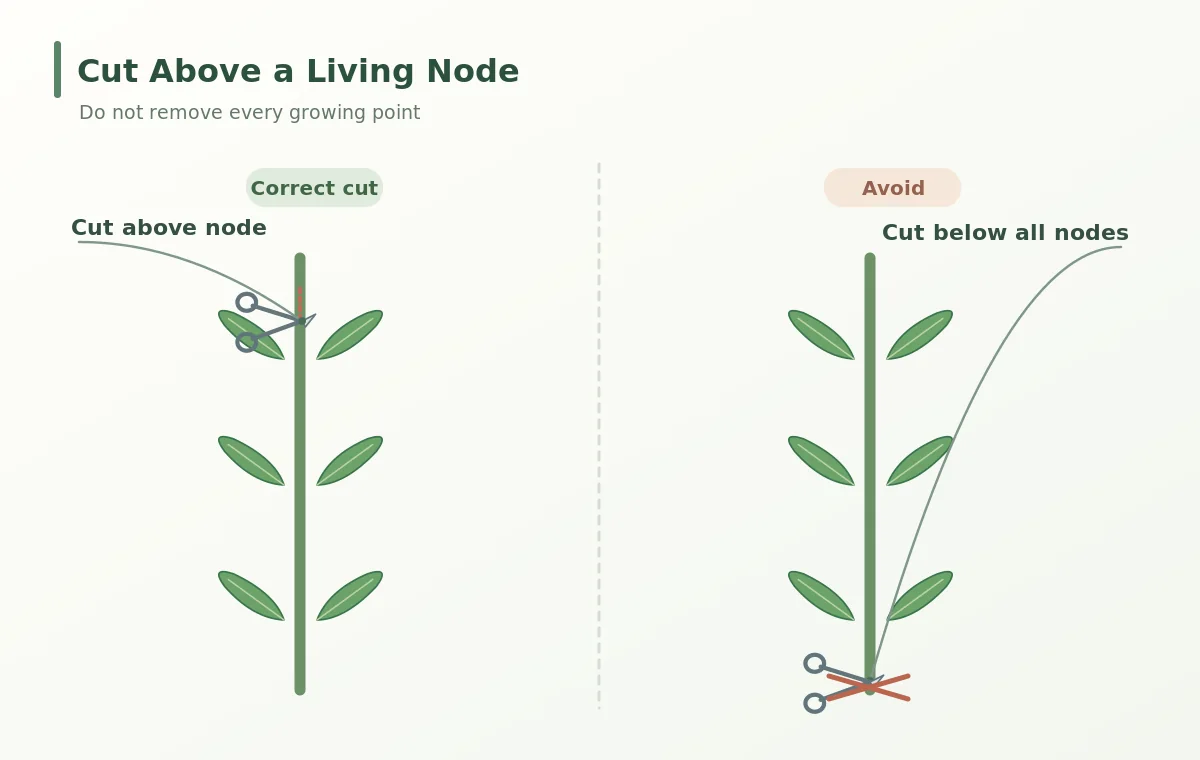
Begin taking light harvests only after plants have enough healthy leafy growth to recover. RHS says shoots may be harvested once seedlings reach roughly four inches tall. Use clean snips and cut through tender upper stem just above a retained leaf pair, leaving the lower leaves and small buds attached. Do not cut flush through the entire root crown or shear a very young stem beneath its last active node.
Harvest modestly and often rather than stripping one plant bare. Young preflowering leaves usually have a delicate flavor; branches may continue to produce as the plant grows. Leaves can be used fresh or dried after being cleaned and carefully dehydrated. Keep harvested herbs out of direct sun and avoid long damp storage that encourages spoilage.
Manage flowering and the annual life cycle
The appearance of tiny white or mauve blossoms marks the plant entering reproduction. Annual summer savory eventually finishes its life cycle as the season advances, unlike perennial winter savory. RHS suggests trimming summer savory after flowering to encourage an additional flush while conditions still permit it. That is a possibility, not a promise of endless winter harvest from the same annual stem.
If you want seed, allow selected flowers to mature and dry, then collect over a clean paper surface before contents scatter. Save only sound dry seed from an identified plant, labeled by name and year. If your aim is continuous tender cooking shoots rather than seed, sow a small later batch when your season is long enough; adjust based on frost dates and actual plant growth.
Diagnose a wet pot or weak new shoots
A wilted plant in wet soil should prompt a root-zone check, not immediate further irrigation. Inspect drainage holes, remove standing water from an outer saucer, and check for dark or soft basal stems. A dry, lightweight pot and crisp wilted leaves call for a different response: water the medium deeply, then let excess escape. Try to identify the cause before making repeated sudden changes.
Look for aphids and other small insects on tender tips, while recognizing that minor cosmetic marks need not mean an infestation. Start with simple sanitation, airflow and removal of obviously damaged material; consult local Extension IPM guidance if pests persist. Harvest only sound identified savory leaves for eating, and avoid unsupported claims that this culinary herb treats medical conditions.
Related Guides
- Growing Herbs by Type: Water, Harvest, and Winter Survival Guide
- When to Harvest Summer Savory and Cut Above the Leaves for Regrowth
How We Research and Verify This Advice
We based the plant identification, growth-stage decisions and handling guidance on the following resources, accessed on 2026-10-29: www.rhs.org.uk; www.rhs.org.uk; extension.umn.edu. Where a source gives a region-specific schedule, we describe it as an example, not a universal date. The independent editorial goal is to show recognizable plant organs and practical actions a reader can verify outdoors. Weather, variety, label directions and local Extension advice take precedence over any generalized timeline.
No product, paid partnership or affiliate link is recommended in this article. Our general policy is available at VegWin Affiliate Disclosure. Recommendations focus on plant stages, careful observation and documented university or RHS horticultural information rather than unsupported claims of guaranteed yield or food safety.
No. Satureja hortensis is an annual; winter savory is a different perennial species.
RHS recommends surface sowing in moist seed compost without a covering layer.
RHS describes light harvesting once plants reach about four inches and have enough foliage to recover.
Cut a tender stem just above a retained leaf pair, leaving growing buds below the cut.
As an annual it normally completes its life cycle in one season; resow rather than rely on overwintering.