
Sweet alyssum makes a low carpet of tiny, often white flowers, but seed handling is different from that of most large garden flowers. Light at the seed surface matters. These steps show when to sow, what young plants and four-petaled blooms should look like, and how to keep a neat edging from becoming leggy.
Identify Sweet Alyssum Rather Than an Unrelated Ally
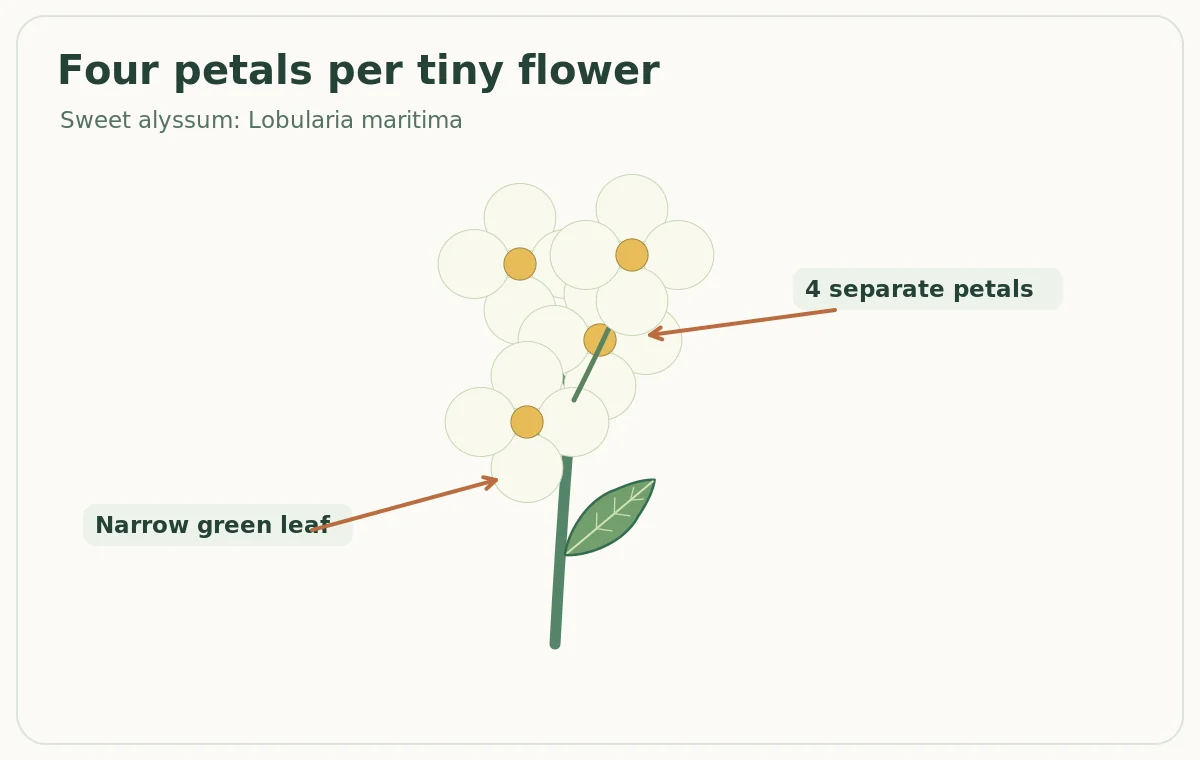
Sweet alyssum is Lobularia maritima, a low, spreading plant in the mustard family. Small flowers occur in clusters above narrow leaves; each open flower normally has four petals arranged in a cross. White-flowered forms are familiar, while pink and lavender selections also occur. The name alyssum is sometimes applied to different plants, including perennial rock-garden species, so verify the botanical name on the packet. This article concerns seed-grown sweet alyssum used as a scented edging or container spillover, not a large upright alyssum shrub. Keeping that identity clear prevents the wrong seed-depth and spacing advice.
Time Sowing to Cool Weather and Usable Light
Clemson Extension recommends direct sowing several weeks before a local last spring frost or starting indoors ahead of transplanting. The exact calendar shifts by region; in warmer areas, a cooler season can give better bloom quality than midsummer heat. Rather than treating a USDA perennial hardiness zone as a spring calendar, consult local frost guidance and watch your soil conditions. Seedlings need enough light not to stretch, and transplants need a period of gradual outdoor acclimation. If heat routinely ends flowering in your area, plan sowing around the season when plants can establish and flower in milder conditions.
Use Fine Compost Without Burying the Seed
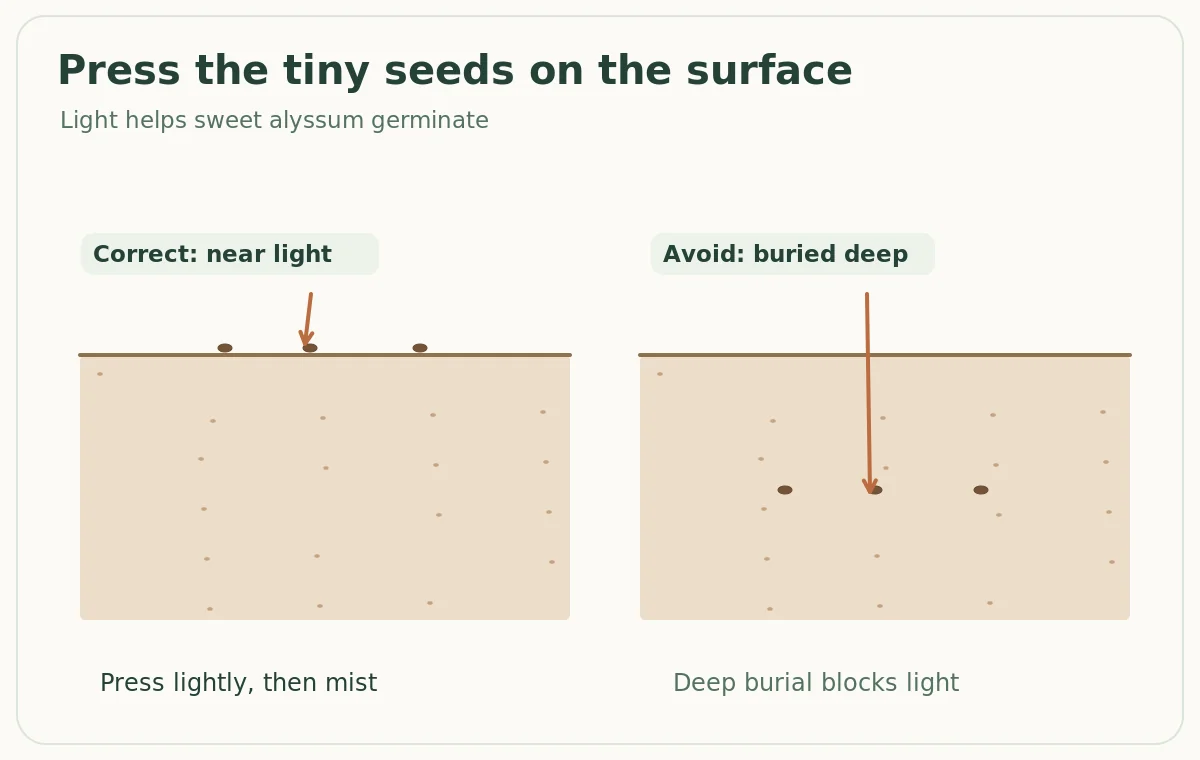
Start with a clean, well-drained tray or a level, weed-free bed. Dampen the growing medium before sowing, then distribute the tiny seeds thinly over the surface. Press them into contact; add at most a dusting of fine material. Clemson specifically notes that alyssum seed needs light for germination. Do not put it at the bottom of a deep trench. The illustrated section shows seed at the illuminated top edge of the mix, not a seed floating in midair. A spray bottle used carefully or bottom watering helps preserve even placement. Good surface contact is as important as the tiny covering.
Keep Germination Conditions Moist, Not Soggy
A seed resting near the surface can fail if its immediate surroundings dry repeatedly. Check the top of the mix gently and keep it evenly moist until germination. Avoid a constantly water-filled saucer, because roots still need air. If you use a temporary clear cover, remove it as sprouts show and provide ventilation; a closed humid tray held for too long can favor collapsing seedlings. A warm bright indoor location may work well, but an overheated windowsill can desiccate shallow sowings quickly. Label the pot and record emergence rather than adding more seed immediately if you do not see a shoot at first glance.
Recognize Cotyledons and Narrower True Leaves
The first pair of rounded seed leaves does not yet resemble the adult flowering mound. True leaves become narrower and more lance-shaped along low branching stems. The plants gradually spread sideways, rather than making a single tall central pole. Some seedlings will be stronger than others; thin crowded seedlings to reduce competition and leaf wetness. Hold plants by a leaf when moving small plugs, keeping as much root medium together as you can. If seedlings become long and pale before developing true leaves, the light supply or crowding deserves attention before any fertilizer is considered.
Plant a Low Border With Air Around Each Mound
Prepare a site with sun and soil that sheds excess water. A little afternoon shade can be useful where summer heat is severe. Transfer seedlings after hardening off and after local outdoor conditions are suitable for that planting. Keep the crown level consistent with the old plug; do not build a mound of soil around its small stem. Mature plants spread into loose cushions or mats, so allow enough lateral room to avoid trapping moisture in a thick layer of crowded foliage. In a pot or window box, leave some free edge for stems to spill over without the roots sitting in stagnant water.
Look for Four Separate Petals at Flowering
The tiny white flowers may look like dots from across the bed. At close range, each has four distinct petals around a small center. Several are carried on branching flower clusters, producing the familiar soft carpet of bloom. The accompanying enlargement shows a four-petal flower rather than a five-petal daisy or a dense pom-pom. The plant is useful as a garden flower and for visiting pollinators, but insect visitation depends on season and local habitat, not on a guaranteed number of beneficial insects. Do not mislabel any white-flowered ground cover as sweet alyssum solely on color.
Adapt Watering When a Dense Mat Develops
Keep new transplants evenly moist until their roots enter surrounding soil. After establishment, water in dry spells at the base when practical, rather than repeatedly wetting dense flower clusters. A well-drained bed is particularly important during wet weather, while containers may dry much faster. Check the mix below the surface before watering. In hot weather, flowering can slow or plants may look tired; this is not always a nutrient problem. Avoid heavy fertilization that encourages floppy green growth at the expense of a neat edging display, and do not let a pot stand in its saucer of water.

Trim Spent Growth Rather Than Overfeeding
Clemson recommends removing spent blooms to encourage more flowering. A gentle haircut after a flush can restore shape where stems have opened up in the middle, provided some healthy leafy growth remains. Trim gradually rather than cutting every plant to bare dry stems on a hot afternoon. Flower performance depends on temperature, exposure, and the seed line; some newer cultivated forms differ from typical seed-grown plants. If you want to collect seed, leave selected flower clusters to develop, but understand that many ornamental selections do not come true to their named color or shape.
Resolve Sparse Germination and Stretched Plants
When only a few seedlings emerge, check whether the seed was buried beneath too much mix or washed into one corner. Repeated drying of the top layer is another common cause. If seedlings appear but fall over at the surface, restart with clean materials, drainage and better ventilation rather than spraying unidentified chemicals. If they form tall weak stalks with very few leaves, provide brighter light and reduce crowding. If a healthy plant stops blooming in a sustained hot period, wait for milder weather and examine moisture before changing the fertilizer. Inspect individual stems for insects rather than assuming all yellow leaves mean pest attack.
Use the Plant Shape to Judge Success
A successful sweet alyssum planting is a cluster of short, well-branched stems with many small four-petaled flowers; it is not a single trunk with a few large blossoms. Compare your seedlings, mature mound and flower close-up to that sequence. The essential workflow is: time for cooler suitable weather, sow seeds at the illuminated surface, maintain gentle moisture, harden plants before planting out, and give them space to spread. A written record of local sowing and flowering dates will be more valuable next year than applying a calendar from a different region without adjustment.
Related Guides
How We Research and Verify Recommendations
This guide draws on plant-specific horticultural guidance from University Extension RHS RHS, checked October 28, 2026. We compare the practical actions and diagrams against the described species, growth stages, planting depth, and pruning or harvest targets. Local climate, cultivar choice and soil conditions may change timing. This article is informational and does not promise a fixed yield or chemical treatment. See VegWin’s affiliate disclosure; no sponsorship or affiliate relationship is asserted here.
Yes. Clemson Extension advises sowing near the surface with only a very light covering.
The tiny flowers normally have four petals, typical of its mustard-family relatives.
No. Seed-grown Lobularia maritima forms low spreading mounds or mats.
Yes. Use a bright seed tray, harden seedlings before transplanting, and adjust timing to local weather.
Many seed-grown alyssums bloom less freely in heat; assess moisture and wait for milder conditions.