
Pruning a summer-bearing raspberry is not the same as mowing down a fall-bearing patch. First-year primocanes are next year’s productive wood, while spent second-year floricanes have already borne their crop. Here is a cane-by-cane method for removing the old shoots while preserving the stems you need.
Determine Which Raspberry Fruiting System You Own
This guide is for summer-bearing red or yellow raspberries that carry their main crop on second-year canes. Oregon State Extension distinguishes them from fall-bearing or primocane-fruiting varieties, whose first-year canes can produce fruit at their tips. Pruning them all in the same way can remove an entire intended harvest. If you inherited an unlabeled patch, observe when berries form and whether they appear on new shoots or older overwintered canes before making sweeping cuts. Black and purple raspberries also need different training and tipping methods. The plant’s fruiting habit matters more than the name on an old garden tag.
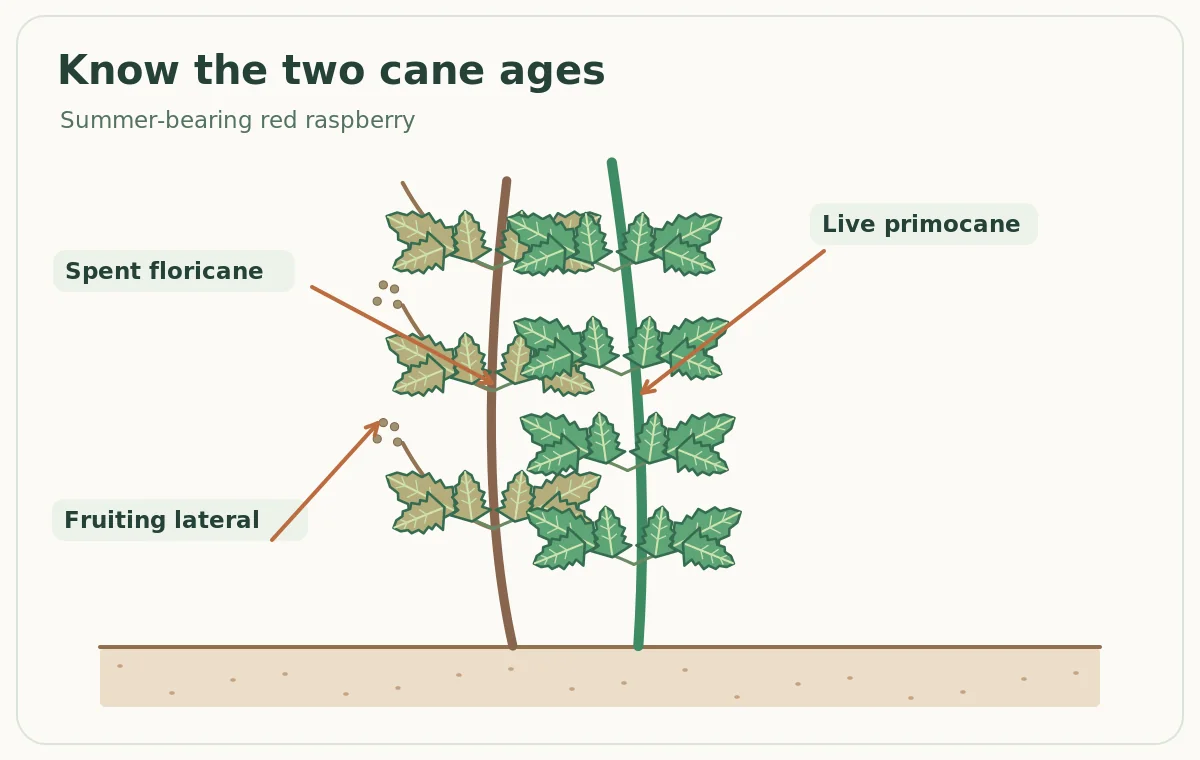
Recognize a Green First-Year Primocane
Primocanes emerge from the crown and, with red raspberries, often from underground roots in spring. They commonly have greener, vigorous stems with foliage and no summer crop in a floricane-fruiting planting. These are the canes that should survive into next season and carry berries after they overwinter. A green cane can still be weak or diseased, so color is a useful clue rather than the only test. Inspect the bases, leaves, and position in the row. Protect sound primocanes from being cut while clearing old fruiting wood; accidental removal of all these shoots is the classic cause of a crop gap next year.
Identify a Spent Second-Year Floricane
Floricanes are last year’s canes that bore this year’s fruit on lateral branches. After harvest they begin to age, with dying foliage and a browner, woodier appearance. The remaining branching fruit stalks are often a more reliable clue than color alone. Do not mistake a healthy new cane for an old one solely because its lower stem has started to firm up. Trace a suspected floricane from its fruiting laterals to its base. In the diagram, the old branch bears a short fruiting lateral while the neighboring first-year cane has fresh leaves but no old fruit cluster.
Choose Postharvest Removal Rather Than Blind Topping
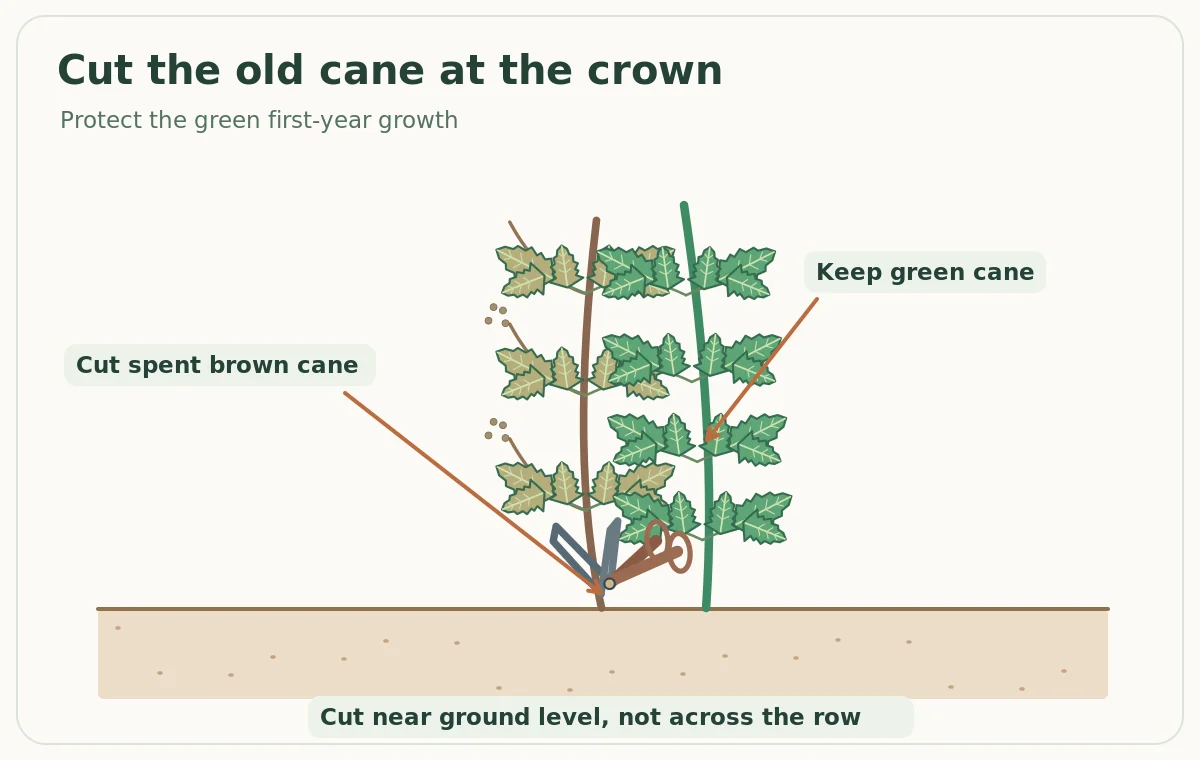
For summer-bearing red raspberries, Oregon State advises removing dying floricanes after fruit harvest at their crown, near soil level. This is called caning out. If a cane shows suspected disease, prompt removal can reduce problems; in a healthy row, growers may remove fully dead floricanes later during the dormant period. Do not shorten every green primocane during the growing season merely to make a symmetrical hedge: it is next year’s crop framework. Also avoid cutting every stem to the ground unless your crop type and one-crop plan specifically call for that treatment.
Make the Cut at the Old Cane Base
Wear gloves and use clean, sharp loppers or pruners suited to cane thickness. Follow the woody spent cane down to its point of origin, part adjacent green growth out of the way, and cut the old cane close to the crown at soil level. Do not cut horizontally across the entire row with a hedge trimmer. The accompanying diagram shows the blades touching the old brown cane, not the live green primocane. Lift the removed cane clear carefully because it may be tangled on wire or neighboring canes. Avoid tearing living bark or pulling young rooted shoots out of the ground.
Clear Old Fruiting Wood From the Support
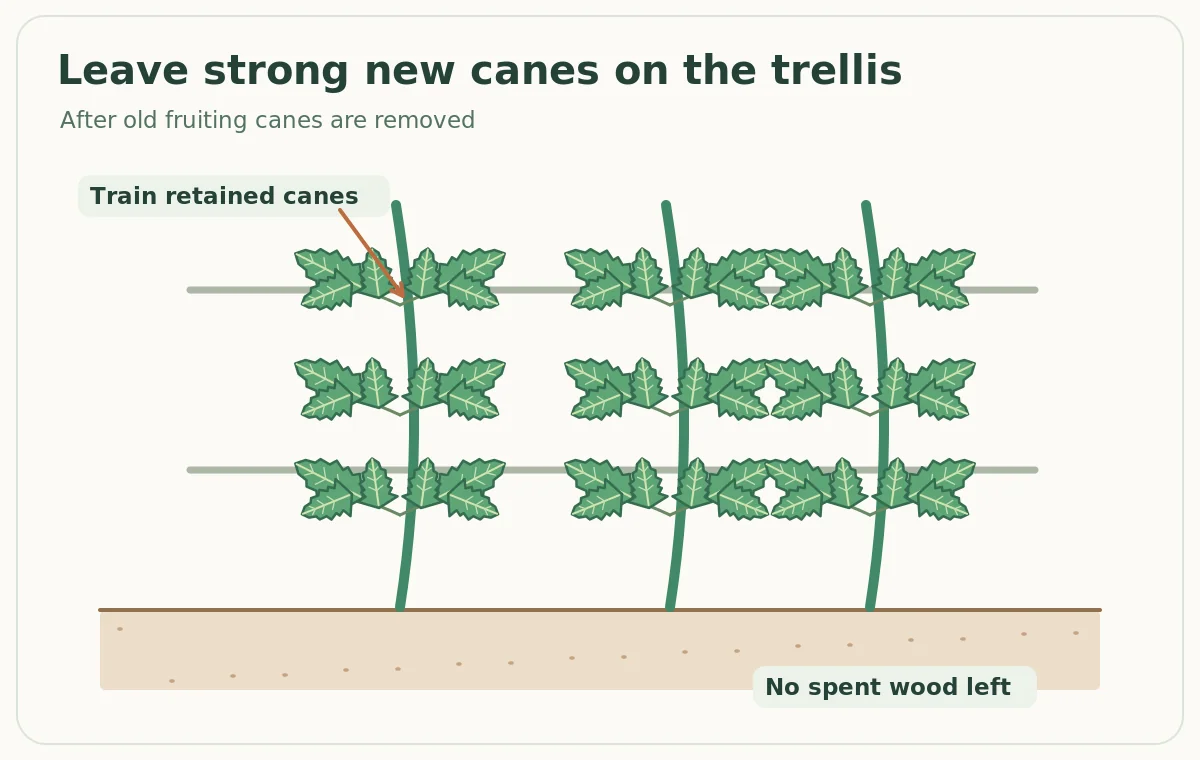
A trellis can hold a confusing mix of last year’s fruiting branches and current upright growth. Remove spent floricanes one at a time and disengage them from wires instead of yanking whole clusters. Dispose of clearly diseased material according to local guidance; do not automatically compost infested plant parts in a cold home pile. If leaves remain green on a supposedly spent cane, confirm its identity before cutting. Removing the old wood opens the row and leaves room to arrange new primocanes so they can overwinter with less rubbing and breakage in wind.
Train and Select Canes During Dormancy
Later, when plants are dormant, assess the primocanes retained after the summer harvest. Oregon State recommends removing weak, broken, damaged or diseased stems and maintaining an orderly row rather than letting every sucker stay. Regional winter temperatures affect when this dormant pruning should occur. In colder climates, delay until severe cold has passed enough to judge winter injury; in milder areas, growers may work earlier. Use ties that support without girdling or sharply bending stems. The diagram of an open trellis shows separate green cane positions, not vines twining naturally around a wire.
Do Not Confuse Fall-Bearing Pruning Instructions
A primocane-fruiting raspberry may be managed for one late crop by removing all canes during dormancy, or for two crops by retaining living lower sections of previously fruited primocanes. That choice is not the method taught here. Applying a one-crop fall-bearing rule to summer-bearing varieties would eliminate the next crop because the replacement first-year stems would never reach their second fruiting season. If you want to change your harvesting system, first confirm the cultivar and follow a variety-specific Extension recommendation. A single brown tip on a fall-bearing plant does not prove its entire cane is spent.
Watch Crown Health and New Shoot Development
Healthy roots and crowns support the next annual flush of primocanes. Maintain a moderately narrow weed-controlled row without cultivating so deeply that you sever raspberry roots. Water during dry weather when foliage or new growth indicates moisture stress, and use mulch appropriately for your soil and climate. Do not pile wet organic matter tightly over crown tissue. Sparse primocanes may reflect poor light, competition, winter injury or pest and disease problems rather than insufficient pruning. Inspect cane lesions, wilting patterns and drainage before treating a suspected disease; local Extension diagnosis is safer than guessing.
Use a Cane-by-Cane Pruning Checklist
Before each cut, answer four questions: did this stem produce this season’s berries; does it have fruiting laterals; is the cane dying; and is there a living replacement primocane beside it? For summer-bearing types, a definite spent floricane can be removed near ground level, while healthy first-year canes remain. If identification is uncertain, mark stems during fruiting so you can return later. Good pruning is selective, not a demand that all stems look the same color or height. Work slowly around the crown, where several generations of growth may be crowded together.
Measure Success by Preserved New Growth
A properly pruned summer-bearing raspberry row has old fruiting canes removed and a manageable set of sturdy primocanes prepared for the following season. The immediate reward is a cleaner, more open support, not a promise of additional berries that same afternoon. Next year’s result will depend on cultivar, winter injury, pollination, weather and plant health. Photograph the row before and after pruning and label which canes fruited. These observations help keep your annual pruning decisions consistent and prevent an accidental switch to the wrong fall-bearing protocol.
Related Guides
How We Research and Verify Recommendations
This guide draws on plant-specific horticultural guidance from University Extension University Extension, checked October 28, 2026. We compare the practical actions and diagrams against the described species, growth stages, planting depth, and pruning or harvest targets. Local climate, cultivar choice and soil conditions may change timing. This article is informational and does not promise a fixed yield or chemical treatment. See VegWin’s affiliate disclosure; no sponsorship or affiliate relationship is asserted here.
Remove definite spent floricanes at their bases and retain sound first-year primocanes.
Yes, in summer-bearing red raspberries the first-year growth generally fruits in its second season.
No. That removes the canes needed for next year’s summer crop.
Pruning depends on whether you manage for one fall crop or both fall and summer crops; confirm cultivar type.
No. Oregon State cautions against summer tipping the primocanes of summer-bearing red raspberries.