
Garlic chives, Allium tuberosum, grow as tight clumps of narrow flat, straplike green leaves from small elongated bulbs and crowns. Their leaves are not the hollow round tubes typical of common chives, Allium schoenoprasum. Mature garlic chives commonly produce taller stalks topped by loose, rounded umbels of small white star-like flowers rather than the purple globes of ordinary chives.
Confirm These Are Garlic Chives, Not Hollow Chives
Before digging, inspect leaf shape and, when present, flower form. Both kinds of chives are onions, but a credible division illustration should not replace garlic chives with several large kitchen garlic cloves. Each viable daughter piece needs a portion of basal growing tissue and living roots. A fistful of harvested leaves without the crown is food or compost, not a transplant.
Decide When a Crowded Clump Needs Division
An established clump may become densely packed, with thin interior growth and less room for new shoots. Wisconsin Extension recommends lifting and dividing garlic chive clumps around every three years to maintain vigor and flowering. That is a useful check-in period, not an order to disturb a small thriving plant every spring. If a clump looks open, healthy and productive, dividing can wait.
Early spring is a practical division time in many climates, according to New Hampshire Extension, when active growth is beginning and plants can re-establish before summer stress. In a different region, choose a mild moist spell with suitable soil instead of a scorching afternoon. Avoid making a large transplanting operation in frozen soil or when extreme heat is forecast.

Water, Lift and Locate the Rooted Crowns
Water the bed if dry, then loosen soil around the clump with a spade or garden fork. Work outside the main mass, lifting underneath instead of cutting straight through the basal crowns. Shake off just enough loose soil to see where roots and small whitish bulbs are packed. Many roots should remain connected below their green leaf bases.
If an old clump is large, lift it onto a clean work surface or a shallow tray so detached roots do not dry in the wind. Do not scrub away every fine root or leave exposed divisions in bright sun while preparing the new bed. The objective is to preserve living crowns with functional roots, not to make each segment look cosmetically spotless.
Split into Pieces That Each Have Roots
Use your hands or a clean knife to ease apart natural groups of shoots. Each new section should include several flat-leaved shoots, a portion of the compressed crown or small bulbs, and their own attached root bundle. A single leaf blade has no independent basal growing point and will not become a new clump simply because it is pushed into soil.
Do not make an indiscriminate horizontal cut through every crown at ground level. If a knife is needed to separate a tough mass, cut through the old root-and-crown cluster between groups of shoots, leaving basal plates intact on each side. Trim badly torn roots only as necessary. Keep the divisions cool and lightly moist until they go back into prepared soil.
Recognize Flat Leaves, White Stars and Slender Bulbs
Garlic chives have narrow, relatively flat leaf blades emerging fanlike from the bottom of the plant. Their flower stalks can stand above the foliage and finish in umbels composed of many little six-part white flowers. Beneath the soil, the narrow bulb bases and root bundles overlap, sometimes giving the clump the appearance of dozens of small linked shoots.
This botanical structure explains where to divide: separate the compressed base into viable units rather than snipping the green tops and hoping they root. In the enlarged diagram, the pale bulb base sits below the green leaf sheath while white roots extend downward. The soil line belongs near the original planting depth, not halfway up the leafy shoots.

Replant Divisions at Their Former Depth
Choose a prepared, draining location with sun or partial shade appropriate to your climate. New Hampshire Extension suggests about twelve inches between plants once thinned or established, a reasonable starting point for divided clumps. Make holes broad enough to spread the root bundles without folding them into a tight knot. Return each crown to approximately its former soil level.
Firm loose soil gently around the roots and water well to settle the planting. Do not bury most of the foliage or leave the pale bulb bases drying above the soil. A newly moved section may lean while roots re-anchor; shelter it temporarily from drying winds rather than tying all leaves into a constricting bundle. Monitor moisture during the first active growth period.
Compare Rooted Divisions With Leaf-Only Cuttings
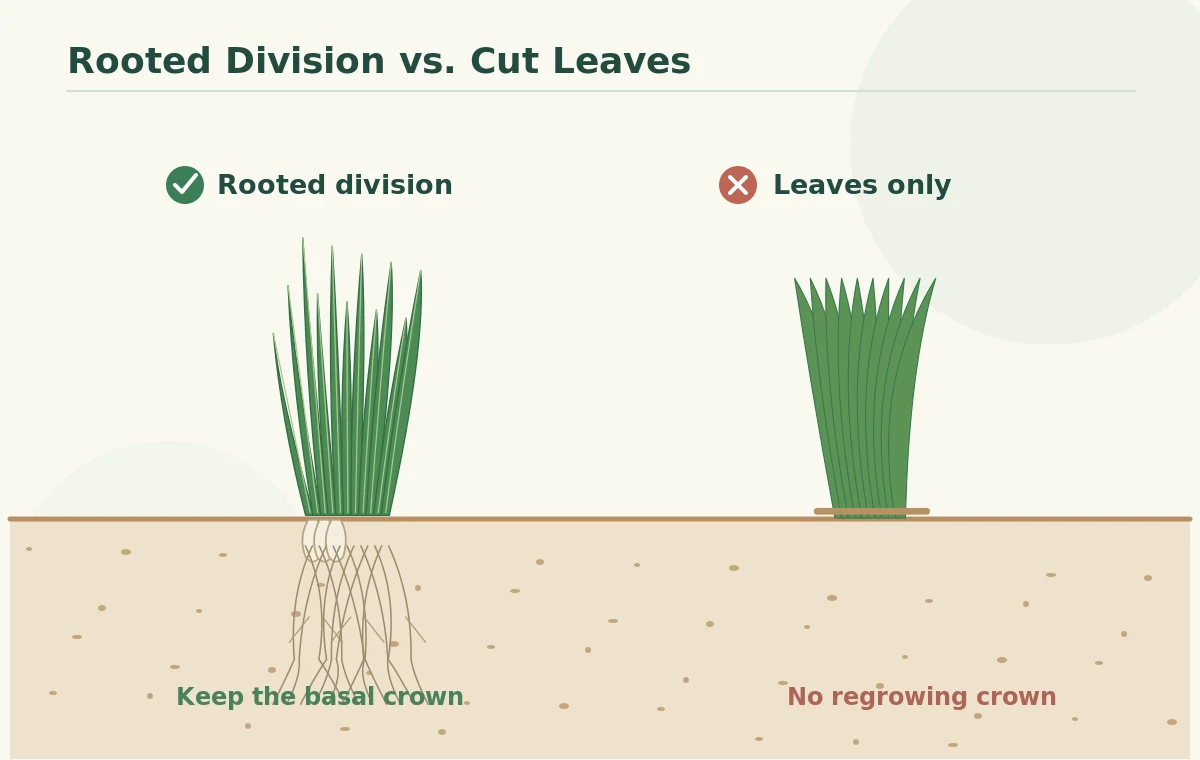
A useful division should show green shoots above, living crown tissue at the transition, and intact roots extending beneath. A trimmed bunch of flat leaves, even if aromatic and fresh, lacks those underground organs and is not a divided plant. The comparison illustration keeps both examples at similar scale so the reader can see what is actually missing.
If a rooted division wilts, do not assume immediately that the growing point was lost: some foliage stress can follow handling. Keep soil moist but not saturated and give the plant time to re-establish under favorable weather. Conversely, a piece with no crown or roots cannot be fixed by simply watering the cut foliage more heavily.
Control Flowers and Seedlings After Division
Garlic chives can self-sow strongly. New Hampshire and Wisconsin Extension both warn that seed spread can become troublesome. If you want tidy clumps, remove spent flower umbels before the seeds mature and fall. Cut the flowering stalk below the head without gouging out the leafy crown, and dispose of seed-bearing heads before the little dark seeds scatter.
Established clumps tolerate routine leaf harvest, but leave enough green area for recovery after division. Watch for volunteers near paths or beds and remove them while small. Combining occasional division with seedhead management keeps the plant useful without allowing it to spread through neighboring vegetables. Share only clearly identified, healthy rooted divisions rather than plants showing unknown pests or rot.
Related Guides
- Growing Herbs by Type: Water, Harvest, and Winter Survival Guide
- Grow Garlic Chives for Flat Leaves Without Letting the Plants Escape
- How to Grow Garlic Chives From Seed and Prevent Unwanted Self-Seeding
How We Research and Verify These Field Diagrams
These instructions were checked against university horticulture publications on October 28, 2026. In particular, we used University of New Hampshire Extension garlic chives guide; University of Wisconsin Extension garlic chives profile. The drawings distinguish actual plant structures from generalized gardening symbols; conditions, cultivars, local climate and development stage can change exact timing.
This independent educational guide has no sponsored product recommendation or confirmed affiliate link. Read our affiliate disclosure. Consult your local Cooperative Extension for climate-specific advice and follow any applicable food handling or pest-control guidance.
No. Garlic chives have flat leaves and usually white flowers, while common chives have hollow leaves and usually purple flowers.
Early spring is a common choice; Wisconsin Extension suggests checking mature clumps around every three years.
Several shoots with living crown or bulb bases and attached roots.
A clipped bundle of leaves lacks a basal crown and should not be treated as a plant division.
Remove aging flower heads before they shed mature seed and weed out volunteers early.