
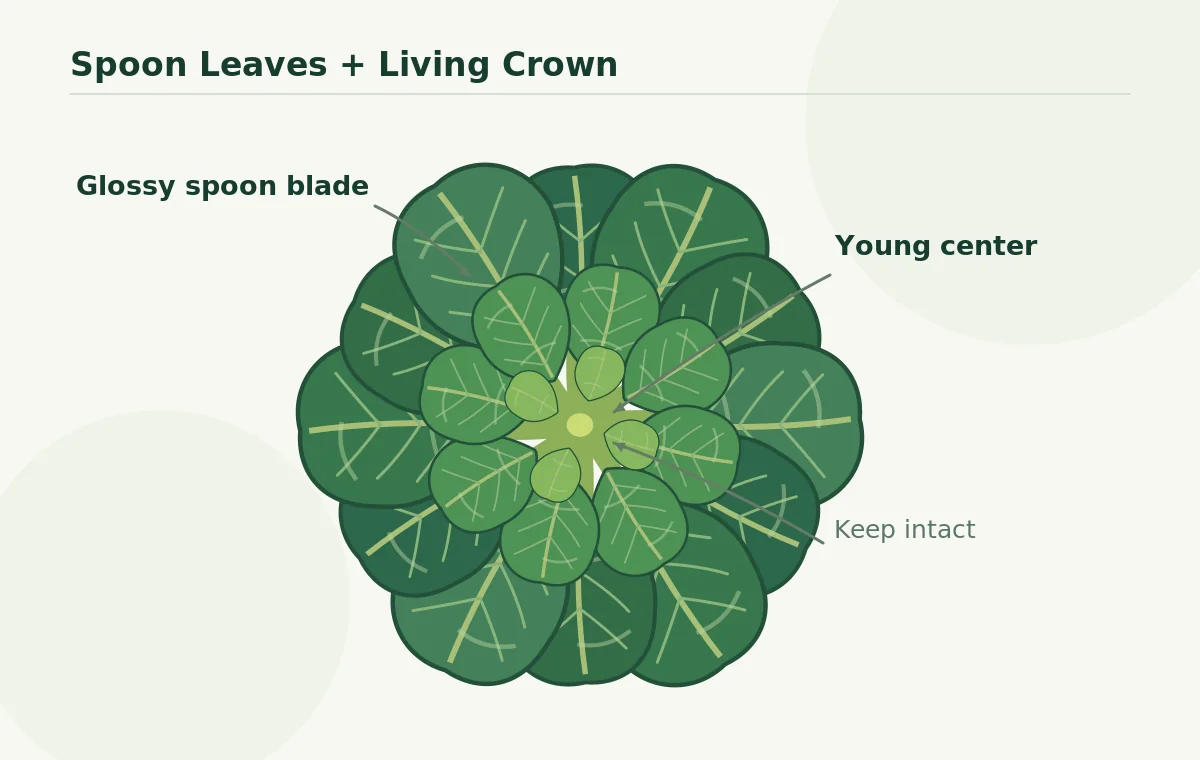
Tatsoi is a compact Asian mustard green, not a headed cabbage. A mature plant forms a circular arrangement of small-to-broad, glossy green blades on petioles radiating from a short central crown. Some varieties lie nearly flat; others stand more upright. That difference matters when finding a safe cut: the newest, smallest leaves appear at the middle, tucked between the bases of older petioles.
Recognize the Flattened Spoon-Leaf Rosette
Look for healthy, unyellowed outer foliage before deciding to pick. Tatsoi may have smooth or gently puckered blades; a few insect holes do not automatically make a leaf unusable, but slime, rot, or extensive damage call for closer inspection. The root system stays in the ground during a leaf-by-leaf harvest, while the tightly packed growth point at the heart must remain intact.
Choose Between Loose Leaves and a Whole Head
For repeated light picking, take fully developed outer leaves and leave the central rosette. This supplies small harvests over time without pretending the plant will regrow indefinitely. For a single large cooking harvest, cut the mature rosette close to its base with a clean knife. The SARE harvest manual describes whole-head cutting; repeated outer-leaf selection is a separate home-garden technique.
Use size and leaf condition, not a fixed number of days alone. Commercial harvest guidance describes tatsoi around four to six inches tall, but baby-leaf plantings are intentionally cut younger. The cultivar, planting density, weather, and intended meal all alter what “ready” means. A cluster crowded against neighboring plants is usually better thinned than stripped repeatedly while still immature.
Find the Leaf Stalk Before You Cut
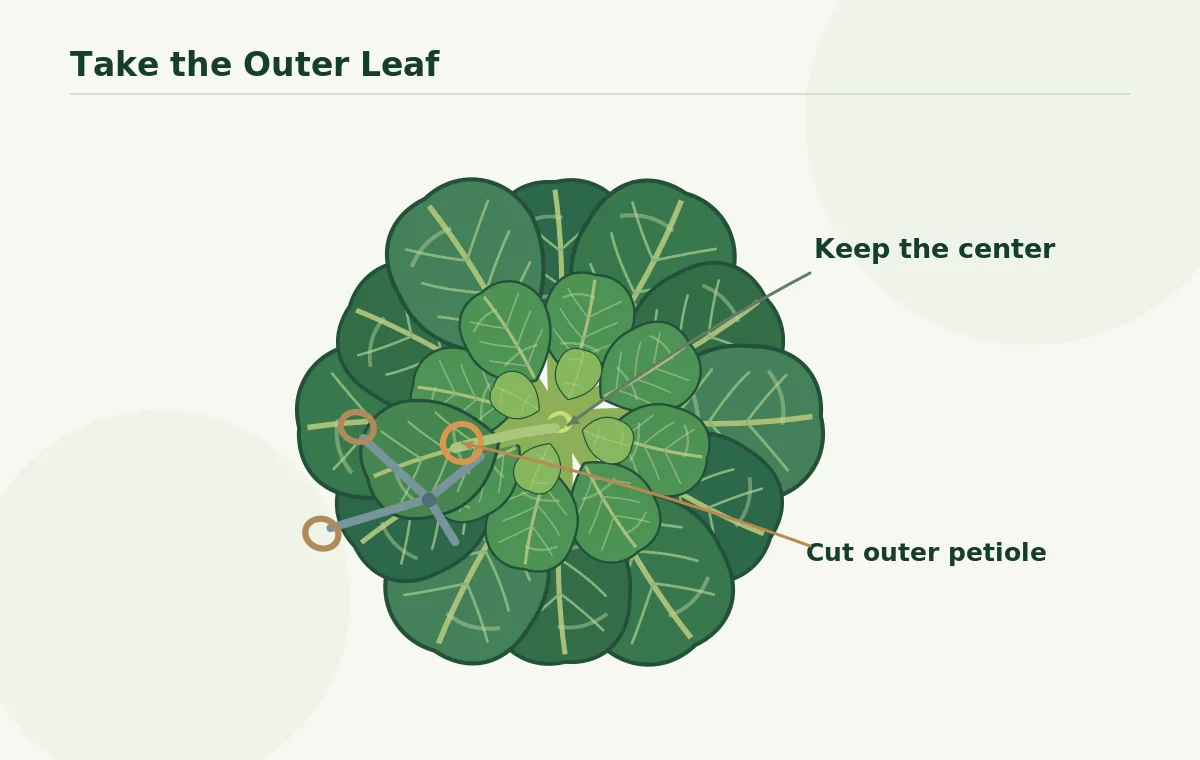
Follow one mature blade inward to its own petiole. Cut or pinch that stalk just above where it joins the low crown, without slicing across the central group of tiny new leaves. Use clean scissors in a crowded rosette rather than pushing a broad knife through unfamiliar foliage. The blade and petiole come away together; a short remaining petiole is not a replacement for the living crown.
Take a few leaves from around the outside rather than stripping one side bare. Do not pull hard enough to lift the plant or tear the crown from its roots. If the plant is too small to expose the leaf bases clearly, wait and let it grow. A very low rosette can hide its crown under several overlapping leaf stalks; clear the view before every cut.
Work in Cool Weather and Manage Moisture
NC State Extension describes tatsoi as a cool-weather crop suitable for spring and fall growing. In hot periods it may form a flowering stem sooner, especially when moisture is limited. A bolting plant diverts energy from tender new leaves; removing one stalk will not reliably restart a leafy season. Base sowing dates on local temperature patterns rather than using a USDA winter-hardiness zone as an annual planting calendar.
Keep soil moist but not waterlogged, and avoid grinding wet leaves into mulch or bare soil during picking. Mulch can help reduce soil splash, but do not pile it over the crown. When freezing weather threatens, remember that cultivar hardiness and the protection provided by snow or covers vary. Leaves that have been freeze-damaged should be assessed for texture and quality before they are used.
Harvest With Clean Tools and Gentle Handling
A small sharp pair of clean shears is easier to aim than a knife when harvesting individual tatsoi leaves. Choose the morning when leaves are generally cooler and hydrated; SARE specifically recommends morning harvest for produce handling. Hold each leaf by the blade or petiole and make the cut at its base. Place leaves in a clean container instead of setting them on the soil.
For a whole rosette, hold the leaves together above the base and make a controlled horizontal cut, leaving the roots behind. This is not the same as a selective regrowth harvest: cutting through the plant’s central crown can end its productive life. Avoid treating a harvested head as though it must sprout again; any regrowth depends on the tissue left behind and favorable conditions.
Leave the Living Heart and Watch Regrowth
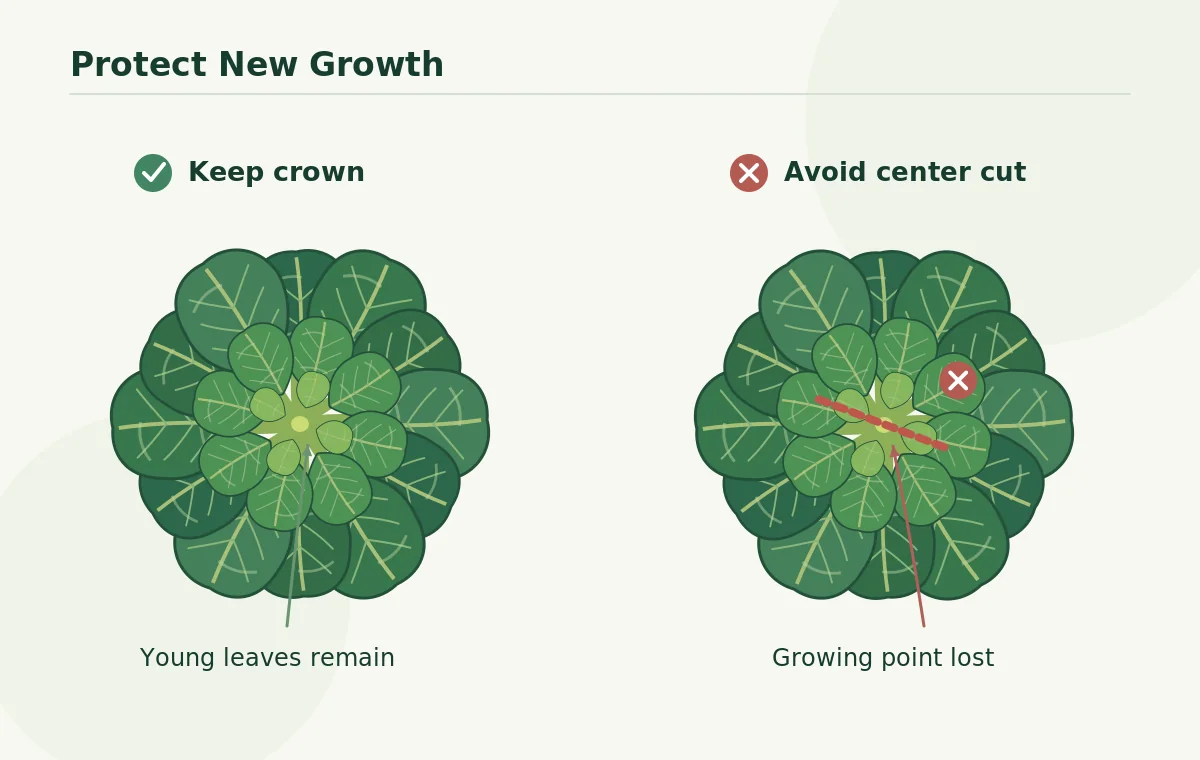
After selective harvesting, look straight into the center for folded new spoon-shaped leaves. Their presence is your simplest check that the growing point survived. New leaves expand outward as the plant recovers; give it adequate light, water, and time before another picking. Removing nearly every mature leaf at once reduces the leaf area available to support recovery and can weaken the remaining plant.
A center that turns mushy, brown, or hollow should not be described as a healthy growth point. Neither does a rising flowering stalk promise a future crop of mild leaves. If a tatsoi plant bolts, clears out after a hard harvest, or stops replacing its outer foliage, plan a succession sowing in the next suitable cool season instead of repeatedly cutting a spent crown.
Compare Selective Picking With Damaged Cuts
Correct selective picking leaves a visible ring of young central leaves attached to the short crown. An incorrect cross-cut across those leaves removes the growing point. Another mistake is pulling up a mature leaf by force: that can detach neighboring petioles and rock the root ball. These differences are easiest to understand from a top view and a low side view of the same type of rosette.
If your crop has yellow, ragged, or oddly cupped new growth, check for pest feeding, heat stress, or a nutrient and moisture problem before changing your harvest method. Flea beetles and slugs can affect brassicas, but not every hole requires a spray. Diagnose the cause, protect vulnerable seedlings if needed, and follow local integrated pest management recommendations.
Keep the Harvest Fresh and Plan the Next Sowing
Handle tatsoi as a tender leafy vegetable. Remove obviously damaged leaves, keep the harvest shaded and cool, and wash before use with clean water. Dry leaves gently to limit surface moisture, then refrigerate rather than leaving a warm pile on a counter. The exact holding life depends on handling, freshness, and refrigerator conditions, so use sensory quality instead of assuming a guaranteed storage period.
For a continuous kitchen supply, sow small amounts over suitable cool-weather periods, rather than harvesting a single crowded bed to exhaustion. Record whether your variety made a flat or upright rosette and whether loose-leaf or whole-head harvesting worked better. That simple record helps you choose spacing and harvest style next season without relying on a one-size-fits-all number.
Related Guides
How We Research and Check the Drawings
We compared university Extension and horticultural guidance with the plant’s visible structures rather than assuming all varieties behave alike. Sources checked October 28, 2026: NC State Extension plant profile; USDA SARE harvest manual; Tatsoi planting and harvest sheet. Where climate, variety, or growing conditions can change the answer, the observations below take priority over a single fixed calendar date.
This independent educational article contains no sponsored product endorsements or confirmed affiliate links. See our affiliate disclosure. Use local Cooperative Extension recommendations when your weather, soil, or pest pressure differs from the examples shown.
Yes, if the central growing point and enough functional leaves remain, new leaves can expand; the response slows with age, heat, or flowering.
On the petiole of a mature outer leaf, close to its attachment but outside the small new leaves at the center.
Both are Asian brassica greens, but tatsoi typically makes a smaller spoon-leaf rosette, while many bok choy types have taller succulent stalks.
For tender leafy harvest, generally yes. Rising flower stems and warm weather often indicate less suitable leaf quality.
Do not rely on it. Cutting through the central crown is different from selective leaf picking and may stop regrowth.