
Recognize ripe dill fruits on umbrella-shaped heads, collect before shattering, and store a dry labeled sowing packet. This guide focuses on plant parts you can identify with your eyes, season-specific decisions, and how to correct the mistakes that matter most.
Recognize Dill Rather Than Another Umbel Herb
Dill, Anethum graveolens, has soft, finely divided feathery leaves and broad umbrella-like clusters of small yellow flowers. Each main umbel consists of many slender rays with smaller bunches of flowers or fruits at the ends. Fennel is a related herb, but its larger mature plant and different fruits should not be silently substituted for dill in a seed diagram. Start identification from the packet, foliage and flowering habit rather than only a photograph of tan grains.
As the flowers fade, the fruits develop into flat oval units with lengthwise ridges and a thin marginal wing. Gardeners routinely call these seeds even though botanically they are dry fruits. A full-size detail drawing shows each fruit attached at the end of an umbellet and a separate enlarged example of the flattened winged shape. A rounded bean-like seed would be a botanical mistake here. For future planting, keep separate lots from different dill varieties clearly labeled.

Allow a Few Plants to Form Seedheads
If your goal is dill leaf harvest, frequent snipping may postpone flowering, but a seed crop requires some stems to reach the flowering stage. Select healthy plants and let those stems produce umbels and then fruits. Minnesota Extension notes that dill is difficult to transplant because of its taproot, so plan the seed crop where the plants already grow. Tall stalks may need gentle support against wind without tying the flower head so tightly that it bends or breaks.
Dill is an annual. Once it completes its flowering and seeding cycle, the plant generally declines instead of returning to leafy vegetative growth. Do not expect a harvested dry umbel to immediately regrow a new fresh seed crop. Leave some flowers available to visiting pollinators while others ripen. If you wish to limit self-sown dill in paths or neighboring beds, monitor the heads before the first dry fruits begin dropping naturally.
Read Tan Color and Firmness, Not a Fixed Date
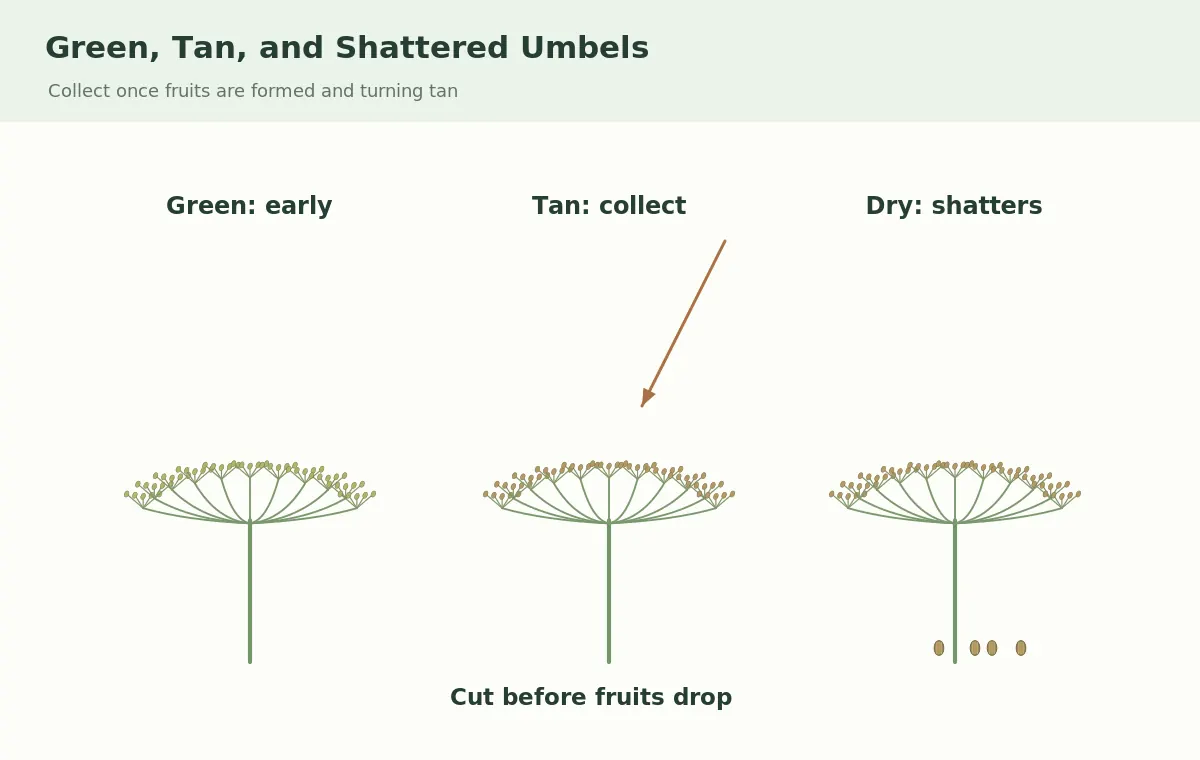
Dill fruits change from soft and green to developed, firm and eventually tan or brown. Individual umbels, and individual clusters within one umbel, can be at different stages on the same plant. Harvest when fruits are well formed and beginning to change color, before wind or a sharp touch scatters them. Wisconsin Horticulture cautions that ripe fruits shatter easily. A completely dry umbel left outdoors may have already lost much of its usable harvest.
The comparison illustration shows green undeveloped fruit, a well-formed tan seed head, and an overripe cluster dropping fruits. Gardeners should not confuse yellow petals remaining on a flower with a formed mature dill fruit. Inspect the heads at close range every few days as they ripen, particularly before predicted heavy rain. A dry morning after dew lifts can be a cleaner collection window than a soaked afternoon. Do not invent a universal number of days after sowing for every climate.

Hold a Paper Bag Under the Umbel Before Cutting
Bring a clean paper bag beneath the chosen umbel before disturbing it. Support the slender flower stalk with one hand and snip it below the mature head with clean scissors. Let any loosened fruits fall into the open bag rather than scattering onto the bed. If the umbrella is too wide for the bag opening, use a broad tray outdoors and transfer the intact head carefully. The action drawing places the cutting mark below the rays and keeps the bag below the fruits.
Minnesota Extension also describes hanging stems upside down in a warm ventilated place, with a small paper bag arranged to catch falling seeds. If using a bag around the drying head, allow air exchange; a closed plastic bag can trap moisture. Drying stems need enough separation that leaves and heads do not remain damp. Keep the indoor spot out of direct harsh sunlight and away from cooking steam or splashing sinks.
Let Dry Heads Release Their Flat Fruits
As collected umbels dry, many finished fruits detach with gentle shaking or rubbing. Work over a clean tray to retain them. Pass out coarse stems and obvious debris by hand or a suitable sieve; do not crush the flat fruits into fine dust. The winged oval fruit may appear slightly curved or narrow depending on perspective, but a central ridged flattened surface should still be apparent. Seeds intended for planting need to stay dry, clean and reasonably intact.
Do not judge dryness from the stiff stalk alone. Spread a test portion on paper and check whether the fruits themselves feel dry rather than cool and pliable from moisture. If a closed storage container develops condensation, immediately remove the material and dry it more thoroughly. A low-draft room protects light fruits from being blown away during sorting. Separate each date of collection if the same plant has umbels ripening at widely different times.
Store Planting Seed and Remember Pollination Limits
Label an envelope with Anethum graveolens, the variety if known, and the actual year of harvest. Once fully dried, seed can be stored sealed under cool dry conditions protected from direct light, consistent with Extension advice. If you also use dill seed as a culinary spice, keep a distinct clean food-safe portion. Do not treat an unverified wild umbel as edible or save it simply because the seed smells aromatic: the carrot family contains dangerous look-alikes.
Seed from cross-pollinated or commercially hybrid selections may not match the parent exactly. Keeping accurate records helps you interpret the next generation. Check for insects, off odors and mold before storing, and discard suspect material. A small germination test before future sowing is useful when the seed has spent a season in warm or humid storage. Be conservative about predicted storage life; temperature, dryness and initial maturity change it.
Troubleshoot Shattering and Poor Germination
If very few seeds remain after harvest, consider whether the heads were left past the point of natural shattering. Catch the next head earlier, when fruit is firm and starting to turn tan. If a harvested lot sprouts poorly, possible causes include collection too early, prolonged wet drying, aging in warm storage or difficult sowing conditions. None can be diagnosed by observing the color of one dry stem. Record stage at harvest and how the drying area was ventilated.
For the next sowing, remember that dill prefers to be sown in its final place rather than transplanted from crowded modules. Keep a few healthy umbels to provide seed but avoid unwanted self-sowing by bagging the last heads. The final comparison illustrates early, usable and over-shattered umbel stages with the same dill leaf type and slender branching structure. Clear botanical identification and a paper catcher solve most avoidable seed losses without specialized products.
Related Guides
- Growing Herbs by Type: Water, Harvest, and Winter Survival Guide
- How to Grow Dill for Fresh Leaves and Seed Without Losing the Harvest
- How to Harvest Dill Seeds From Umbels Before They Scatter in the Garden
- How to Grow Dill in a Pot: Direct Sowing, Thinning, and Leaf Harvests
How We Research and Verify Botanical Details
Authoritative sources reviewed October 27, 2026: extension.umn.edu: Minnesota Extension recommends cutting dill umbels as fruits ripen, paper-bag drying and airflow. hort.extension.wisc.edu: Wisconsin Horticulture identifies yellow umbels and flat winged ridged fruits that shatter when ripe. www.rhs.org.uk: RHS explains mature brown dill seedheads and upside-down paper bag collection. extension.umd.edu: Maryland Extension describes blue-green finely divided foliage, yellow flowers and flat brown seeds. These practical illustrations simplify plant structures without implying exact scale or universal planting dates. Where cultivar, weather, locality or seed stock changes the result, follow local Extension and supplier guidance.
This independent educational guide contains no paid product placement. Read our affiliate disclosure. Check local regulations and registered product labels before any pesticide use; use integrated pest management and an accurate diagnosis first.
The commonly named seeds are small dry fruits with ribs and thin wings.
When the fruits are well formed and beginning to turn tan, before they shatter.
Use ventilated paper or an airy tray, not sealed plastic around damp heads.
Dill is an annual and usually declines after flowering and setting seed.
Direct sowing is preferable because dill has a taproot that dislikes disturbance.