
A broad bean or fava bean, Vicia faba, has two quite different harvest stages. Tender, swollen green pods are excellent for dinner, but the soft beans inside are not the seed-saving target. For planting seed, choose healthy plants and let selected pods age until they are papery, dark brown to nearly black, and dry enough to open without squeezing wet pulp. The seeds themselves are large and flattened, not the tiny round pellets shown in generic seed-saving diagrams. The most useful test is to compare the whole pod, seed firmness, and remaining moisture before sealing anything away.
Choose Healthy Plants Before the Eating Harvest
Mark a few vigorous fava bean plants with the pod shape, growth habit, and vigor you actually want to grow next year. Broad beans are often self-pollinating, but cross-pollination is possible; do not promise that every saved seed will reproduce an exact named type if different varieties flower nearby. Open-pollinated, true-to-type plants are safer choices than unlabeled mixed seed. Keep seed pods attached after collecting the young pods intended for the kitchen.
Avoid selecting plants that have repeatedly shown severe disease symptoms or produced pods that are misshapen from evident infection. A healthy-looking pod is not a certificate of disease-free seed, but basic sanitation and careful selection lower unnecessary risks. Record the variety and planting location while you remember it. The later labeling task is easiest when every saved pod can still be connected to a known plant or row.
Let Seed Pods Age Beyond the Eating Stage
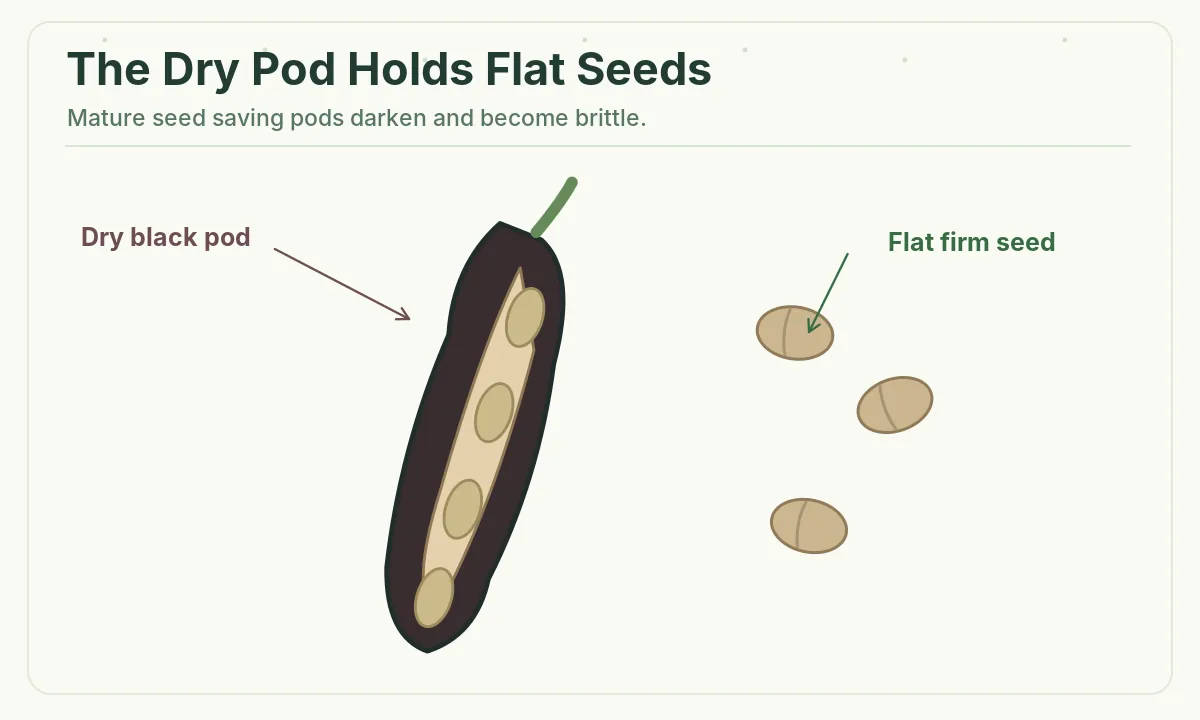
Fresh eating-stage fava pods can be thick, firm, velvety, and vivid green. For seed saving, those pods need much longer on the plant. The pod wall gradually dries, shrinks, and turns brown to black; moisture leaves the broad, flat seeds inside. RHS describes broad bean seed pods that have become black by collection time. A fully dry pod is papery and may rattle when moved.
Do not use a rigid week count from the first eating harvest. Cool, wet weather slows drying, and pods on the same plant may mature unevenly. If some are dry and others are still green, collect only the dry group and leave the remainder where weather allows. Watch for splitting: very dry pods may open and drop seeds. Collect before a sudden stretch of wet weather ruins sound mature seed.
Check the Pod Seam Before Cutting
Inspect the two long pod edges and the tip. A pod starting to split can spill its contents when grabbed, especially on a windy day. Support the pod with one hand and clip its short stem with clean snips rather than stripping a whole branch. A paper tray or shallow bowl under the pod catches seed that breaks free unexpectedly. If the pod is still bendy and wet, it is not ready simply because it has a dark patch.
A pod completely black on one side can still have moist green tissue at its stem end. Open a sample and look for firm, full-sized seeds, not soft, translucent ones. Remove obviously diseased or moldy pods from the batch. You are judging living propagation material, not producing dried beans for an edible storage product: only store clean, thoroughly dry seed, and do not assume seed-treatment recipes or chemical dips are necessary.
Finish Air-Drying Harvested Pods Indoors
Even when pods feel brittle outdoors, short indoor air-drying reduces the chance of trapping moisture in an envelope. Spread intact pods in a single layer on clean paper or a mesh tray in a dry, shaded, well-ventilated location. Turn them occasionally and keep them away from damp windowsills. Minnesota Extension notes that pea and bean pods can be dried further indoors before shelling; there is no benefit to packing moist pods tightly together.
Humidity matters more than a particular ritual or day number. Check the thickest pods because they release moisture more slowly than thin ones. Discard pods with spreading mold or a rotten odor. Keep seed lots separate from kitchen beans and away from children or pets who might mistake treated or unknown seeds for food. If rain is expected and pods are already mature, bringing them under shelter can save an otherwise sound harvest.

Shell the Large Flat Seeds Without Crushing Them
When pods are crisp, ease open the seam and lift the individual seeds out with your fingers. Broad beans are noticeably larger and flatter than ordinary garden peas. A mature seed should be solid and relatively hard, with an identifiable seed coat and scar, rather than squishy and bright green. Work over a light-colored tray so you can see and retrieve each seed, including the occasional seed that rolls under a fold of the pod.
Do not crush dry pods with a heavy tool. Split them by hand and keep the firm seed coats intact; injured coats can invite decay in storage or reduce germination. Remove empty, shriveled, insect-holed, discolored, or soft seeds. An odd color alone may be normal for a particular variety, so compare it with other mature seeds of that same cultivar. Count the healthy seeds and save a few extra for a later germination test.
Label and Store Only Completely Dry Seed
A paper envelope bearing crop, variety, and harvest year makes seed identification much easier. Once the beans are truly dry, they can be placed in a suitably dry, sealed container in a cool location. University of Minnesota recommends keeping seed dry and cool and using a desiccant where needed. Moist seed sealed in glass can mold, so finish drying first; adding silica gel does not repair a wet or rotten seed lot.
Keep saved seed away from sudden temperature changes that cause condensation. Do not mix varieties in an unlabeled jar or claim a guaranteed viability span for seed stored under unknown humidity conditions. In spring, test a small sample for germination and compare it with a fresh seed lot if performance is uncertain. Stored seed is a plan for next season, not proof it will germinate indefinitely.
Compare Food Beans With Sowing Beans
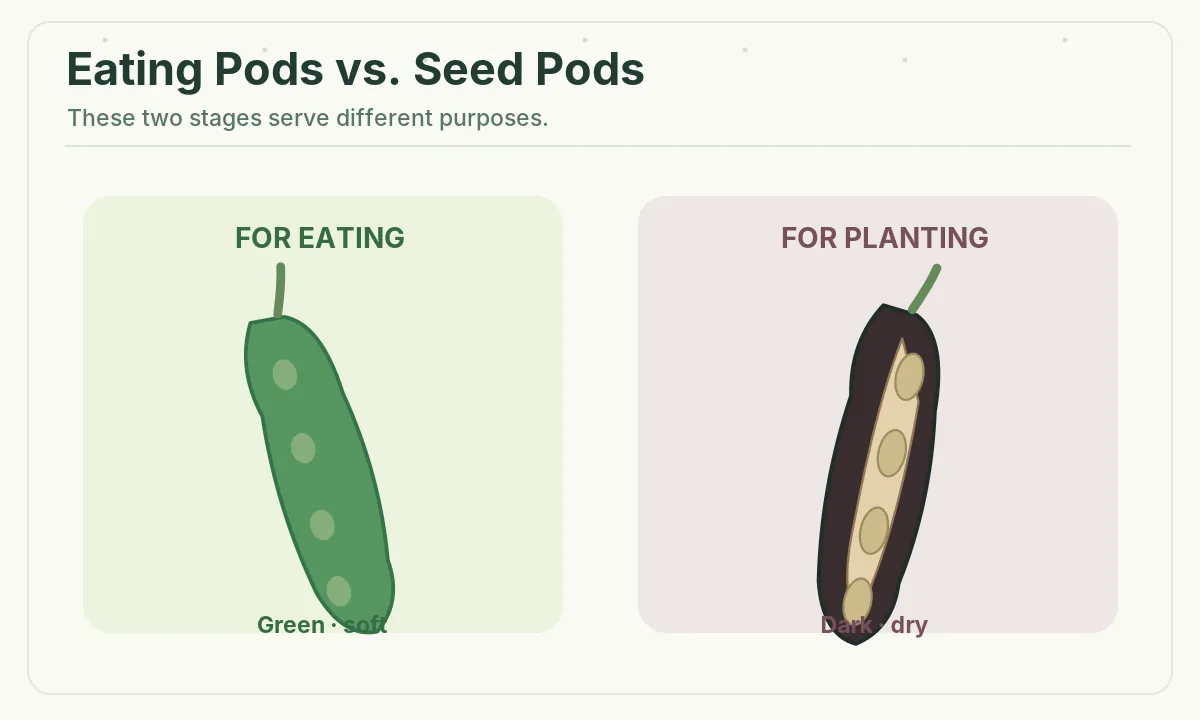
The young harvest for eating and the fully mature harvest for planting have different priorities. Tender eating pods are green with succulent beans inside. A mature seed pod is brittle and dark, and its beans have hardened. Keeping the stages distinct prevents the common disappointment of drying tender green beans and expecting them to perform like fully ripened seed. A correctly drawn comparison shows both pods on the same species, rather than confusing fava beans with round peas.
Save seeds from the best representative plants when possible and note any changes in plant vigor, emergence, or pod traits the following year. If your seed lot remains soft or shows evidence of mold, do not gamble your entire planting on it. Buy fresh seed or reserve only the sound portion. Seed saving should yield cleaner, better documented planting material—not a larger bag created by mixing questionable pods with good ones.
Related Guides
- Growing Fava Beans: Cool-Season Planting and Pod Harvest Guide
- When to Harvest Fava Beans for Plump Fresh Shelling Seeds
How We Research This Gardening Guide
For this guide, we cross-checked the crop-specific guidance in the following institutional resources on October 27, 2026: RHS (RHS directly describes saving broad bean seeds from black dry pods and labeling seed envelopes.); University of Minnesota Extension (University of Minnesota Extension advises drying pea and bean pods to brown maturity before shelling and storing.); Penn State Extension (Penn State Extension covers dry bean pod seed maturity and collecting before pod splitting.). Recommendations are interpreted for gardeners and may need adjustment to local conditions, cultivar differences, and extension advice.
No paid product placement or affiliate recommendation is included in this article. See the VegWin affiliate disclosure. If disease symptoms or food-safety decisions are involved, seek local Extension guidance before making a treatment or food-processing decision.
Green eating-stage pods generally contain immature, high-moisture beans; leave selected pods to dry fully for seed.
Often dark brown to nearly black, with a brittle dry pod wall.
You can first dry intact pods further in a ventilated space, then shell them gently.
No. Mature Vicia faba seeds are relatively large, broad, and flattened.
Include the crop, variety or source, collection year, and any relevant plant notes.