
Ground cherries are small, sweet fruits of certain Physalis species, including Physalis pruinosa, wrapped in light paper husks. They are relatives of tomatoes and tomatillos, but not identical crops. The harvest rule is especially different: a ripe ground cherry typically has a dry papery husk and often drops from the plant. This guide follows that real visual sequence—from seed and yellow flower to lantern-like husk and golden berry—so you do not pick immature fruit just because a husk has formed.
Choose True Ground Cherry Seed, Not a Tomatillo
Read the botanical name or reliable cultivar description before buying seed. Common garden ground cherries include Physalis pruinosa and related species; tomatillos are usually larger and harvested under different conditions. University of Minnesota Extension describes ground cherries as small sweet fruits generally about the size of a little cherry tomato, while tomatillos are firmer and often harvested when their fruits fill the green husks. Confusing the two can produce a misleading harvest date and disappointing flavor even when the plants are healthy.
A ground cherry plant often sprawls outward rather than growing as a neat upright tomato. Minnesota Extension describes plants that can be shorter than 30 inches. Reserve enough space for spreading stems and a collection area around the base. A clean mulch makes it easier to find fruit when ripe husks fall. Do not assume every wild roadside lantern-shaped fruit is an edible garden ground cherry: Physalis identification matters, and unidentified or immature nightshade fruits should not be eaten.
Start Seeds Indoors With Warmth and Light
University of Minnesota recommends starting ground cherry seed earlier than tomato seed; it provides this distinction because ground cherry plants need time to establish before they bear. Work from your own anticipated safe transplant period rather than from a hardiness zone. Sow shallowly in clean seed-starting medium according to packet directions, keep the mix consistently moist but not soggy, and provide a stable warm germination environment. If your supplier gives a variety-specific sowing depth, use it instead of adopting a universal rule from a different Physalis crop.
After emergence, give seedlings strong light and move promptly out of stagnant, overly humid conditions. Tiny seedlings can be knocked flat by hard watering, so use a gentle stream or bottom watering with attention to drainage. Transplant into individual cells if roots begin to crowd, holding seedlings by a leaf rather than squeezing their tender stems. A seedling with a few true leaves is easier to judge for vigor than one that has only just opened its first pair of cotyledons.

Identify the Flowers and Developing Lantern Husks
Ground cherry plants carry broad green leaves and small five-part flowers. Many garden ground cherries have pale yellow flowers with a darker center. After pollination, the calyx grows around the forming berry like an inflated lantern. That papery shell is a plant structure, not a shipping wrapper or leaf that should be peeled away early. A young enclosed berry may remain green, and the husk may still feel fresh while fruit development is underway.
The anatomical detail drawing shows a yellow flower next to a later lantern-shaped calyx. These are two stages, not two unrelated organs. When flowers drop without fruit, first consider temperature, light, water stress and pollination conditions rather than immediately adding fertilizer. Healthy plants can carry both fresh flowers and maturing fruit at the same time. Fruit quality must be judged individually because the oldest and youngest husks on a sprawling stem are rarely equally ripe.
Transplant Into a Warm, Weed-Free Bed
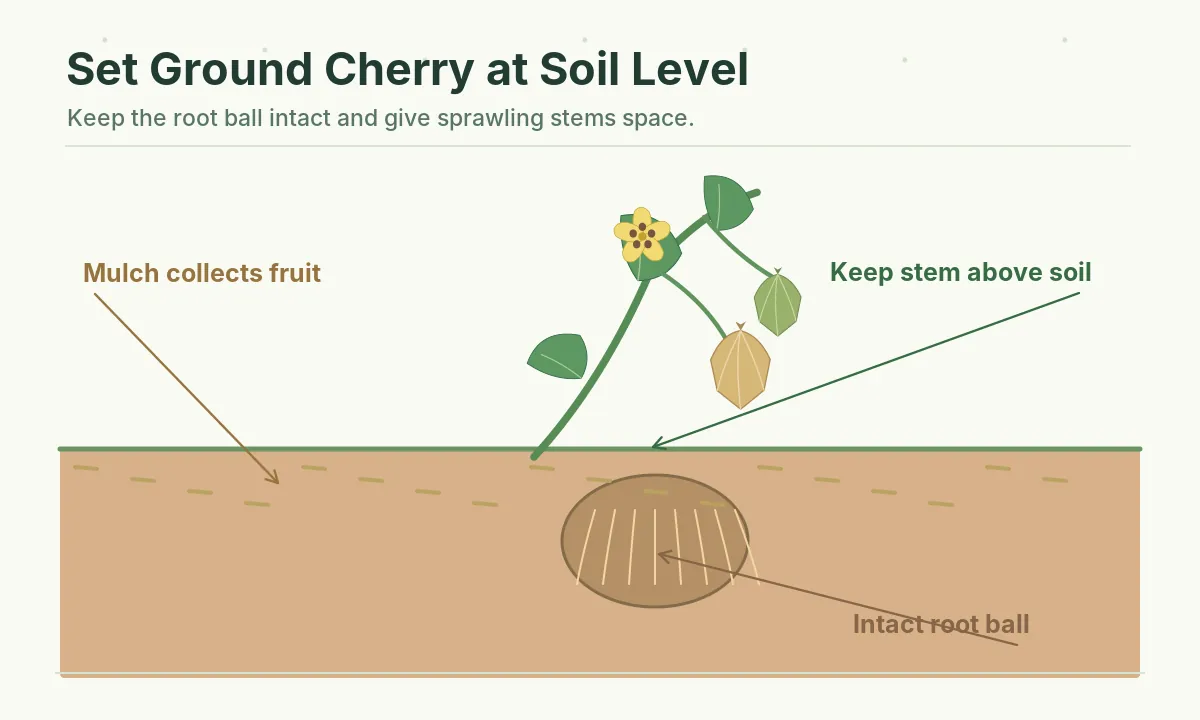
Once frost risk has passed and the ground is warm enough for this tender crop, harden off the young plants gradually. Use full sun and reasonably well-drained soil with space for foliage and air movement. Water the transplant thoroughly after setting it into the bed at its previous soil level. A plant that is pushed into cold mud may stall even though its indoor leaves looked healthy. Thin overcrowded plants instead of expecting their stems to compete for light in a dense patch.
A lightweight stake or low support may improve access to fruit, but it is not required to turn the crop into a tall tomato. Because ripe fruits often land beneath the plant, keeping the soil surface visible is especially important. Minnesota Extension mentions clean, weed-free straw as a way to keep dropped fruits from getting dirty. Apply mulch when the ground has warmed and keep it from sitting against the main stem. Check beneath the canopy gently rather than stepping across sprawling branches.
Use Two Ripeness Clues Together
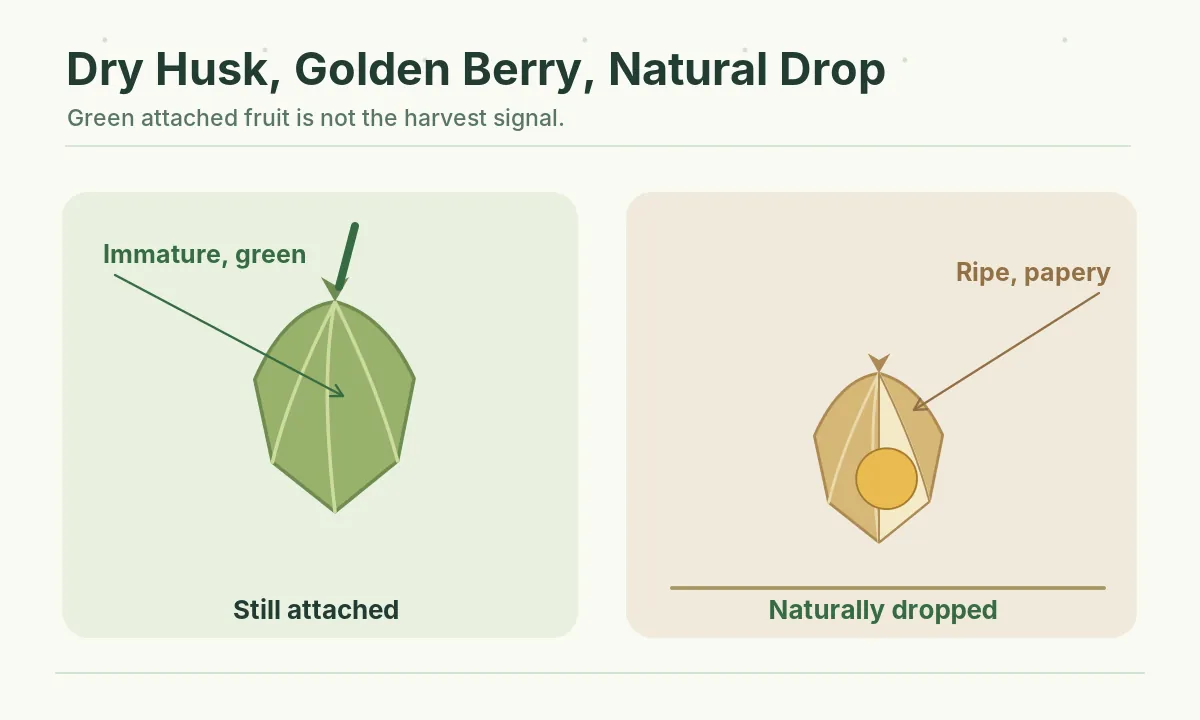
The best cue is a dry, tan, papery husk surrounding a fully colored ripe fruit, commonly golden yellow for many ground cherry varieties. University of Minnesota states that fully ripe ground cherry fruit drops from the plant, unlike a tomatillo harvested firm inside a filled but greener husk. Look underneath the plant and lift fallen husks from clean mulch. A dry husk is a helpful signal, but open one and check the fruit itself when color, smell or cultivar behavior seems unusual.
Avoid eating immature green berries, any green surrounding plant material, or unidentified wild Physalis fruits. Ground cherries belong to the nightshade family, in which unripe tissues may contain unwanted compounds. Do not equate a husk turning pale with proof that every berry is safely ripe. Discard fruit showing mold, decay, insect damage or signs of contamination. Harvesting repeatedly over the ripening window is more reliable than stripping every husk in one afternoon.
Collect Fallen Fruit Cleanly and Store With Care
Walk the bed regularly during the harvest season and gather newly fallen dry husks before extended rain, slugs or foot traffic damage the fruit. Clean mulch makes collection easier than muddy soil. Handle the fruit gently: a ripe berry can bruise, and a split husk does not protect it from contamination. If fruit lands in an area with animal waste or obvious chemical contamination, do not use it for eating. Wash hands and produce using normal food-safety practices before preparation.
Keep only sound, ripe fruit for the kitchen and store it according to appropriate produce-handling guidance rather than assuming the paper husk makes it shelf-stable indefinitely. If you intend to preserve ground cherries, use tested preservation recipes and procedures from authoritative food-safety sources; this gardening article does not give canning parameters. Leave obviously unripe fruit to mature on the plant when possible and resist mixing dark, damaged, or green berries into a harvest bowl simply to increase quantity.
Solve Common Fruit and Seedling Problems
A vigorous plant with many flowers but little ripe fruit may still be in the early fruiting stage. Look for the expanding calyx that follows pollination, then give the berry time to color. Poor light, repeated dry spells, saturated roots and temperature extremes can also affect fruit set. Avoid a broad pesticide treatment without identifying an actual pest or disease. Keep a brief log of flowering and falling husks so you can tell slow maturation from repeated losses to animals or severe weather.
Ground cherries may reseed after dropped fruits remain on the soil; Minnesota Extension notes self-seeding in Physalis gardens. Remove unwanted volunteers and do not assume every volunteer is the named variety you grew previously. The crop can be managed in a container, but check drainage, growing volume and the practical space for its sprawling stems before selecting a small pot. Next year, focus on good seed identification, warmth, and repeatable ripe-fruit observation rather than chasing a single ideal calendar date.
Related Guides
- How to Save Ground Cherry Seeds From Fully Ripe Husked Fruit
- When to Harvest Ground Cherries: Dry Husks and Fallen Ripe Fruit
How We Research These Planting and Propagation Details
These recommendations were checked against botanical and growing guidance from extension.umn.edu resource; plants.ces.ncsu.edu resource; extension.psu.edu resource. All links were reviewed October 27, 2026. Where a source addresses a closely related crop rather than the exact garden selection, that limitation is stated in the practical section. The educational diagrams show key morphological features and avoid promising a uniform result for every cultivar, climate or growing medium.
This informational guide has no paid product recommendation. Review the site affiliate disclosure for partnership policies. For crop disease, pesticide or local growing-season questions, consult your Cooperative Extension office and actual labeled instructions rather than extrapolating from a diagram.
No. They are related Physalis crops, but ground cherries are generally small and sweet, with different harvest timing.
Usually not. For ground cherries, look for a papery dry husk and a fully ripe berry; fruit often falls naturally.
Avoid immature green berries and other green plant tissues; eat only correctly identified, fully ripe fruit.
Natural dropping is a common ripeness cue. Clean straw mulch can help keep fallen husks off bare dirt.
Yes. They can self-seed from fallen fruit; remove volunteers where unwanted.