
Broccoli raab—also called rapini—is a leafy Brassica rapa crop grown for tender shoots, greens and immature flower buds, not for a large supermarket-style broccoli head. The harvesting window can be brief during warm weather: green clusters enlarge and then open into yellow flowers, which changes both texture and flavor. The clearest signal is the look of the buds and stems, not a printed seed-packet day count alone. This guide focuses on identifying a firm cluster, cutting an edible portion cleanly, avoiding woody oversized shoots, and understanding that repeat cropping differs across varieties and growing conditions.
Confirm You Have Broccoli Raab, Not Heading Broccoli
RHS identifies broccoli raab or rapini as a Brassica rapa Ruvo Group crop, unlike large-heading broccoli cultivars in Brassica oleracea. Rapini carries green leaves with wavy or serrated edges and produces clusters of small buds on shoot tips. The tender tip, a portion of stem, and young leaves are used as food. The plant does not need to form a tight softball-sized crown to be harvestable. If you wait for a familiar grocery broccoli shape, flower buds may open first. Read the seed packet’s cultivar description because raab types differ in height, branching and their harvest sequence.
Look for Green, Tightly Closed Bud Clusters
At the ideal early harvest stage, developing flower clusters are distinct but the individual buds remain closed and green. RHS notes that left to flower the plant produces yellow blossoms and ultimately elongated seedpods. Check the center and side shoots closely rather than judging a plant from across the bed. A few bright yellow petals signal that some buds have opened and the crop is moving beyond its prime stage. Flowered shoots may still be usable in some kitchens, but expect a stronger flavor and coarser stems. Prioritize tender, compact green clusters for a classic rapini harvest.

Use the Seed Packet as a Guide, Not a Clock
Fast-maturing varieties may move quickly from leafy growth to bud formation, especially as days become warm. A suggested number of days to maturity is an estimate based on typical growing conditions, not a guarantee that every plant is ready that morning. Cool-weather crops often stay tender longer than heat-stressed plants. Inspect stems every few days as buds first appear; daily checks may be needed if temperatures climb. In regions with mild winters, planting and harvesting may occur at different months than northern schedules. Do not confuse the USDA perennial hardiness zone with a calendar for this annual vegetable.
Cut a Tender Shoot With Some Young Leaves
Hold the chosen shoot in one hand and locate a tender section below the tight flower-bud cluster. Cut cleanly with a sharp knife or clean snips, keeping edible young leaves attached. A sound cut sits below the bud group but above very fibrous lower growth. There is no need to cut an entire plant to the soil just to obtain a single tip, unless you are intentionally harvesting whole young plants. Leaving healthy foliage and possible side shoots can allow further growth in some types. Handle cut shoots gently, as crushed buds and leaves lose freshness quickly.
Check the Stem Rather Than Guessing Its Tenderness
A stem that snaps or slices easily, with moist light-colored tissue, is usually more pleasant to eat than one that bends stubbornly or shows a thick fibrous center. Test a small sample from the planting before cutting every stalk. Under drought or prolonged hot weather, stems may become tough even when some buds are still visible. Cutting too far down into old stem does not improve the meal and may reduce the plant’s remaining growth. In the kitchen, trim off any obviously woody ends while retaining sound young leaves. Quality comes from developmental stage and texture together.

Know When a Second Harvest Is Possible
Some broccoli raab varieties produce usable secondary shoots after the first tender tip is removed, but others are grown for a brief concentrated harvest. Look for fresh axillary growth in the leaf joints rather than assuming the plant will behave exactly like large-heading broccoli. A variety intended for one main cutting may not deliver many later harvests. Leave enough healthy foliage to support new growth when your goal is repeated picking, and monitor whether buds keep developing. If the plant is already producing many flowers and long tough stalks, it may be time to clear it and begin a new cool-season planting.
Prevent Heat and Water Stress From Shrinking Quality
Rapini prefers favorable cool-season conditions; hot weather may accelerate flowering and reduce the time available for tender shoots. Consistent water helps maintain vegetative growth, though wet roots and compacted soils create other problems. Mulch may moderate surface drying, provided it does not bury stems or encourage rot. Avoid sudden heavy nitrogen applications just before harvest as a substitute for appropriate sowing dates. Where summers are hot, a fall or mild-winter crop often makes more sense than forcing harvest through extreme heat. Local Extension recommendations should guide regional sowing windows.
Inspect Brassica Pests Before Bringing Greens Indoors
Like other cabbage-family plants, rapini can host caterpillars, flea beetles, aphids and other pests. Turn leaves over while harvesting, checking for eggs, larvae, honeydew and feeding holes. Fine mesh netting applied early can help limit some insect access, but ensure covers are placed over uninfested plants and monitored. Remove heavily contaminated leaves and rinse edible harvests under clean running water. If damage appears unusual or widespread, seek an accurate diagnosis before selecting any treatment. Never use improvised pesticide doses on a quick-turnaround leafy vegetable; check legal product labels and harvest intervals.
Keep the Harvest Fresh and Food-Safe
Move cut rapini to shade promptly instead of leaving bunches in the sun while you finish gardening. Remove obvious garden debris, rinse when preparing, and refrigerate the crop promptly in a clean container or suitable bag. An extended warm countertop period encourages wilting and quality loss. If shoots arrive wet, avoid keeping them dripping and sealed for a long period. Harvest only what you can cook or properly chill. The young leafy stems, buds and tender leaves are the intended edible material. Older yellow-flowered stems may still be safe when correctly identified but are often less appealing.
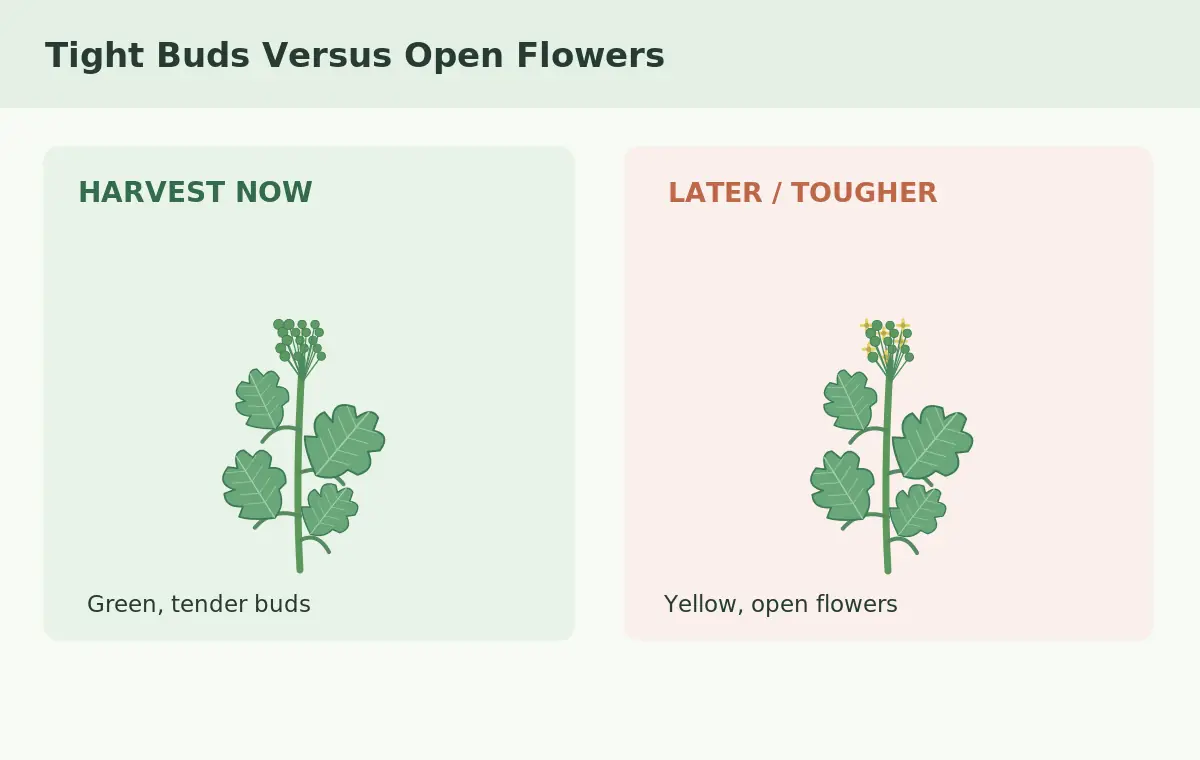
Learn From the Buds That Opened Too Soon
If buds repeatedly turn yellow before you reach them, the cause may be timing rather than an ineffective fertilizer. Review planting date, cultivar, sunlight and the temperature trend before the first harvest. In a region with intense heat, try the next crop in a cooler window or choose a locally recommended variety. Record the interval between the first visible bud and open yellow petals; this gives a practical site-specific monitoring cue. When a crop has bolted extensively, do not keep trimming tough stalks in hopes of creating tender broccoli-like heads. Start the next sowing with what you learned.
Authoritative Sources and Further Reading
Recommendations were checked against these resources: www.rhs.org.uk guidance (RHS botanical identity of broccoli raab and harvestable flower buds, shoots and young leaves.). dev.extension.umd.edu guidance (Maryland Extension distinguishes broccoli raab from true heading broccoli and describes flower-bud harvest stages.). www.rhs.org.uk guidance (RHS harvesting guidance for tight immature brassica bud clusters; applies generally, while not substituting for rapini cultivar instructions.).
Related Guides
- When to Harvest Broccoli Rabe for Tender Leaves and Tight Flower Buds
- How to Grow Broccoli Rabe (Rapini) for Tender Shoots, Not Heads
How We Research Plant-Care Instructions
We compared the stated plant species and growth stage with the linked Extension, university and RHS sources, distinguished observed facts from practical judgment, and reviewed the botanical structures depicted in this guide. Sources checked October 27, 2026. This intent was screened against 145 available B097–B125 titles; earlier B001–B096 full production files are unavailable, so a complete historical duplication audit is not claimed.
Safety, Climate and Editorial Disclosures
This is educational gardening information, not individualized pesticide, veterinary or medical advice. Recommendations depend on cultivar, local climate, soil and plant condition. No commercial endorsement or paid partnership is implied. Follow legally applicable labels and local guidance whenever products are considered. Read the site’s general affiliate disclosure for related policies.
Look for green, compact unopened flower-bud clusters with tender stems and young leaves.
No. Rapini belongs to Brassica rapa Ruvo Group and usually makes small flowering shoots, not one large heading broccoli crown.
Young flowering shoots may be usable, but taste and stem texture often become stronger and coarser.
Some types make additional side shoots; observe the cultivar and leave healthy foliage when aiming for another pick.
Cut a tender stem below the tight bud cluster with attached young leaves, avoiding woody old stem.