
A tomatillo develops inside a papery lantern-like husk that can hide most of the fruit. That wrapper helps with judging maturity: a young fruit occupies only a fraction of the roomy husk, while a more developed one fills it and may begin to split it. A single color rule is unreliable because mature tomatillos can be green, purple or yellow depending on the cultivar. Check the fruit, the husk, and how readily it releases.
Recognize the Tomatillo Husk as a Flower Calyx
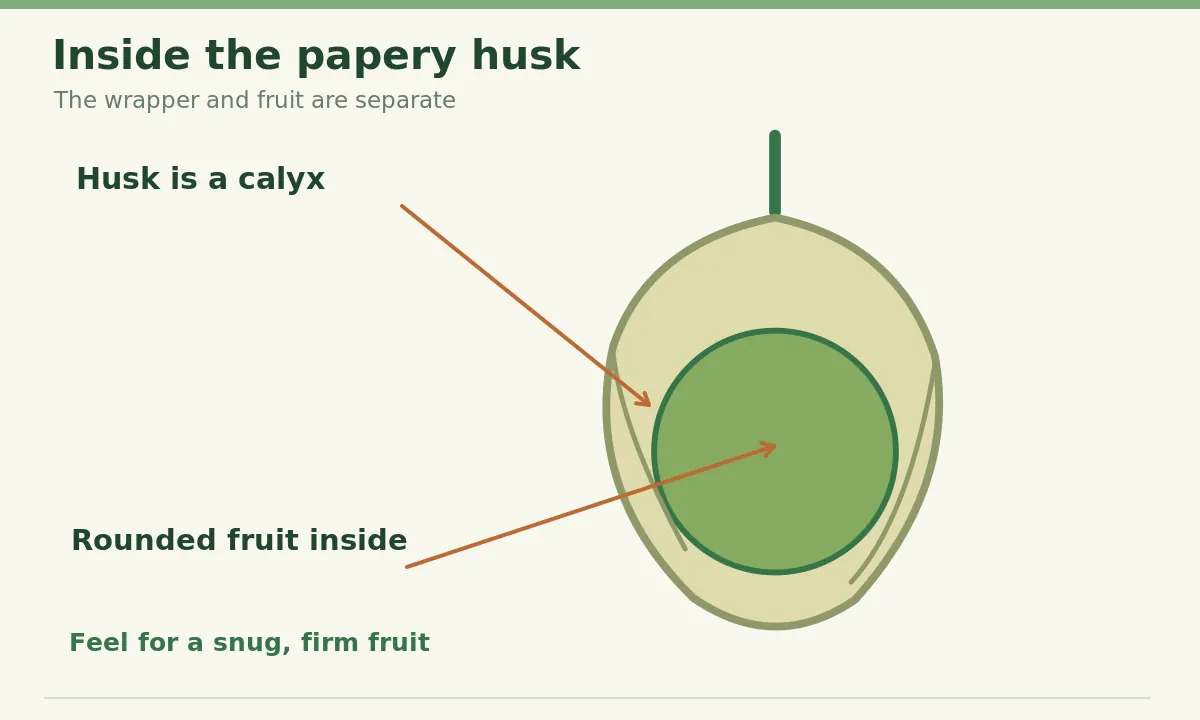
The papery husk around a tomatillo is an expanded calyx left from the flower, not a separate leaf wrapped by hand around a tomato. It often begins larger than the young fruit and looks like a hanging green lantern. Inside sits a smooth round fruit that gradually enlarges. The husk may become pale, tan or split as maturity approaches. Look for the attachment at the thin fruit stalk, and remember that a tomatillo is a Physalis relative, not a green standard tomato. The explanatory cross-section shows the fruit and thin husk as separate structures.
Use How Fully the Fruit Fills the Husk
South Dakota State Extension describes harvest readiness when the tomatillo fills its husk, often accompanied by a drying or splitting wrapper. A small hard bead rattling in a much larger green husk is usually still immature. Hold the husk gently and feel the smooth fruit inside without crushing it. A snug wrapper and nearly full round fruit are useful signs to combine with expected cultivar size. Avoid tearing open every lantern just to inspect it; doing so removes some protection. A dry husk alone is not enough if the fruit underneath is damaged.
Read Husk Color Without Making It the Only Test
The enclosing calyx often shifts from fresh green toward tan, papery or partly split as the enclosed fruit matures. Some ripe tomatillos may still have greenish husks, and a weather-damaged dry husk can surround a poor-quality fruit. Compare fullness, texture and color together rather than using the first brown patch as an automatic picking signal. A husk that is wet, moldy or disintegrating does not guarantee good edible fruit. The three-stage graphic shows a small fruit inside an inflated lantern, a mature full fruit stretching the husk and a soft or discolored fruit that needs separate assessment.
Match Fruit Color to the Cultivar
Green-fruited varieties are often harvested while the fruit is still pleasantly firm and tangy rather than waiting for it to become yellowish and soft. Purple and yellow types have different color expectations, so a purple blush does not automatically indicate disease. Both South Dakota State Extension and the University of Saskatchewan say to use the variety description when judging color. If the seed packet is unavailable, compare several fruits that have filled their husks and learn the plant’s normal mature look. Avoid turning a general green-variety rule into a claim about every Physalis fruit.
Feel for Firmness Without Squeezing Hard
A mature tomatillo should generally be firm, with slight give appropriate to the cultivar and intended use. A rock-hard tiny fruit may still be immature; a soft leaky or foul-smelling one may be overripe or damaged. Do not use aggressive finger pressure that bruises the fruit. Feel through the papery husk, then inspect any fruit that naturally exposes itself where the wrapper has split. Some cooks prefer a slightly earlier tart stage, while others wait for a fuller size and less sharp flavor. Choose deliberately rather than assuming one stage is universally ideal.
Pick Gently to Protect the Branch
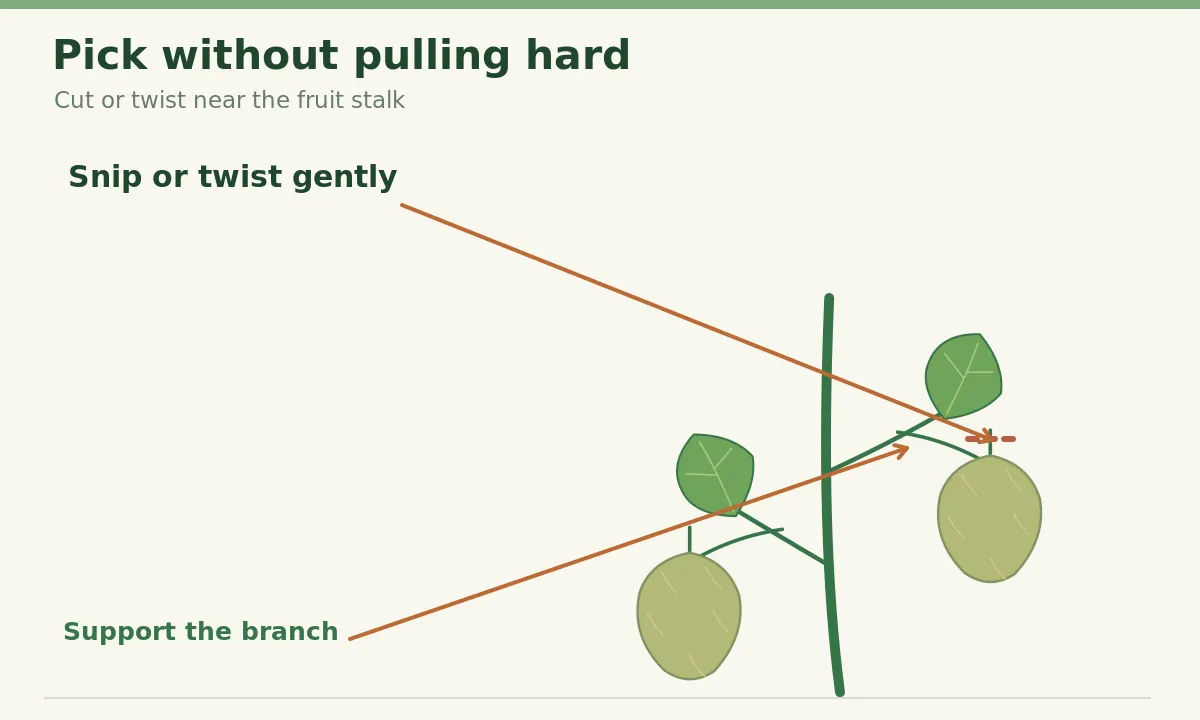
Support the stem or branch with one hand and twist a ready fruit gently with the other. South Dakota State Extension says ripe fruits often release readily; clean snips are an alternative if the stalk does not let go. Do not yank a tight green lantern until a flowering shoot breaks. Place the harvest in a clean container rather than dropping it onto stones or stacking heavy loads on tender fruit. If the husk is already split, be especially cautious about bruising exposed flesh. A tomatillo plant can continue setting fruit, making repeat gentle harvests worthwhile.
Check Fallen Fruit Without Assuming It Is Ripe
A dropped tomatillo may have been knocked off by wind, animal activity or simple abscission. Gather sound fruit promptly from clean ground and inspect the husk and fruit for bruising, insect entry or decay. South Dakota State Extension observes that some fallen fruit can continue ripening after separation. However, that is not a promise that every undersized, moldy or frost-damaged fruit will become good. Keep questionable fruit apart from clean stored harvest. Note that a fallen fruit’s husk can be dry due to exposure even if its flesh has already deteriorated.
Harvest Before Damaging Freezes
Tomatillos are warm-season plants and fruit can be injured by freezing. South Dakota State Extension advises bringing in fruit before a freeze, whether all fruit is fully mature or not. A north-temperate early-fall frost date is not meaningful everywhere; local forecasts and growing environment determine urgency. If cold is imminent, collect sound usable fruit and separate nearly mature specimens from tiny immature ones. Do not assume a hardiness-zone label predicts the daily frost forecast. In a frost-free region, the decision is more often driven by individual fruit quality, pests and the plant’s production pattern.
Keep Husks During Short-Term Handling
The dry wrapper helps protect the fruit from bumps and makes it easy to separate questionable specimens. South Dakota State Extension recommends leaving husks on until use; the fruit underneath may feel sticky once the wrapper is removed. Do not wash every tomatillo and pack it wet into an unventilated container immediately after harvest. Storage recommendations differ with cultivar, harvest maturity and institutional guidance, especially about very cold temperatures, so follow a well-supported method matched to your conditions rather than promising one universal refrigerator duration. Remove the husk and rinse the fruit before cooking.

Avoid Confusing Tomatillo Ripeness With Tomato Ripeness
Tomatillos do not necessarily turn red or become very soft when they are ready, unlike many garden tomatoes. The papery husk and cultivar-specific color provide a separate maturity framework. The most common mistakes are picking a hollow early lantern, leaving a green cultivar on the plant until it is yellow and soft, twisting violently, and ignoring split damaged husks. A final comparison shows an empty early husk, a full firm harvestable tomatillo and a soft overripe example. Use several observations and keep any damaged fruit out of the fresh batch.
Related Guides
- How to Cage Tomatillo Plants Without Crushing Their Papery Husks
- How to Save Tomatillo Seeds From Ripe Husked Fruit Without Pulp
How We Research and Verify Plant Advice
Sources checked on 2026-10-26: extension.sdstate.edu; gardening.usask.ca; ucanr.edu. We reviewed each institution’s plant identification, correct growth stage and relevant cultural recommendations before adapting them into an independently written step-by-step guide. Where sources are region-specific, their calendar details are not applied universally. Pictures use simplified teaching shapes and should be compared with living specimens; they are not a substitute for laboratory disease diagnosis or local climate guidance. The relevant advice is paraphrased rather than reproduced.
Safety and Independent Editorial Disclosure
This independently prepared educational article does not claim sponsorship or affiliate approval. Our category reading links are informational, not product endorsements. See the VegWin affiliate disclosure. Clean sharp tools before cutting plants, protect hands from thorns and blades, and keep cut plant material away from children and pets where appropriate. Use only locally registered plant treatments labeled for the actual crop, and observe the product label. Do not rely on unsupervised home remedies or unverified harvest-safety promises.
Check whether the fruit fully fills the husk and feels firm; a papery or splitting husk is another clue.
No. Green varieties are often best picked before yellowing; other cultivars mature purple or yellow.
No. Twist gently while supporting the stem, or use clean snips.
No. Inspect the size, husk, firmness and signs of damage.
No. It can indicate full size, but inspect the fruit for rot, bruising or contamination.