
How to Save Marigold Seeds From Fully Dry Flower Heads for Next Year starts with recognizing the right plant parts, not with rushing to cut or treat. An image showing those parts can keep a simple gardening job from becoming a costly mistake. This guide focuses on one distinct task and explains what to examine, which action to take, and when to delay. Conditions vary by cultivar, season and region, so always compare the instructions with the plant in front of you. The university and horticultural sources linked below inform the specific steps; they are not evidence that every garden will respond on the same schedule. Follow the diagrams together with the text, and stop if the living plant does not match the identification described.
Identify Tagetes Marigolds Before Collecting Seed
Garden marigolds commonly sold as French or African marigolds are Tagetes, recognizable by their bright yellow, orange or bronze flower heads and often deeply divided aromatic leaves. This guide addresses their dried flower heads, not calendula, which is sometimes called pot marigold but has a different seed form. Retain the original plant label if you know the cultivar. Plants from saved hybrid or cross-pollinated seed can differ from the parent in height, flower form and color. Illinois Extension specifically warns that hybrid flowers may not come true from collected seed. Save seeds when you want to experiment or maintain a stable population, not when you require guaranteed identical blooms.
Wait Until the Flower Head Is Brown and Papery
A showy orange bloom is not yet a ripe seed supply. Leave selected flowers on the plant after their petals fade, watching the base and surrounding bracts turn brown and dry. Illinois Extension recommends collecting when the flower head is completely dry, brown and shriveled, before seeds fall. Weather matters: a flower that looks dark because of rainfall can still be wet inside. Choose a dry day after surfaces have dried. Avoid taking badly moldy, rotten or diseased heads into storage; a clean mature head is a much safer starting point than any wet clump that you hope will recover on a shelf.
Locate the Slender Seeds Beneath the Old Petals
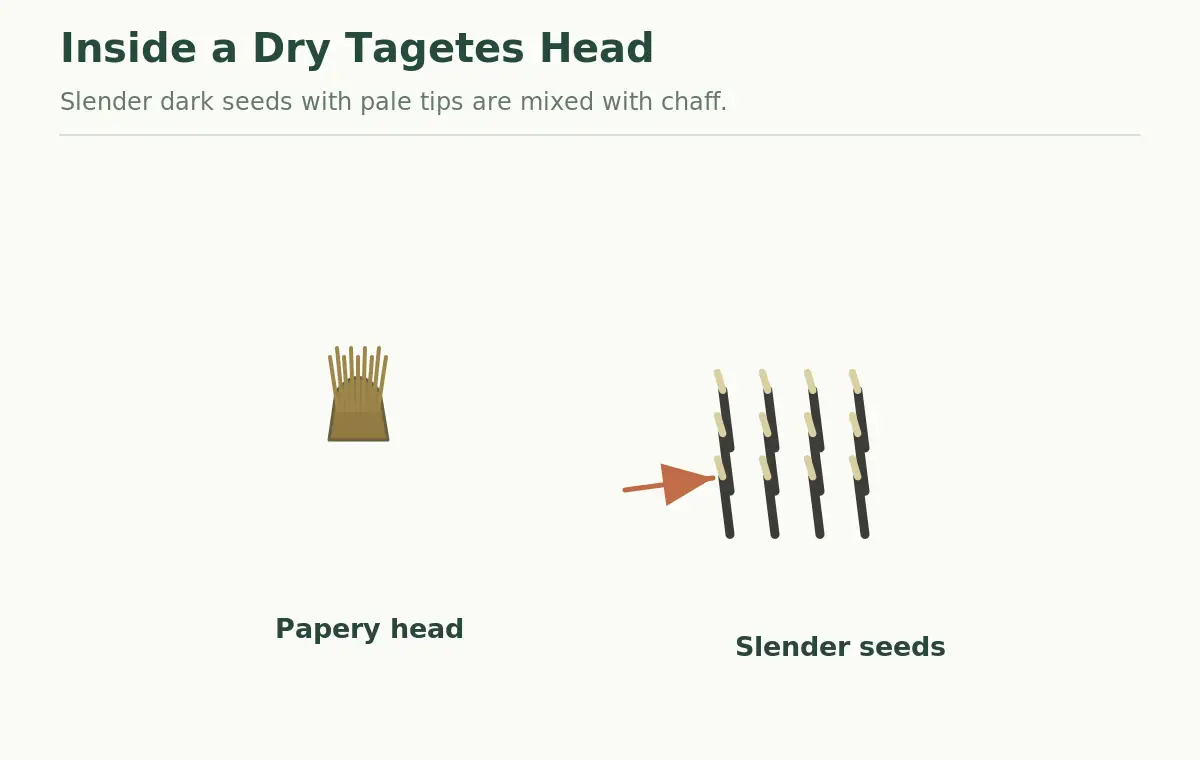
Hold a dry Tagetes head between your fingers. The seed structures are slender, dark at one end and pale or straw-colored at the other, typically grouped where the flower’s base has dried. Pull the papery remnants apart over a clean tray rather than shaking them into the wind. Some narrow dark objects may be immature or broken; select firm, well-formed seeds where possible. Do not confuse detached golden petals and crumbling brown bracts with the main seed pieces. A close-up diagram can make the difference visible without expecting beginners to interpret a loose pile of plant fragments.
Clip Ripe Heads Into a Breathable Paper Bag
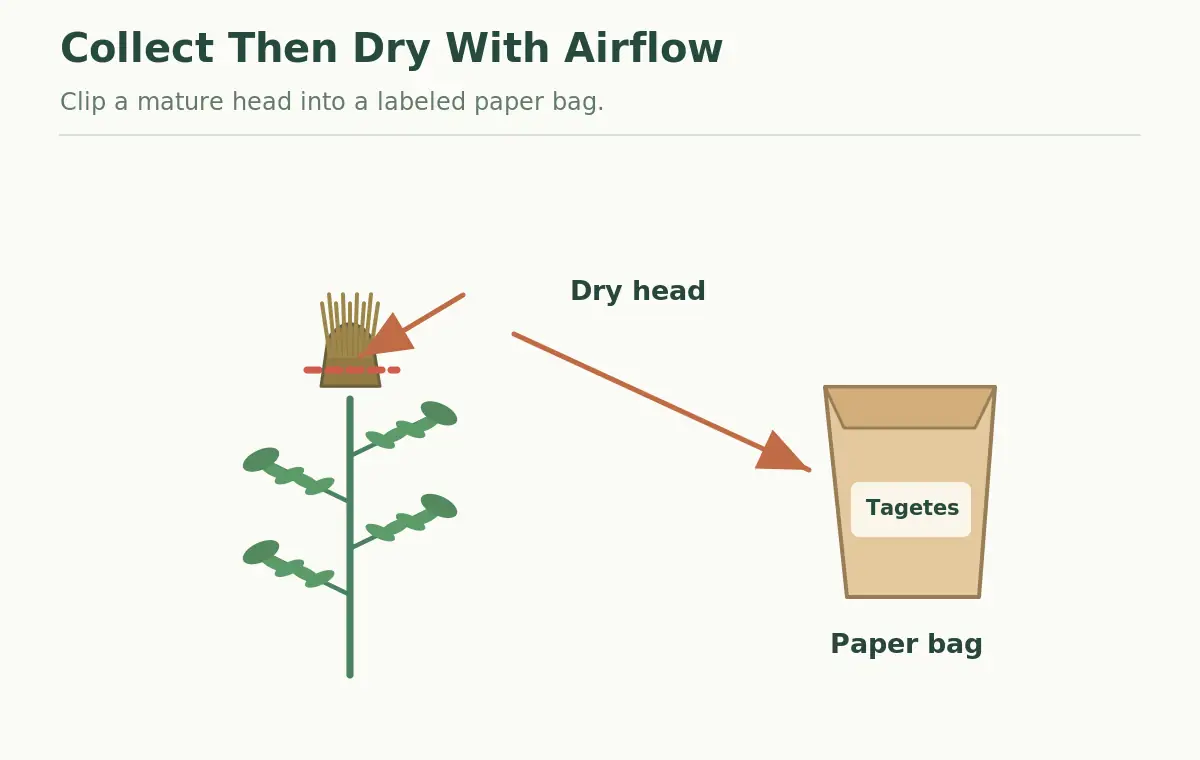
Use clean scissors to clip mature heads, keeping varieties separate if you care about identification. Put only a modest quantity in a labeled paper bag or spread heads over a shallow tray protected from rain and drafts. Paper allows residual moisture to escape better than sealing freshly harvested heads in plastic. RHS guidance supports collecting ripe seeds on dry days and allowing seed heads to dry further before extraction. Write the plant name, cultivar if known, and collection date while you still remember the source. If you collect heads from several plants, mixing them may preserve more visible variation, but do not promise identical flower colors next year.
Finish Drying Before You Seal Any Container
Move the seed heads to a dry, airy, shaded indoor location and inspect them periodically. The goal is dry plant material that separates easily, not artificial heat or direct scorching sun. If the bag feels damp, the heads clump together or you smell mold, spread out the material and discard affected parts. There is no fixed drying duration that fits every climate and container; humidity and head size change the process. Wait until the seeds and surrounding debris feel thoroughly dry before cleaning and packaging. A tightly closed jar is for already-dried seed, not for completing the drying stage.
Separate Seeds Gently From Petals and Chaff
Over a white plate or shallow tray, hold one dried head by its base and pull or crumble away the old petals and bracts. Collect the firm narrow seeds and brush away coarse chaff with clean fingers. Work with one batch at a time so a second cultivar is not mixed in accidentally. RHS advises removing chaff because retained organic debris can hold moisture and increase the risk of trouble in storage. This is not a reason to wash every dry seed; unnecessary wetting means you would need to dry the material again. Aim for a clean, dry collection rather than perfectly polished seeds.
Label the Seed Lot and Keep It Cool and Dry
Store the cleaned seeds in a labeled paper envelope or another dry container suitable for your storage environment. Write Tagetes, the cultivar or parent plant if known, the year and a note about any uncertainty. Keep the packet away from direct sunshine, condensation and hot appliances. Illinois Extension recommends cool, dry, dark storage and also notes that many saved flower seeds are most dependable when used the next spring. An airtight glass jar can protect well-dried seed in a consistently dry place, but sealing damp seed invites mold. Check packets occasionally for condensation or musty odors rather than assuming the first packaging choice guarantees viability.
Expect Variation From Hybrids and Cross-Pollination
Saving viable seed does not ensure that the resulting flowers will match the plant that grew them. Breeding background and pollination can alter next-generation appearance, particularly for commercial hybrids. The statement on a seed packet that a plant is F1 or hybrid is a signal to expect variation in saved offspring. Even an open-pollinated plant may cross with a compatible neighboring Tagetes type. Keep separate labels for different sources and treat surprise colors as part of a trial, not evidence that the seeds were incorrectly collected. If preserving an exact ornamental display is important, buy fresh seed of the named cultivar instead of relying on saved seed.
Check Germination With a Small Trial Before Sowing
Before relying on an older seed lot for a full bed, place a small counted sample under suitable germination conditions and see how many develop normally. Use the packet’s sowing instructions and keep the medium damp rather than sodden. The test is especially useful if storage conditions fluctuated or the packet is more than one season old. Record the result with the label, and plan extra sowing only if germination is clearly lower. Do not mix a test sample with your main saved seeds, and do not assume a single sprouted seed proves the entire packet is vigorous. A small trial protects garden space without pretending a universal shelf life.

Avoid the Most Common Wet-Seed Mistakes
The frequent failures in marigold seed saving are collecting heads while they are still colorful and fleshy, leaving damp debris in a closed container, and forgetting which seed belongs to which plant. Correct these by waiting for an unmistakably papery brown head, using breathable drying space, cleaning before packing and labeling promptly. Also remember that a marigold flower is a composite of many small florets: one mature head can yield numerous long slender seed units rather than one round seed. Dispose of visibly moldy material rather than trying to rescue it for an important sowing. These simple distinctions are more useful than a complicated gadget-based process.
Compare the Key On-Plant Decisions
| What you see | Action | Why it matters |
|---|---|---|
| Fresh colored flower | Keep on plant | Seed may not be ripe |
| Papery brown dry head | Collect on a dry day | Likely mature seed supply |
| Wet or moldy head | Reject for storage | Moisture threatens seed quality |
Related Guides
- How to Save Marigold Seeds from Fully Dry Tagetes Flower Heads
- How to Save French Marigold Seeds From Fully Dry Flower Heads
- How to Save Calendula Seeds After the Flower Heads Turn Brown
- How to Save Nasturtium Seeds After Pods Turn Tan and Dry
- How to Save Gomphrena Seeds From Dry Globe Amaranth Heads
How We Research and Verify These Steps
Sources checked on 2026-10-26: University or horticultural source 1; University or horticultural source 2. We compared those original recommendations with the specific crop, growth stage and real safety limitation before writing this guide. Site illustrations simplify the relevant botanical details, so always confirm the actual specimen and apply regional Extension advice when conditions differ. No pesticide or planting claim here should be taken as a replacement for a local label or growing guide.
Safety and Independent Editorial Disclosure
This article is independent educational gardening content, not paid sponsorship, and its internal links do not imply a vendor partnership. See the VegWin affiliate disclosure. Use clean tools, prevent injury to yourself and the plant, and wash food crops with clean water. Keep poisonous or irritating plant material out of reach of children and pets. For possible insecticide uses, follow current local registration and label directions; this guide does not provide treatment rates or off-label recipes.
Many Tagetes marigolds set collectable seed, but hybrid offspring may not match the parent.
It is brown, papery and fully dried rather than a fresh colorful or rain-soaked blossom.
Tagetes seeds are narrow, often dark at one end with a pale, straw-colored tip.
No. Let the heads finish drying with airflow before putting clean dry seeds into storage.
No. Hybrid ancestry and cross-pollination can produce different flower colors or plant forms.