
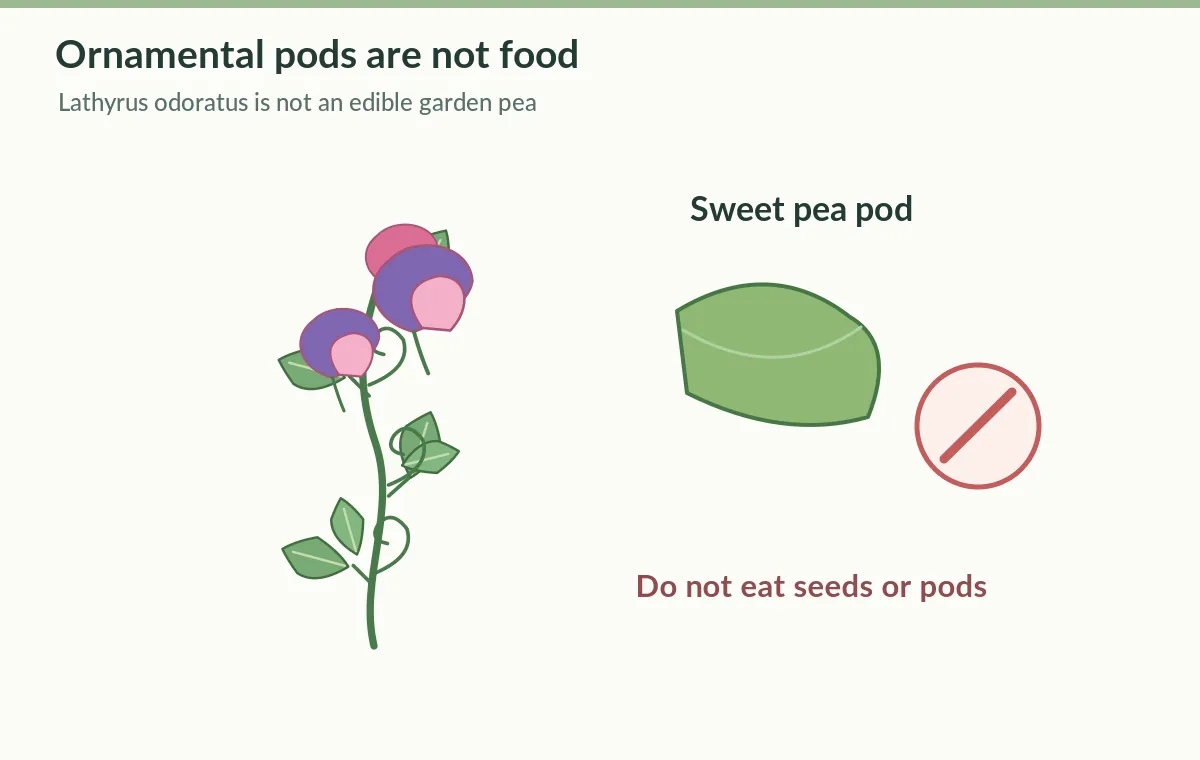
Annual sweet peas, Lathyrus odoratus, produce fragrant, pea-shaped flowers on slender climbing stems. Their seeds can be started in containers or sown outdoors when the season is suitable, but strong plants need room for roots, bright light, cool growing weather and early support. Ornamental sweet peas are not edible garden peas. Their pods and seeds must not be eaten. The method below focuses on growing flowering sweet peas without leaving crowded seedlings languishing in warm indoor air or damaging their roots at transplanting.
Confirm the Packet Says Lathyrus odoratus
First read the botanical name and growth habit on the seed packet. Flowering sweet peas are Lathyrus odoratus, not vegetable peas, Pisum sativum. Climbing selections make twining tendrils that grasp a mesh or twig support; some compact kinds remain bushier. The flowers are unmistakably pea-like, with a broad upper standard petal and smaller wing petals, and may be pink, violet, blue, white or multicolored. Flowering performance and height vary by cultivar. Keep the seed packet away from children and pets, and label trays clearly so poisonous ornamental seedpods cannot be confused with edible pea harvests.
Choose the Sowing Window for Your Actual Climate
RHS guidance allows annual sweet peas to be started in autumn or late winter to spring, with the best choice depending on winter severity and shelter. Autumn-sown seedlings require cool, protected conditions and are not a blanket recommendation for places with severe freezing weather. In colder regions, start under protection in late winter or early spring and plant outdoors when hard frost risk has passed. In regions with very warm springs, flower production may decline as heat arrives. Match sowing to a sufficiently long stretch of cool growing conditions, not a USDA hardiness zone number used as a rigid planting date.
Give Each Seedling a Deep Root Run
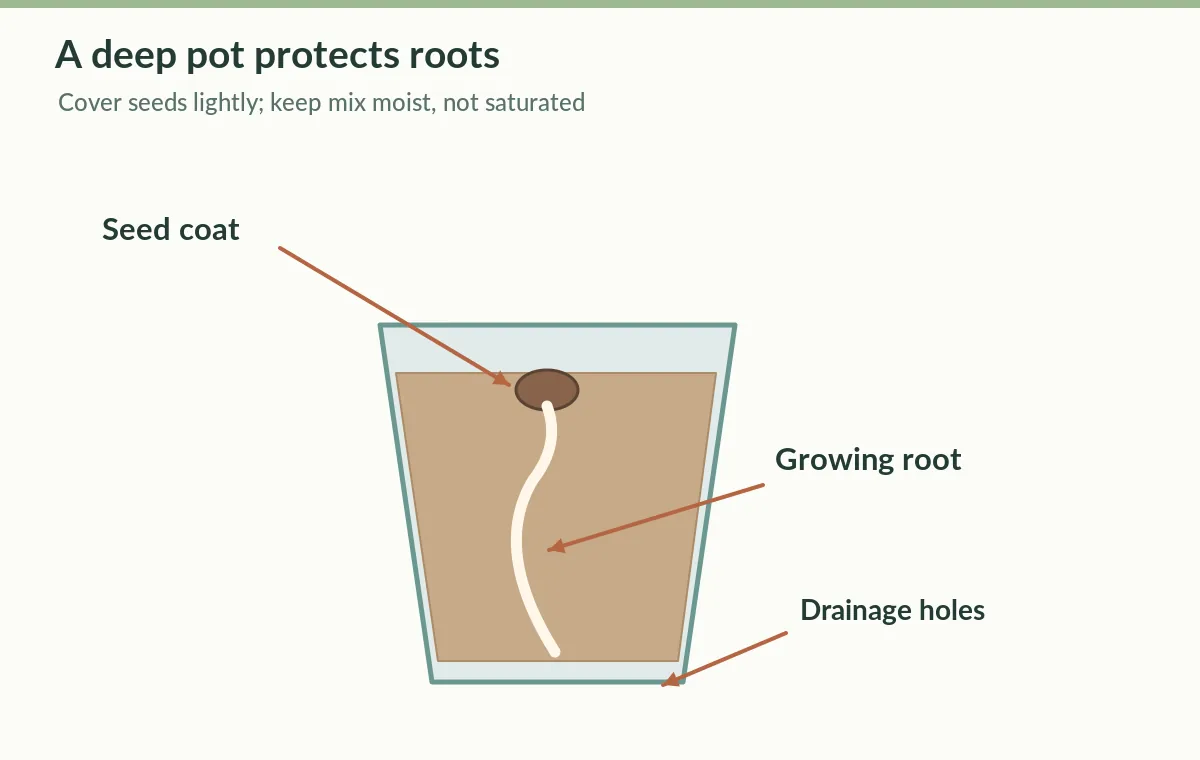
Sweet peas form substantial early roots and resent repeated root disturbance. Use a clean, deep seed pot or a suitable root trainer with a freely draining seed-starting mix. Plant in a moist but not waterlogged medium. RHS describes covering seed with about one centimeter of mix in its simple seed guide; use the packet recommendation if your variety provides one. Seed coats can be firm, but filing or nicking is not mandatory and careless scarification can injure the embryo. Label the sowing date and variety, then place the container where temperatures and light fit the germination instructions.
Keep the Medium Damp Without Making It Airless
Water after sowing to settle the medium around the seed, and let excess water drain completely. Check by lifting the pot and touching the upper mix rather than pouring more water on a fixed daily schedule. Saturated compost can deprive emerging roots of oxygen and promote rotting seed. Conversely, allowing the whole pot to dry out sharply can interrupt germination. A light temporary cover may reduce evaporation during germination, but remove it once shoots appear and provide ventilation. Treat mold, collapsing stems and sour-smelling mix as warnings that conditions are too wet or stagnant.
Move Sprouted Seedlings Into Bright Cool Light
As soon as green shoots emerge, provide strong light and relatively cool conditions. Weak, stretched stems often indicate inadequate light combined with indoor warmth. If starting near a window, rotate pots and move them away from hot radiators; supplemental lighting can be helpful where daylight is weak. Ventilate protected seedlings while avoiding freezing and desiccating winds. Do not fertilize heavily to force rapid height. A compact plant with an established root system and multiple healthy leaves is more ready for garden life than a tall pale seedling grown rapidly in a heated room.
Introduce Seedlings Gradually to Outdoor Conditions
Seedlings moved straight from protected indoor air to bright sun and wind can suffer leaf scorch, wilting or broken stems. Harden them off by providing a gradually longer period of suitable outdoor exposure, with protection when nights are too cold for the growing stage. Keep the root ball lightly moist throughout. Choose the final position before roots fill the pot into a tangled mass. Some protected autumn-sown plants can go outdoors earlier than spring-sown plants in mild areas, but local frost and soil conditions determine what is sensible; a calendar from another country is not a reliable final authority.
Install the Trellis Before Tender Tendrils Need It
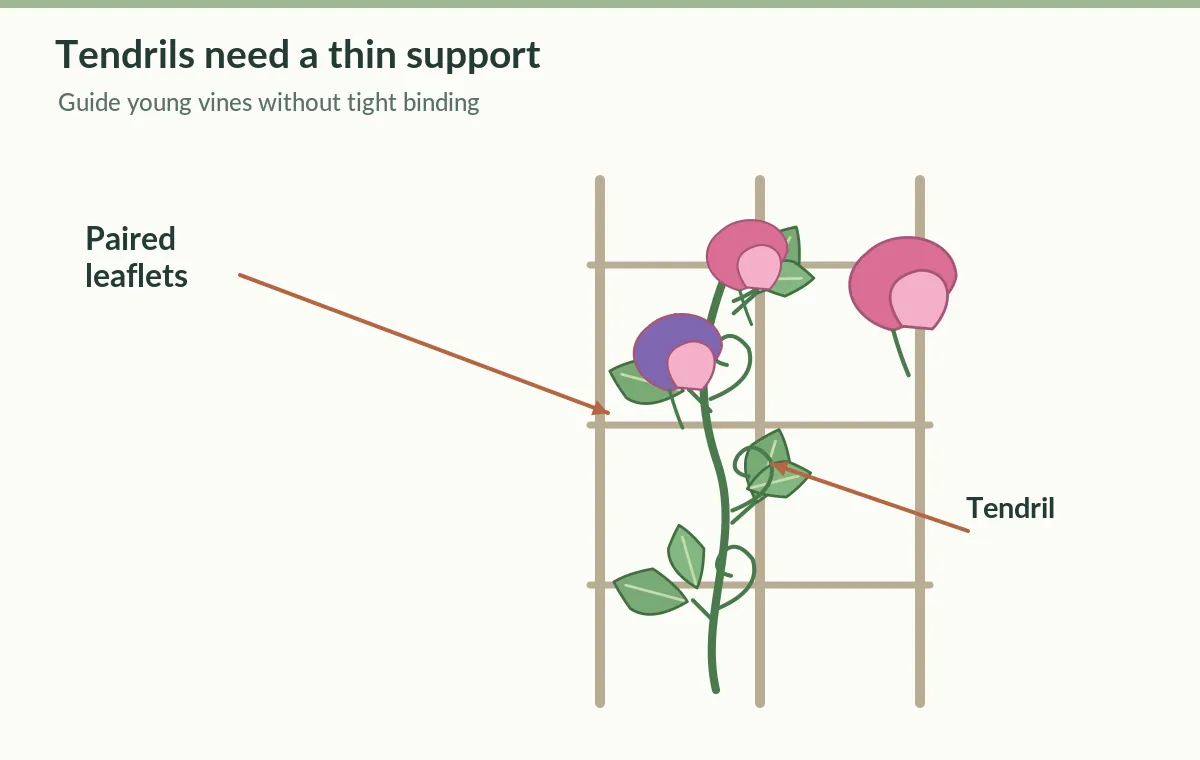
Put an appropriate trellis, netting or twiggy framework in place before planting out climbing sweet peas. The leaves have two main leaflets, while the terminal tendril curls around thin supports; a smooth, thick post may not offer a good grip on its own. Place seedlings where their young stems can reach the support without stretching across a windy gap. If a tendril has not yet attached, guide the stem loosely rather than binding a soft tip tightly. Recheck attachments after storms because unsupported young shoots can kink or snap before they become established.
Plant Out Without Burying or Tearing Roots
Select a sunny position with well-drained yet moisture-retentive soil. Dig a planting hole large enough for the intact pot root ball. Slide or tear away containers carefully so the long roots remain as undisturbed as possible, and set the seedling at essentially its existing growing depth. Firm soil gently around the root ball and water to remove large air pockets. RHS plant information commonly suggests roughly eight to twelve inches between sweet pea plants, but consult the cultivar and support system. Leave space for air movement, watering access and picking flowers without crushing stems.
Use Pinching Only When Seedlings Are Strong Enough
RHS recommends pinching the shoot tip of young spring-sown sweet peas when they are about three to four inches tall to encourage side branches. Use clean fingers or snips on a healthy seedling with enough leaves to support regrowth. Do not strip the entire top of a weak, recently transplanted plant simply because it reached a number on a ruler. Autumn-started plants may branch on their own. Pinching can affect the timing and shape of growth, so follow the habit of your variety; dwarf selections may require less intervention than tall cut-flower climbers.
Pick Flowers to Delay Seedpod Formation
Harvesting stems of open flowers is useful for a vase and encourages more flower production. Remove faded blooms before many pods develop, especially on annual sweet peas, because producing seed directs plant resources away from new flowers. Cut the flower stem without slicing through the main climbing vine. Keep the plants evenly moist during active growth, particularly in containers that dry quickly. Do not mistake an ornamental pod for food while pruning or picking: sweet pea seeds and pods are potentially harmful when eaten. Dispose of them securely if children or curious animals use the space. For the basics, see our guide: When to Sow Sweet Pea Flower Seeds for Fragrant Cool-weather Blooms.
Troubleshoot Poor Flowers and Tall Thin Plants
If vines look tall but carry few blooms, assess light, heat, excessive nitrogen and whether seedpods were left to mature. Sweet peas generally perform best in cooler seasons; very hot weather can sharply reduce flowers even on a well-watered plant. Check for aphids and powdery growth on leaves before assuming a fertilizer deficiency. A yellowing seedling in persistently soggy soil may need improved drainage rather than another feeding. Note whether the plant is a tall cutting cultivar or short bedding type, because growth habit changes what an acceptable plant looks like and how much support it needs.
Related Guides
- How to Train Sweet Peas on an Obelisk So Their Tendrils Can Climb
- How to Pinch Sweet Pea Seedlings Above a Leaf to Encourage Branching
How We Research and Verify Practical Advice
We compared university Cooperative Extension and established horticultural guidance for the specific plant and decision in this article, including seasonal differences, plant physiology, and limitations of each approach. Sources were reviewed on October 23, 2026. Outcomes still depend on local climate, cultivar, soils, weather, and plant condition. For an unusual symptom or legal restriction, use an appropriate local Extension resource.
Sources, Scope, and Editorial Disclosure
Sources checked: Royal Horticultural Society Lathyrus guide (sowing seasons, cool protected seedlings, climbing supports, deadheading and young-plant pinching). RHS sweet pea plant guide (Lathyrus odoratus floral form, paired leaflets, tendrils and sunny fertile site). RHS sweet pea seed guide (seed covering, plant-out timing and poisonous seedpods).
Disclosure: We do not claim brand sponsorship, commercial endorsement, or a verified affiliate relationship in this guide. Read the VegWin affiliate disclosure. Diagrams are educational and show representative anatomy; the actual plant, label, and local conditions take precedence over a simplified drawing.
No. Ornamental Lathyrus odoratus pods and seeds are not edible; do not confuse them with Pisum sativum.
Yes, in suitable mild and cool conditions; pot sowing offers more control over pests and root development.
Hard coats may slow germination, but scarification is optional and can damage the seed if done carelessly.
For healthy spring-sown climbing plants, RHS describes pinching near three to four inches tall; weaker plants should establish first.
Heat, developing seedpods, poor light or plant stress can reduce blooms; remove spent flowers and reassess the site.