
Sweet William (Dianthus barbatus) is easy to recognize in bloom: flat-topped clusters of small red, pink, white or patterned flowers rise above narrow green leaves. Its seed packets are less straightforward. Traditional strains are commonly grown as biennials, building a leafy plant first and flowering later. Other selections are sold for annual flowering, often with a different seed-starting schedule.
That distinction changes everything about timing. A packet advertised as “blooms the first year” and a conventional biennial packet should not be treated as interchangeable. Before picking a date, identify the strain, check whether the garden has a cool growing period for establishment, and use your own last and first frost estimates.
Separate biennial types from first-year bloomers
A traditional biennial spends much of its first growing season forming a low leaf rosette. It usually flowers the following year after suitable seasonal development. Some cultivated strains, however, are marketed specifically for flowering in the sowing year. This is not a contradiction; it reflects selection and growing conditions. Check the botanical name and any cultivar notes, not just the bright packet photograph. If a packet gives a precise starting window for its strain, treat that instruction as more relevant than a generic calendar for sweet William.
Plan a late-season sowing for biennial plants
In regions where winters and autumns permit establishment, a late-summer or early-fall sowing can produce sturdy young plants before cold weather. Penn State’s Dauphin County seasonal guidance includes sowing sweet William outdoors in August for next spring. That is a regional example, not a universal North American date. In short-season northern areas, starting earlier may be necessary for a rooted rosette; in hot southern areas, young plants may struggle in peak summer heat. Select a window that allows growth without prolonged waterlogging or heat stress.
Start annual-flowering selections as the packet directs
Annual-flowering sweet William may be started under lights for later transplanting. Penn State lists annual Dianthus barbatus among annual seed crops, while Minnesota Extension groups dianthus with seeds commonly started indoors. These references are general; a particular named series may need a different lead time. Work backward from when your outdoor bed will safely support transplants. Count only useful weeks of bright, controlled indoor growth; starting too early can produce cramped roots and lanky shoots before outdoor conditions are suitable. If you want the full process, read how to sow sweet alyssum seeds without burying them too deep.

Choose a seed tray that drains cleanly
Use a sterile or clean seed-starting mix in a tray with drainage holes. Moisten it evenly before sowing and follow the packet’s guidance for seed covering, since seed size and germination instructions vary. Seedlings need steady moisture but not a constantly saturated tray. Clear humidity covers can be useful briefly, but remove or vent them after emergence to reduce stagnant conditions. Good light close above emerging plants helps keep stems compact; a dim windowsill may not be enough on short winter days.
Move seedlings into light and sensible spacing
Once germinated, give seedlings enough light and air movement to grow stocky leaves rather than long pale stems. Thin crowded cells instead of letting neighbors strangle each other. Handle plants by a leaf rather than pinching the delicate stem when moving them. If roots circle densely before it is safe to transplant, do not merely add fertilizer and hope; pot up carefully or adjust the schedule next time. Avoid transplanting straight from a protected room into cold wind or hot afternoon sun.
Harden plants off before their permanent bed
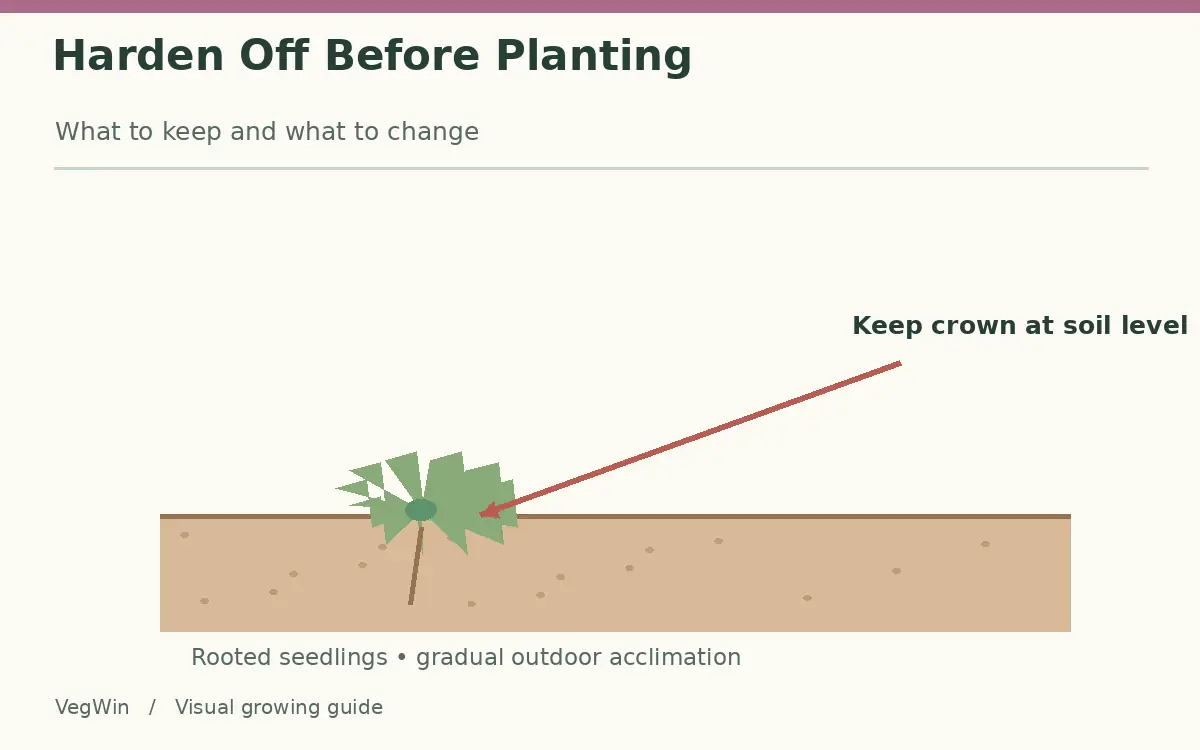
Acclimate indoor-grown seedlings gradually to outdoor light, wind and temperature. Begin in a sheltered position and increase exposure over several days as weather allows. A single unexpectedly cold night or hot sunny afternoon can undo healthy weeks in a tray. Check the plant’s cold tolerance and your local conditions rather than assuming every sweet William behaves like a fully dormant established perennial. Keep roots moist during the transition, but allow the surface to breathe between irrigation checks.
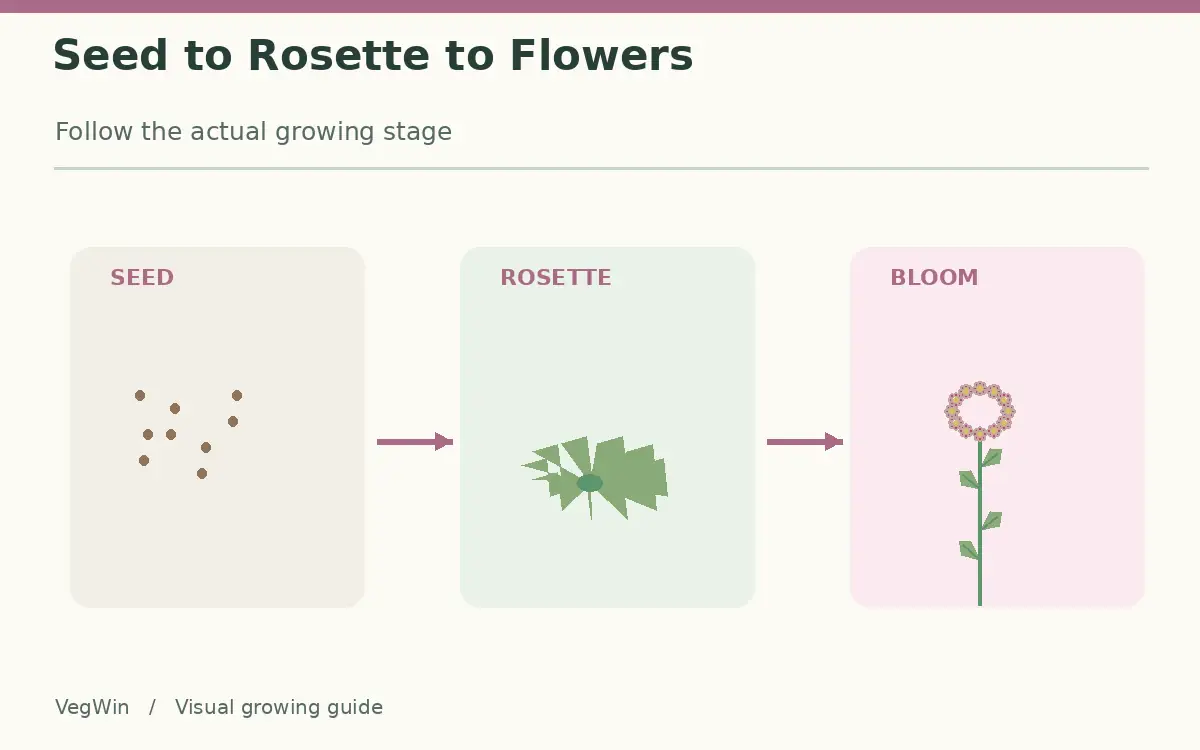
Give rosettes enough room for airflow
Sweet William develops a leafy base before flowering stems rise. Crowding rosettes against damp walls or under dense neighbor foliage can leave plants vulnerable to prolonged leaf wetness. Check the mature spacing for the cultivar you purchased and avoid a deep mulch mound over the crown. In a mixed border, consider how tall neighboring spring flowers will be at the time sweet William blooms. A sheltered bed should still receive air circulation and have soil that drains after rain. If you are starting from scratch, read When to Sow Sweet William Seeds for Strong Rosettes and Second-year Flowers.
Understand why the first year may bring no blooms
If you sowed a traditional biennial and see only a healthy leaf rosette, do not assume the seeds were defective. The plant may be behaving exactly as expected. Conversely, a first-year-flowering cultivar may fail to bloom on time if started too late, crowded under weak lights or planted into unsuitable conditions. Read the plant’s developmental stage before reaching for fertilizer. A photograph and packet label are more useful for diagnosis than simply knowing the month when the seed was planted. For the basics, see our guide: When to Start Celosia Seeds and Grow Stocky Summer Transplants.
Save a practical record for the next sowing
Write down the strain, sowing date, emergence time, planting date, and actual first bloom. Note whether plants overwintered successfully and whether flowers appeared on the first or second season. These observations produce a better local calendar than copying a single nationwide planting date. If you want continuous display, choose cultivars and planting windows deliberately instead of making every plant in the bed the same age and expecting them to bloom together.
Match the Next Step to What You See
| What you observe | Suggested decision |
|---|---|
| Traditional biennial packet | Grow a rosette first; plan for a later flowering season. |
| Packet promises first-year flowers | Follow cultivar-specific indoor starting and transplant guidance. |
| Hot late summer climate | Avoid heat-stressed seedlings; use local seasonal advice. |
| Unheated wet heavy soil | Improve drainage or use a more suitable bed. |
| Healthy rosette but no flowers | Check expected life cycle before treating it as a failure. |
How We Research This Guide
These recommendations were checked against university Cooperative Extension and botanical-garden references on October 23, 2026. The sources clarify general plant biology; your local Cooperative Extension, weather and cultivar instructions still govern regional decisions. Key references: University Extension reference (Dianthus barbatus annual sweet William appears in annual seed-sowing guidance.). Plant-care source (Regional late summer or fall direct sowing suggestion for spring sweet William flowers.). Additional Extension guidance (Dianthus seed-starting calendar and the importance of local transplant timing.). Supplemental growing guidance (Sweet William identified as annual or short-lived perennial in some seed-mixture uses.).
This is independent informational gardening content, not a claim of professional on-site diagnosis or a product endorsement. We have not confirmed any paid referral partnership for this article. Read the affiliate disclosure before using any future commercial recommendations. Photos, local species identification, and site-specific safety concerns should be checked before acting.
No. Traditional forms are often biennial, but some strains are grown to flower in their first year.
Yes where regional timing permits establishment, but use a locally appropriate season and follow the packet.
A traditional biennial may be building its first-year rosette before flowering the next season.
Vent or remove a humidity cover after emergence to reduce stagnant, overly wet conditions.
No. Use local weather, frost windows, the strain and the actual growing conditions.