
The easiest way to reduce a viburnum’s flower display is to give it a uniform haircut at the wrong time. Many familiar spring-blooming viburnums form next season’s flower buds on shoots made the previous year. Those buds may be tiny when the shrub looks unruly in late summer, but clipping the ends then can remove the spring display before it starts.
The answer is not that every viburnum needs pruning immediately after bloom. A healthy, well-placed shrub may need none. A hedge-like plant with dead wood needs targeted sanitation, while an old multi-stem shrub can benefit from slow renewal. Start by deciding whether you care most about flowers, berries, safety or size.
Identify the viburnum and its flowering habit
Viburnum is a large genus rather than one identical shrub. A doublefile viburnum, an arrowwood viburnum and a winter-flowering hybrid may bloom in different months and have different branch architecture. Read the plant tag if it still exists, photograph leaves and flower clusters, and compare the plant with local Extension or botanical-garden references. Do not use a generic “June pruning” calendar when your own shrub finished blooming earlier or later. The important observation is which growth carried the flowers and whether the plant is already forming buds for next year. For the basics, see our guide: When to Prune Spring-flowering Viburnum Without Losing Next Year’s Flowers.
For light shaping, wait until the flower show ends
Penn State Extension groups spring-blooming viburnums with shrubs best pruned soon after flowering. Once the display has faded, remove a wayward branch back to a suitable side branch or healthy outward-growing bud, rather than shaving every tip to a flat plane. This keeps a natural outline and gives new growth time to mature. On a shrub that flowers in winter or very early spring, the after-bloom window can arrive while nearby summer-flowering shrubs are still dormant. Use the plant’s actual bloom cycle, not the month on a distant garden blog. For the basics, see our guide: When to Prune Azaleas After Bloom Without Losing Next Spring’s Buds.
Choose thinning cuts instead of a green haircut
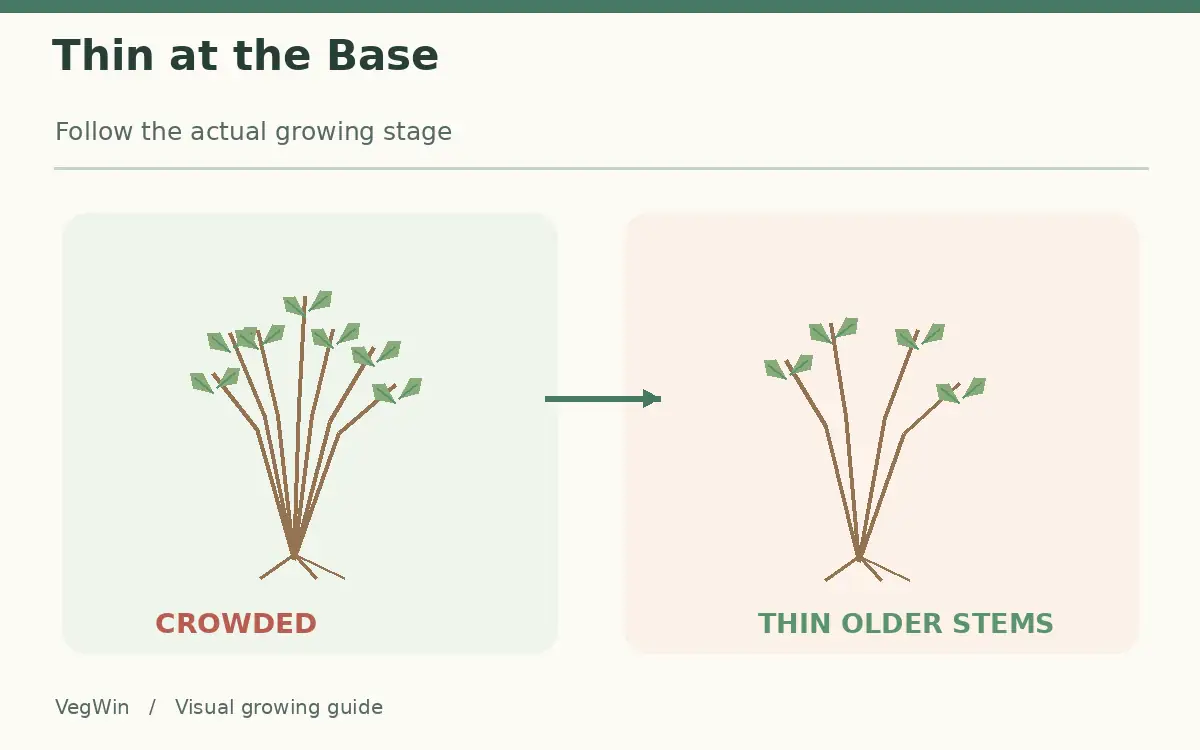
A thinning cut removes an entire unwanted stem at its origin, or a branch back to a meaningful lateral. It opens space without causing a row of short, vigorous stubs on the exterior. Begin with broken and rubbing branches, then inspect which thickest stems crowd the center. A multi-stemmed shrub may respond to the gradual removal of a limited number of old basal stems, leaving younger productive shoots standing. If the shrub is already open and blooming well, there is no prize for reaching an arbitrary number of cuts.

Distinguish routine shaping from restoration
A severely overgrown viburnum may need years rather than one afternoon. NYBG describes staged renewal of older branches; Colorado State Extension likewise explains how timing affects next year’s buds. Avoid cutting a long-neglected plant into a stump solely to match a tidy photograph. Large reductions can temporarily sacrifice flowers and change the shrub’s habit. If the shrub blocks a pathway or conceals a sight line, consider whether moving or replacing it with a smaller-maturing species is more realistic than an endless cycle of severe pruning.
Decide whether berries are part of the goal
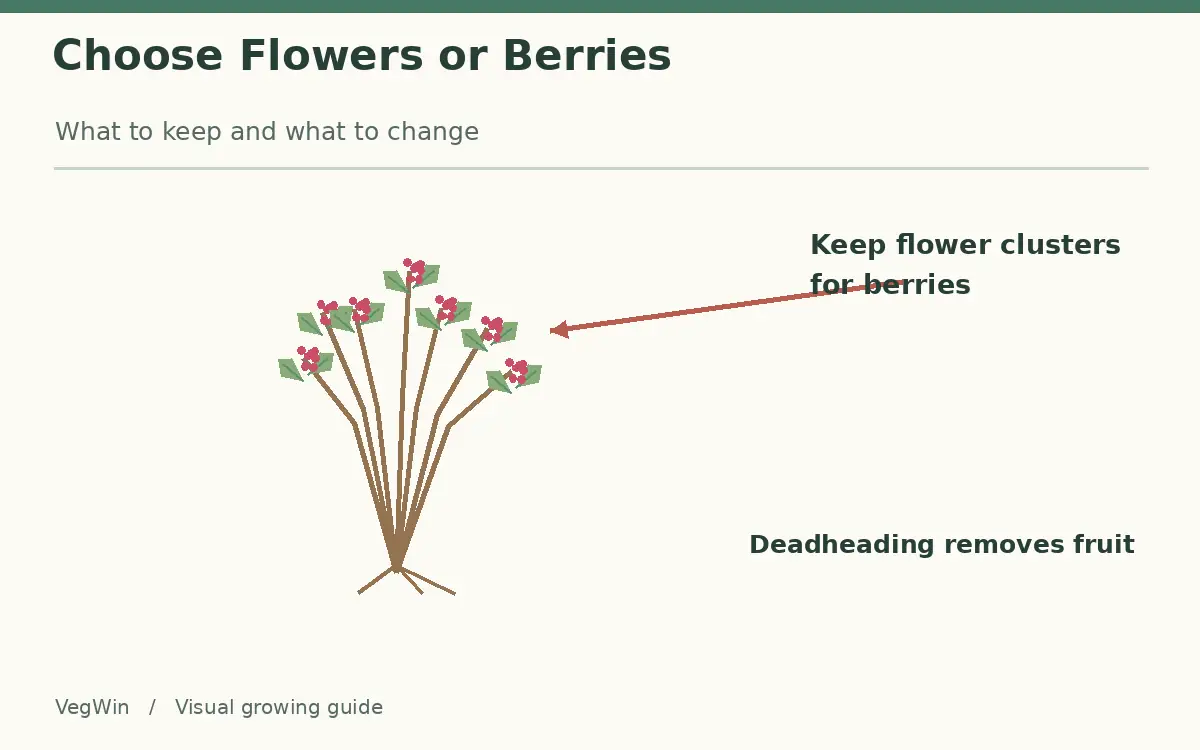
Flower clusters can later become fruit on many viburnums. Deadheading or trimming all spent flowers may remove a display of berries used by birds and appreciated by gardeners. Berry production also varies by species, cultivar and pollination compatibility. If fruit matters to you, leave most flower clusters intact and make branch-structure cuts sparingly. If your goal is only a compact spring bloom shrub, some flower loss may be acceptable. Record the tradeoff before making cuts, because removed fruiting branches cannot be replaced that season.
Make clean cuts without damaging the branch collar
Use sharp bypass pruners for small stems and an appropriate pruning saw for thicker branches. Locate the branch union and avoid a flush cut that removes the natural raised collar. Do not leave long bare stubs that will die back. For a heavy limb, support its weight and use a method that prevents bark tearing; tall or awkward work belongs to a qualified arborist. Disinfect tools when working around a suspected disease problem according to local Extension instructions. Routine pruning should not become a reason to spread material from a diseased shrub to healthy plants.
Read dead wood and sparse interiors correctly
A shaded inner branch may have few leaves yet still be alive. Flex a fine twig carefully and inspect its buds before assuming the entire branch is dead. Branches that are truly dead or dangerously broken can be removed without waiting for the ideal ornamental season. If dieback has spread across multiple limbs, stop and identify possible causes such as drought, winter injury or disease rather than assuming pruning alone will fix it. Remove only what you can positively diagnose; uncertain decline needs regional advice and a closer look.
Care for the shrub after pruning
Check moisture at root depth when weather is dry, especially if the shrub is newly planted. A thin, appropriate organic mulch over the root area reduces evaporation, but leave the trunk and basal stems exposed rather than piling mulch into a wet collar. Heavy fertilizer is not a substitute for correct pruning and can encourage growth without solving poor placement. Take before-and-after photographs from the same position. Next season you can check whether the cuts improved light, preserved flowers and maintained the natural form. For the basics, see our guide: When to Prune Red-flowering Currant Without Losing Spring Blossoms.
Use a three-question decision before each cut
Ask first: is this branch dead, damaged or crossing another? Ask second: am I trying to protect flowers or remove a structural problem? Ask third: does this cut preserve a useful young branch and the shape of the whole shrub? If you cannot state a practical benefit, leave it for another season. The simplest viburnum pruning plan often consists of a handful of well-chosen cuts immediately after flowering, not dozens of snips around the canopy.
Match the Next Step to What You See
| What you observe | Suggested decision |
|---|---|
| Healthy, lightly overgrown spring bloomer | Make selective shaping cuts just after flowers fade. |
| Old multi-stem shrub with shaded center | Remove a few oldest stems over successive seasons. |
| Shrub valued for berries | Preserve spent flower clusters and prune sparingly. |
| Dead, broken or hazardous wood | Assess and remove safely; do not wait for bloom. |
| Shrub permanently too large for its position | Consider relocation or replacement rather than severe yearly clipping. |
How We Research This Guide
These recommendations were checked against university Cooperative Extension and botanical-garden references on October 23, 2026. The sources clarify general plant biology; your local Cooperative Extension, weather and cultivar instructions still govern regional decisions. Key references: University Extension reference (Spring flowering viburnums are commonly pruned after bloom; old wood versus new wood.). Plant-care source (Viburnum shape maintenance, flower buds, fruit retention and renewal guidance.). Additional Extension guidance (Flowering shrubs set next-year buds on previous growth and benefit from selective thinning.).
This is independent informational gardening content, not a claim of professional on-site diagnosis or a product endorsement. We have not confirmed any paid referral partnership for this article. Read the affiliate disclosure before using any future commercial recommendations. Photos, local species identification, and site-specific safety concerns should be checked before acting.
Avoid routine fall shaping on spring bloomers because it may remove next year’s flower buds.
Flower timing and habit vary by species; identify your plant before assuming one schedule fits every viburnum.
Yes. Removing the flower clusters can remove the developing fruit display.
Use staged structural changes or consider a smaller replacement rather than repeated drastic topping.
No. Prefer gradual renewal of crowded shrubs so a functional framework remains.