
Dill can grow beautifully in a container, but it is often sold as a crowded nursery clump that declines after the first harvest. The key to a longer supply of feathery leaves is not stronger fertilizer or constant repotting. Dill forms a taproot, needs ample light and does not welcome frequent root disturbance. Starting it directly in its final pot, then choosing how many plants to keep, solves several common problems at once.
A kitchen garden also needs to distinguish two goals. Leaves are harvested while growth is leafy and aromatic; seeds come later from flower heads that turn tan as they mature. One container cannot be expected to remain a perpetual leaf factory after the same stems have committed to flowering. This guide helps plan both outcomes without promising to stop a normal annual herb from completing its life cycle.
Choose a container that drains and can support roots
Look for a pot with actual drainage holes and enough depth for a developing taproot. A decorative bowl with no outlet can leave roots saturated after rain or watering. Alabama Cooperative Extension gives guidance for several dill plants in a modest multi-gallon container; use that as a starting reference rather than assuming dozens of seedlings should fit in every small pot. A wider pot can support more plants only if each still has sufficient root space and light.
Fill the pot with a quality, well-drained potting mix suited to edible plants. Garden soil dug from a bed often compacts in containers and drains inconsistently. Set the pot where it will receive strong light and is reasonably sheltered from drying wind. A saucer can protect a patio, but empty standing water promptly. If you are growing for culinary use, keep the container away from pesticide drift, dirty runoff and contamination from pets.
Direct-sow seeds where the mature plants will live
Dill is easiest to establish when the seed is placed directly into the final container. University of Minnesota and Illinois Extension both emphasize that dill does not transplant particularly well because of its root system. Sow at the depth recommended by your packet or appropriate Extension instructions; Alabama guidance gives a shallow quarter-inch sowing example. Cover lightly, water carefully, and mark the variety and date.
Treat outdoor timing as a cool-season herb decision based on local conditions, not simply the USDA plant-hardiness map. In places with freezing winters, avoid outdoor sowing while soil remains unsuitable; in hot climates, the more useful planting season may be the cooler part of the year. If seed does not emerge on schedule, check whether the soil dried out, flooded or was too cold before digging into the pot and disrupting every seed.

Thin seedlings instead of continually repotting them
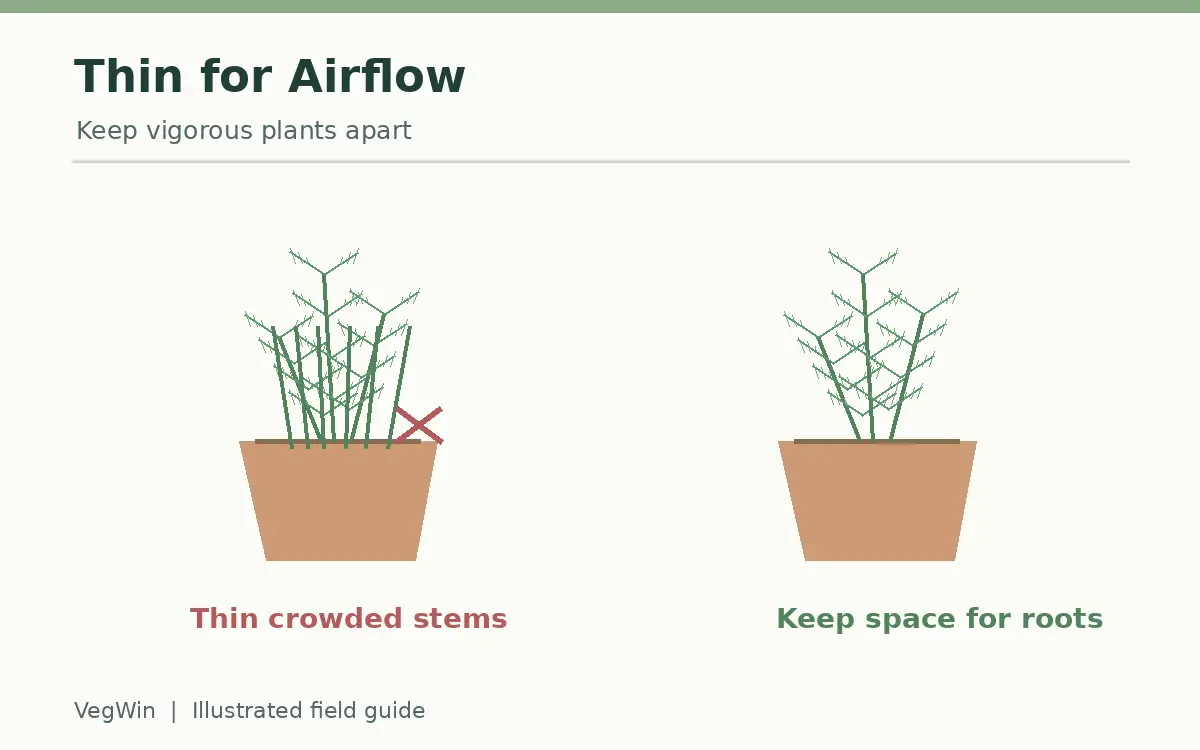
A scatter of germinated dill seeds quickly becomes a crowded mat of fine stems. That may look lush at first, but roots compete and inner leaves receive less light and airflow. Once seedlings are established, select healthy stems with space between them and snip surplus plants at soil level. Pulling large unwanted seedlings can disturb the taproots of the ones you intend to keep. Use the container size and local Extension spacing rather than a one-size-fits-all number.
Watch the retained plants after thinning. Leaves should be green and the stems able to move in light air without collapsing into one wet bundle. Do not confuse naturally delicate, fernlike dill leaves with disease. If growth is very pale and stretched, assess light; if stems soften near the soil, examine overwatering and drainage. Adding fertilizer to a shaded, saturated pot is unlikely to solve either problem.
Water the root zone without leaving the pot soggy
Containers dry faster than many garden beds, especially during windy or sunny weather. Touch the potting mix and feel moisture a short distance below the surface rather than relying on a rigid daily watering promise. Water thoroughly when needed and let excess escape the drainage holes. Consistently saturated media invite root problems, while repeated severe drying stresses a shallow young planting. Alabama Extension recommends even moisture but not waterlogged conditions.
If foliage wilts in hot afternoon sunshine, check moisture before pouring on another full watering can. Heat, root damage and excessive sun can look similar from a distance. A shaded afternoon position may help in very hot regions, but too little light also weakens growth. Move a portable pot gradually rather than exposing indoor-started or shade-grown seedlings suddenly to full midday sun.
Harvest leafy growth before the umbels mature
Use clean scissors to remove small portions of leaf-bearing stems once plants have enough healthy growth to replace what you take. The University of Minnesota notes that leafy dill can be harvested while plants are growing, before the umbrella-shaped flower heads develop fully. Do not strip a tiny young plant of all leaves merely because a recipe needs a large bunch. Several well-grown plants or successive pots provide a more reliable source than repeatedly exhausting one crowded stem.
Once dill sends up flowering stalks, the plant shifts toward reproduction. The leaves can change in texture and flavor, and there is no pruning trick that guarantees a mature annual will revert to a juvenile plant. Let one strong plant form flowers if you want seeds for cooking or future sowing, and start another container for fresh foliage. Harvest seed heads when they mature according to Extension guidance, handling them over a tray because dry seed can scatter easily. If you want the full process, read how to grow dill for fresh leaves and seed without losing the harvest.
Sow a later pot for a steadier leafy supply
Instead of moving an established plant into a huge container after bolting, plan a second sowing in a fresh pot. This spreads the work and provides younger foliage when the first planting begins flowering. Exact intervals depend on season length and the herb’s response in your climate. Repeated sowing during mild conditions can work well, but starting new pots in extreme heat may produce rapid flowering rather than a long leaf harvest.
Keep each sowing labeled with the date. Compare how long leaves remained useful, when flower stalks appeared, and how quickly the media dried. This modest record is particularly useful for balcony gardeners with changing shade, reflective walls and windy railings. Success means having fresh plants arriving at the right time, not forcing one annual dill plant to remain vegetative all year.

Diagnose poor dill growth from the pot outward
If dill is stunted, check the most basic conditions in order: drainage outlet, wet or compacted potting mix, actual hours of light, crowding and recent root disturbance. A seedling tray that was transplanted late can recover slowly because of the taproot. A pot of dozens of dense sprouts can fail to thrive despite frequent watering. Address the likely limitation before buying additives or applying a broad-spectrum spray.
Dill flowers also attract beneficial insects, so flower stalks are not necessarily a failure if the container is serving a pollinator-friendly garden. If insect damage appears, identify the visitor before treating it; some caterpillars use dill as a host plant. Harvest only clean, sound leaves and wash produce appropriately. Decide whether your next pot is for tender leaves, mature seed or wildlife interest, and manage it for that goal.
| What you notice | Practical next step |
|---|---|
| Seedlings fail to emerge | Check moisture, sowing depth and local growing conditions. |
| Pot remains wet for days | Inspect drainage holes and choose airier potting mix. |
| Dense weak stems | Thin without pulling on retained taproots. |
| Leaves needed continuously | Start another pot before the first begins flowering. |
| Tall flower stalks developing | Allow seed production or replace with a new leaf crop. |
Related Guides
- Growing Herbs by Type: Water, Harvest, and Winter Survival Guide
- How to Harvest Dill Seeds From Umbels Before They Scatter in the Garden
- How to Harvest Dill Seeds for Planting Before Umbels Shatter
How We Research and Verify These Garden Decisions
Research checked October 23, 2026. We compared specific growing advice from university Cooperative Extension and/or the Royal Horticultural Society. This article separates the biological principle from timing or planting choices that depend on cultivar, growing environment and local climate. The diagrams are simplified instructional drawings rather than measured botanical plates, and readers should use their own observations before cutting or planting.
References reviewed: extension.umn.edu; aces.edu; extension.illinois.edu. These sources support the main horticultural decisions described above; use regional Extension guidance to resolve unusual symptoms or conditions not covered by general recommendations.
Editorial disclosure: This is independent educational content. We are not claiming a verified paid partnership or affiliate recommendation for these steps. See the site affiliate disclosure for additional information.
Sometimes, but dill dislikes root disturbance. Sowing straight into the final pot is the more dependable approach.
Yes. A well-drained container and appropriate potting mix help prevent standing water around the roots.
No reliable pruning method makes an annual dill plant permanently leafy. Sow additional pots to replace aging plants.
Harvest small portions from healthy, established plants before the flower umbels mature; keep enough growth for recovery.
Check inadequate light, crowding, watering and damaged roots before adding fertilizer or assuming disease.