
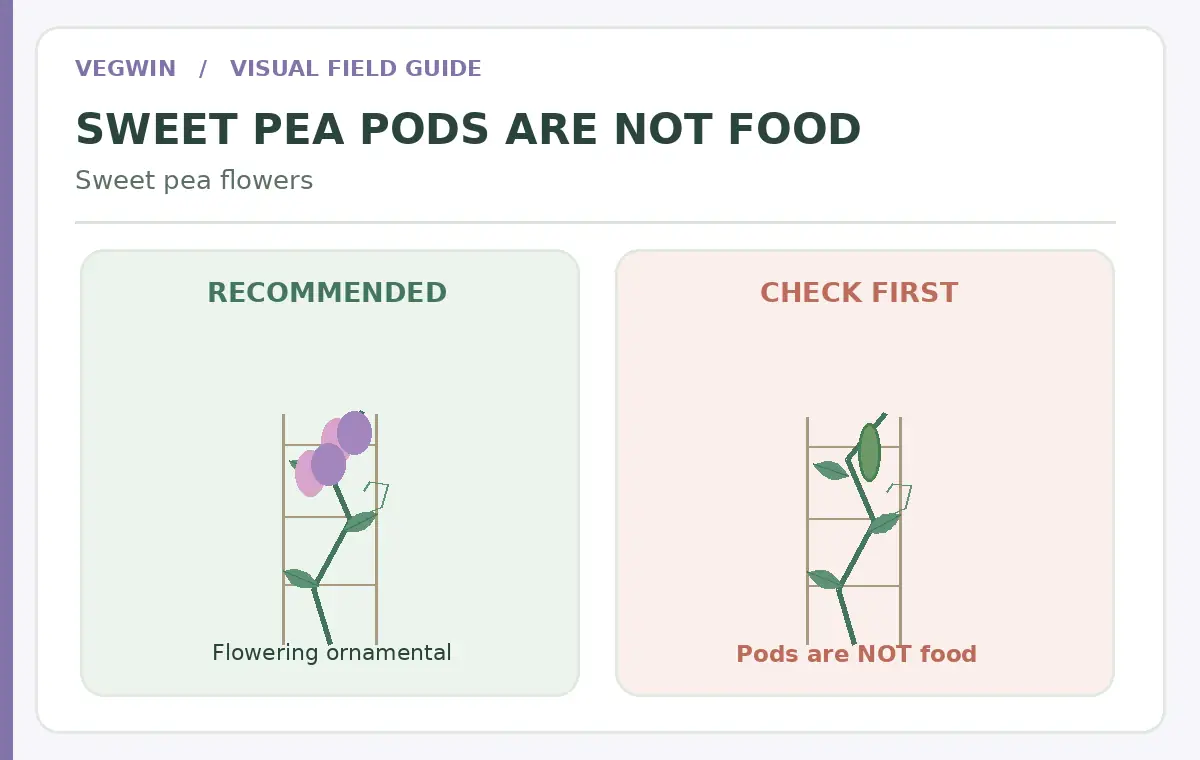
The words “sweet pea” cause a potentially serious mix-up. The fragrant flowering vine Lathyrus odoratus is an ornamental plant; its pea-like pods are not food. Edible garden peas belong to Pisum sativum. Start by checking the scientific name on the packet before discussing sowing time, trellises, harvest or children helping in the garden. A beautiful ornamental flower should never be treated as an edible crop because the pods look familiar.
Sweet peas favor cool growing conditions and often fade when weather turns hot. NC State describes them as cool-season vines, while Iowa State includes them among annuals used in the mild parts of the season. That makes local weather and the expected heat-up date more useful than a single nationwide sowing month. The goal is to give seedlings a long enough cool period to establish roots and flower before stress arrives.
Identify annual Lathyrus before planning sowing
Look for Lathyrus odoratus on the seed packet. Other Lathyrus species and perennial sweet peas can differ in fragrance, habit and reseeding behavior. Do not rely on a casual plant nickname when ordering or sharing seed. Ornamental sweet peas may climb with tendrils or stay relatively bushy depending on cultivar, but they should be labeled clearly away from an edible pea patch, especially if young gardeners harvest pods.
NC State warns that sweet peas have poisonous characteristics, and the University of Maryland explicitly distinguishes ornamental Lathyrus from edible Pisum. Store seed packets away from children and pets, and never add the pods or seeds to food. If you grow edible peas elsewhere, separate plantings and label both so an attractive pod is not mistaken for a snack. Safety begins with identification rather than a later warning hidden in fine print.
Choose cool-season timing by your local weather
For a cold-winter garden, early spring establishment is commonly practical once the planting bed can be prepared, with frost risk and seedling protection considered locally. In a mild-winter climate, autumn or winter establishment may allow flowering before sustained summer heat. Use regional Extension guidance for your climate rather than converting a USDA hardiness zone into a calendar. A cold-hardiness zone does not by itself predict spring soil conditions.
Watch daytime warmth, exposure and the expected onset of persistent heat. Plants started late in a hot spring may produce vines without the flowering period you hoped for. NC State notes that sweet peas can struggle in hot, humid summers. In a short, cool growing season, starting in pots can sometimes give a head start; in a mild area, direct sowing into a prepared bed may avoid transplant stress. The seed packet and regional research should resolve that local choice. If you want the full process, read how to start ornamental sweet peas from seed without weak seedlings.
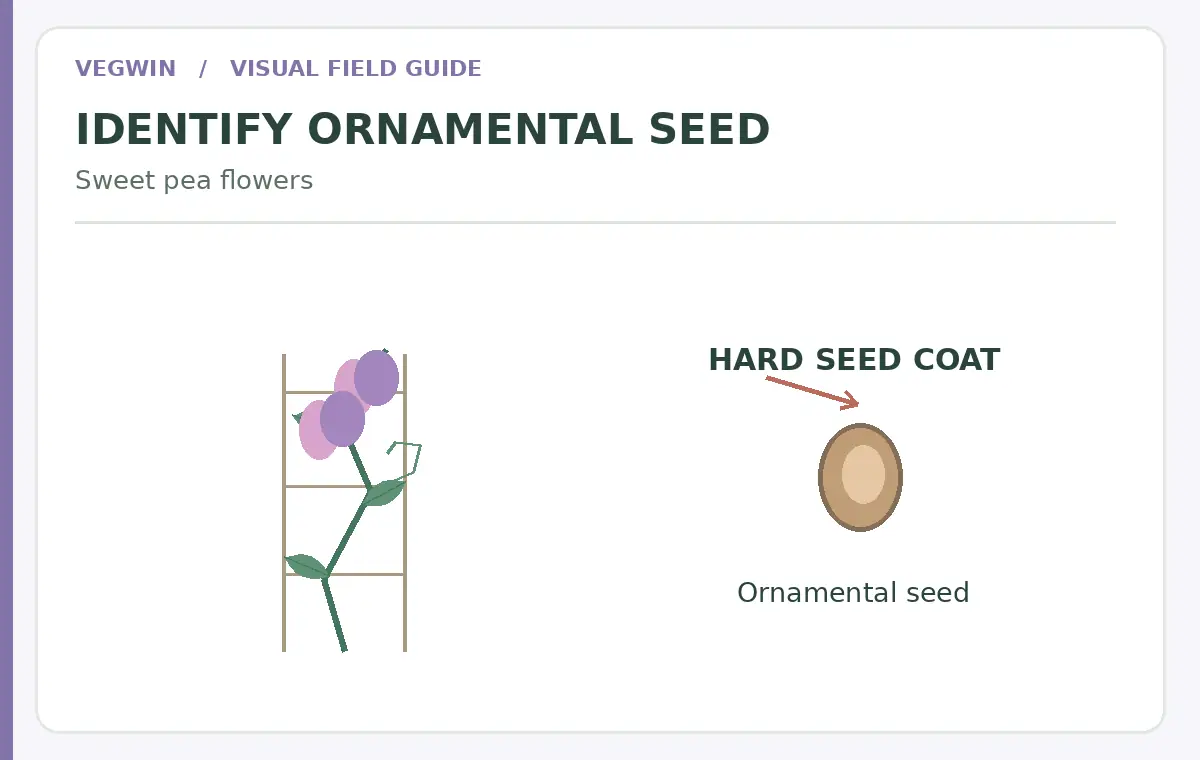
Prepare firm seeds without damaging the embryo
Sweet pea seeds have a hard coat, and Iowa State describes carefully filing or scarifying one small area to help water enter, followed by soaking as part of a recommended procedure. The goal is a modest nick in the coat, not a deep cut into the living embryo. Do not indiscriminately crush or split seeds.
Choose sound seed, discard visibly moldy specimens and work cleanly. If soaking is used according to a trusted protocol, sow promptly in prepared medium afterward rather than leaving seeds in standing water indefinitely. Before any treatment, mark each seed lot and keep ornamental seed away from edible legumes. The same household container used for food preparation should not become an unmarked storage place for poisonous ornamental seed.
Build drainage and support before vines emerge
Choose a sunny site with well-drained soil that does not stay saturated after rain. A vine-type sweet pea benefits from a secure trellis, netting or pea sticks installed before foliage becomes tangled. NC State notes that climbing varieties need support. Tie or guide new shoots gently when necessary; do not wind stems tightly around heavy string. Leave enough space to reach flowers for picking and to observe plant health.
Prepare a fine seedbed and follow the packet depth and spacing for the specific cultivar. The Iowa State direct-seeding guide emphasizes good seed contact and consistent moisture during germination. Mark the row so seedlings are not confused with early weeds. Thin overcrowded seedlings rather than leaving a thick, damp mass that reduces air circulation. A support needs to resist ordinary wind without leaning onto paths, neighboring vegetables or fragile shrubs.
Water seedlings evenly and watch heat stress
Maintain moisture while seeds germinate without turning the bed into mud. Once established, water according to root-zone observations, rainfall and pot or bed drainage. Mulch may help moderate soil moisture after emergence, but do not bury delicate seedlings under thick material. Check plants in the morning if weather changes abruptly; curled or stressed leaves require investigation, not automatic fertilizer or insecticide.
Warm spells can shorten the useful bloom season. If flowering slows, check whether temperatures are simply beyond what this cool-season annual prefers. Excessive feeding is not a substitute for appropriate planting timing. Watch for common soft-bodied pests and distorted leaves, identify the actual cause first, and use regionally appropriate Integrated Pest Management advice. No pesticide rate can be prescribed without a current label and local context.
Pick flowers and prevent accidental seed eating
As flowers develop, cut or pick stems regularly if the goal is a continuous supply of blooms. NC State notes that allowing mature pods to form can reduce flowering. Use clean tools and avoid tearing young vines from the support. Leave a few pods only if you intentionally plan to save seed, understand the variety, and can keep those pods separate from any edible harvest.
Fading flowers are a signal to adjust routine care or finish the seasonal display, not to insist on heavy pruning in unsuitable heat. If vines die back at season end, remove residues as appropriate for your garden and clean the trellis for reuse. Handle pods as ornamental plant material; do not give them to children as pretend edible peas. When sharing seed, include both the botanical name and a prominent nonedible warning. For the basics, see our guide: When to Plant Larkspur Seeds for Reliable Cool-season Flowers.
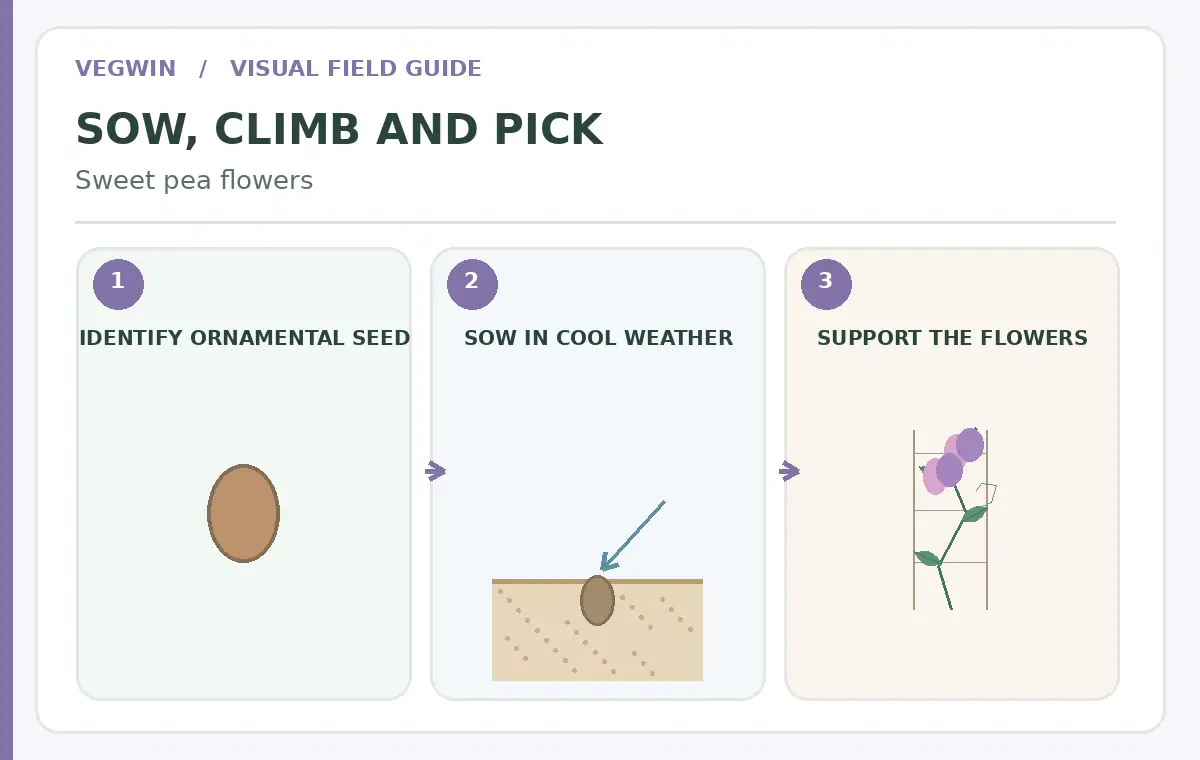
Keep a sowing log that improves next season
Record the scientific name, seed preparation, sowing day, actual first bloom and the weather pattern when flowering declined. Distinguish direct-sown and transplanted plants if testing both. Local trials provide more useful data than a rigid planting date from another region, especially in areas with warm winters or rapid transitions from frost to heat.
For the next season, adjust only one or two variables at a time: sow a little earlier under suitable conditions, choose a cooler site, or improve support before the vines climb. The central decision is not a miracle seed treatment but choosing a window when a cool-season annual can complete its flowering cycle. Keep edible vegetable peas in their own clearly labeled system.
Choose the Next Action From Your Observations
| What you observe | What it may mean | Your reasonable next step |
|---|---|---|
| Seed packet says Lathyrus odoratus | Ornamental and nonedible | Label and separate from food crops |
| Cool early-season weather expected | Good planting window | Prepare seedbed and support |
| Persistent summer heat approaching | Bloom window may be short | Consider another season or locally adapted annual |
| Pods forming after bloom | Seed set competing with flowers | Pick blooms or save labeled seed intentionally |
Related Guides
- How to Train Sweet Peas on an Obelisk So Their Tendrils Can Climb
- How to Pinch Sweet Pea Seedlings Above a Leaf to Encourage Branching
How We Research and Check These Recommendations
This article was researched against the original institutional gardening resources linked below on October 22, 2026. We identified the growing stage or plant structure relevant to each decision, distinguished regional examples from universal biological needs, and checked safety where edible and ornamental species might be confused. This does not amount to an independent full-text audit of every older published page. These simplified illustrations explain an action and are not diagnostic photographs. Consult local Extension recommendations and the actual label for any regulated garden product.
Sources reviewed October 22, 2026: Institutional source 1 — NC State describes sweet pea as a fragrant cool-season ornamental climber needing support and warns it is poisonous.; Institutional source 2 — Iowa State covers scarification and soaking of sweet pea seed and preparation of suitable seedbeds.; Institutional source 3 — Iowa State includes Lathyrus odoratus among flowering annuals best suited to cool shoulder-season conditions.; Institutional source 4 — University of Maryland explains the difference between edible Pisum peas and ornamental, nonedible Lathyrus sweet peas.. We have not asserted any approved affiliate partnership or paid endorsement. Please read the VegWin affiliate disclosure for the site policy.
No. Lathyrus odoratus is an ornamental flowering vine; Pisum sativum is the edible garden pea.
In suitable mild-winter climates, fall establishment can work, but regional timing and weather are essential.
A referenced scarification and soaking procedure can help hard-coated seeds; check the supplier instructions for your lot.
Climbing cultivars do. Bushier selections may need less support, so follow the variety description.
No. Ornamental Lathyrus seeds and pods must not be eaten; keep them away from food harvests.