
The common name chamomile refers to several plants. German chamomile, Matricaria chamomilla (also known as M. recutita), is generally a flowering annual with upright fine branching stems, filigree-like leaves and small composite flower heads. Roman chamomile, Chamaemelum nobile, tends to be a lower perennial and also has daisy-like flowers, but its garden management differs. RHS distinguishes these plants clearly. Make sure the packet names German chamomile if you want the annual described here.
Choose German, Not Lawn, Chamomile
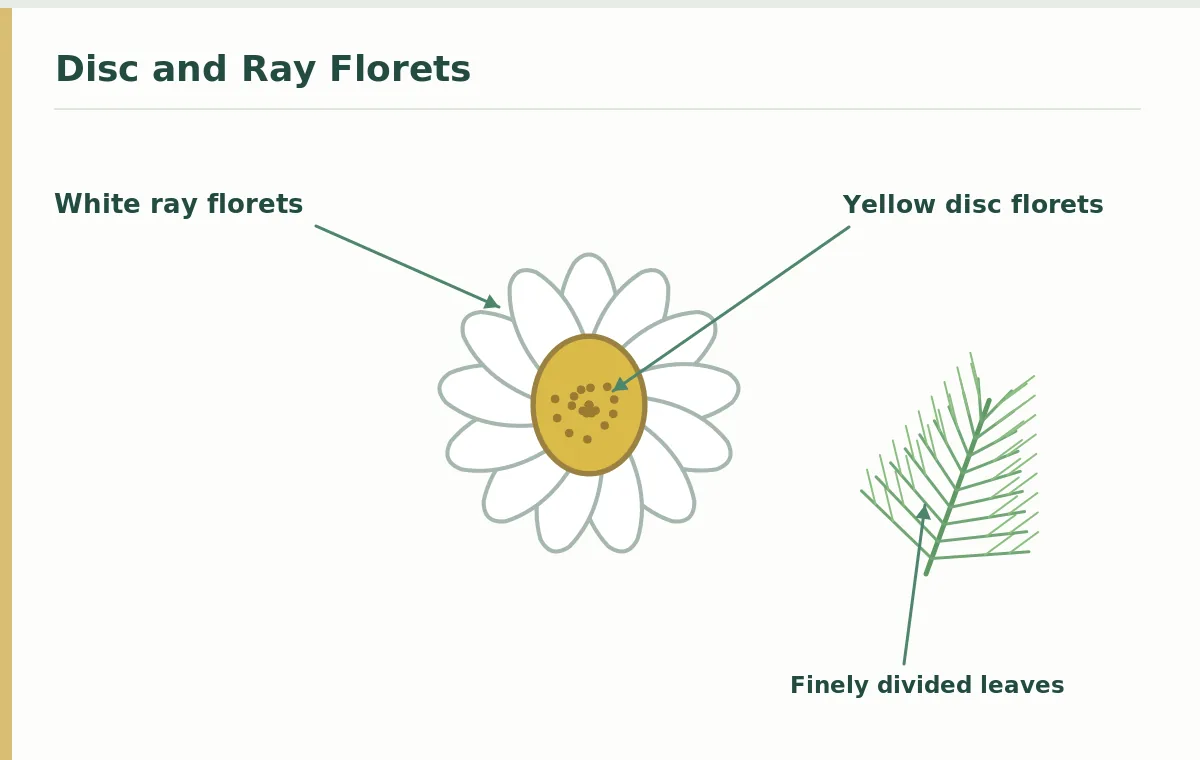
Our cover displays the feathery leaves and white outer rays around a domed yellow center. The head is a composite inflorescence, not a single yellow flower with decorative white petals in a purely ornamental sense: the yellow center consists of small disc florets, and the surrounding white parts are ray florets. This distinction is useful when identifying the plant as it flowers. Never identify edible herbs using appearance alone if the plant origin is uncertain.
Understand Why the Seeds Stay on the Surface
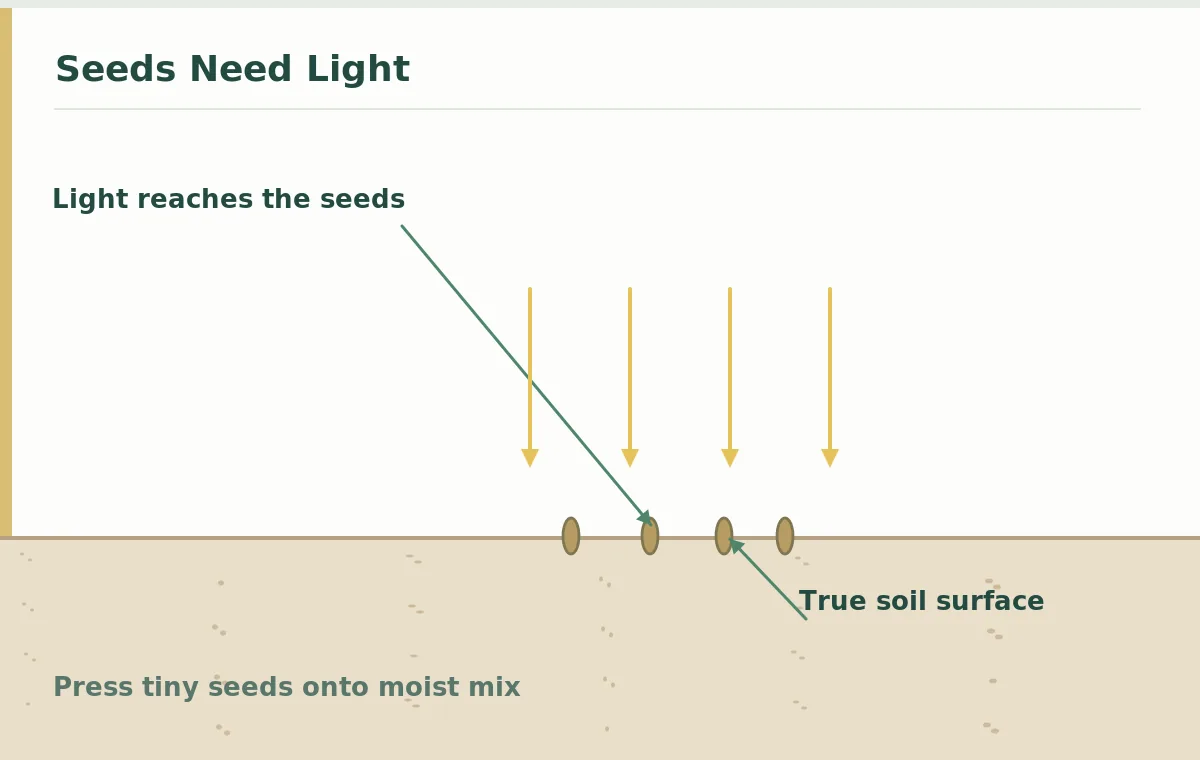
German chamomile seed is very small, and RHS advises scattering seeds on the surface because light helps them germinate. A deep hole that works for a bean is inappropriate here. The practical soil diagram places tiny seeds directly on a moist fine-textured medium, with light reaching them from above. No deep soil layer separates the seed from the sky or indoor grow light. A light press ensures that the seed touches damp substrate.
University of Vermont Extension also advises pressing chamomile seed into the surface instead of burying it. Use a fine watering method so the particles are not washed into clumps or off the tray. Very coarse compost pieces can leave a seed suspended dry above the surface, so level the medium gently before sowing. A surface seed needs both light and moisture, not bright scorching sun or a crust of dry peat.
Prepare a Fine, Draining Seed Tray
Use a shallow tray or small pot with drainage holes and clean seed-starting mix. Pre-moisten the medium until damp but not waterlogged, then lightly level it. Scatter seeds thinly across the top so individual seedlings will have space to grow. If too many fall in one patch, thin them later instead of covering them under a handful of new soil. Label the tray with crop name and the actual sowing date.
A gentle mist or bottom watering can maintain good contact without moving the seeds into the tray edges. A plastic cover may limit evaporation briefly, but remove it or ventilate it as soon as seedling conditions require. The tray should not remain sealed and dripping wet. Provide bright conditions that are suitable for germination, but keep the surface from drying completely. Check that standing water drains out rather than pooling around the roots.
Give Germinating Seedlings Enough Light
After emergence, the tiny first leaves begin to photosynthesize. A bright windowsill may be insufficient in very short days, while strong midday sun can dry a shallow tray too rapidly. Assess the seedlings: sturdy low growth with green leaves is healthier than pale long stems leaning heavily toward a window. Position a suitable growing light according to its manufacturer directions if natural light is weak, and allow normal air movement.
Do not pile soil around skinny chamomile seedlings until the crown is buried; that can encourage rot and hide the underlying low-light problem. Instead improve light distribution, moderate warmth, space plants appropriately and water only as needed. Thin weak surplus seedlings using small scissors at soil level rather than dragging up many roots from the same shallow container. Try to avoid overhead wetting that keeps fine foliage permanently soaked.
Recognize True Leaves and Move Plants Carefully
German chamomile develops increasingly divided, fern-like true leaves instead of broad lobed leaves or flat blades. When seedlings are large enough to handle and have a usable root system, move them to small individual pots or a prepared bed. RHS recommends hardening off indoor-grown seedlings before setting them outdoors. Use a trowel or plug tool to lift roots with their surrounding medium rather than pinching and pulling the delicate stems.
Transplant at the previous soil-line level, keeping the growing crown above the soil while the roots sit beneath it. Give plants space for airflow: the RHS outdoor guidance recommends thinning to approximately 15 cm (6 inches) where plants are grown in the ground. Actual size varies with cultivar and fertility. Protect transplants from slugs and drying winds at first. If hard frost is forecast, follow regional local growing guidance rather than relying on hardiness-zone labels alone.
Grow for Healthy Daisy-Like Flower Heads
Choose sun or a bright open position with freely draining soil. German chamomile does not need very rich fertilizer to form its delicate foliage and flower heads; excessive feeding can encourage leafy growth rather than improving quality. Water young plants until established, then check root-zone moisture in dry periods instead of saturating the soil each day. Avoid crowding so foliage can dry after rain and inspection for pests remains possible.
As the plants mature, upright branching stems carry many small flower heads. A newly opened head presents a yellow disk surrounded by white rays. Some rays angle downward later in bloom, and the disk can become more pronounced. If the heads do not resemble the plant you expected, confirm the species before using any part as an herb. Ornamental daisy species are not all interchangeable for tea.
Harvest Flowers and Dry Them Carefully
RHS recommends picking newly opened chamomile flowers and drying them in a single layer in a warm, dry place out of direct sunlight. University of Vermont Extension also discusses harvesting heads when they are nearly in full bloom. Clip or gently pluck the heads with clean hands or snips rather than taking handfuls of wet stems and leaves. Continue harvesting through the blooming period as new buds open.
Dry each batch thoroughly before storage and inspect for moisture or visible mold. Do not claim that chamomile tea is risk-free for everyone: people with allergies to related Asteraceae plants, pregnancy concerns or medication interactions should consult an appropriate professional before using it medicinally. This guide explains horticulture and flower handling, not treatment of health conditions. Only harvest plants you can identify confidently.
Fix Empty Trays or Weak Seedlings
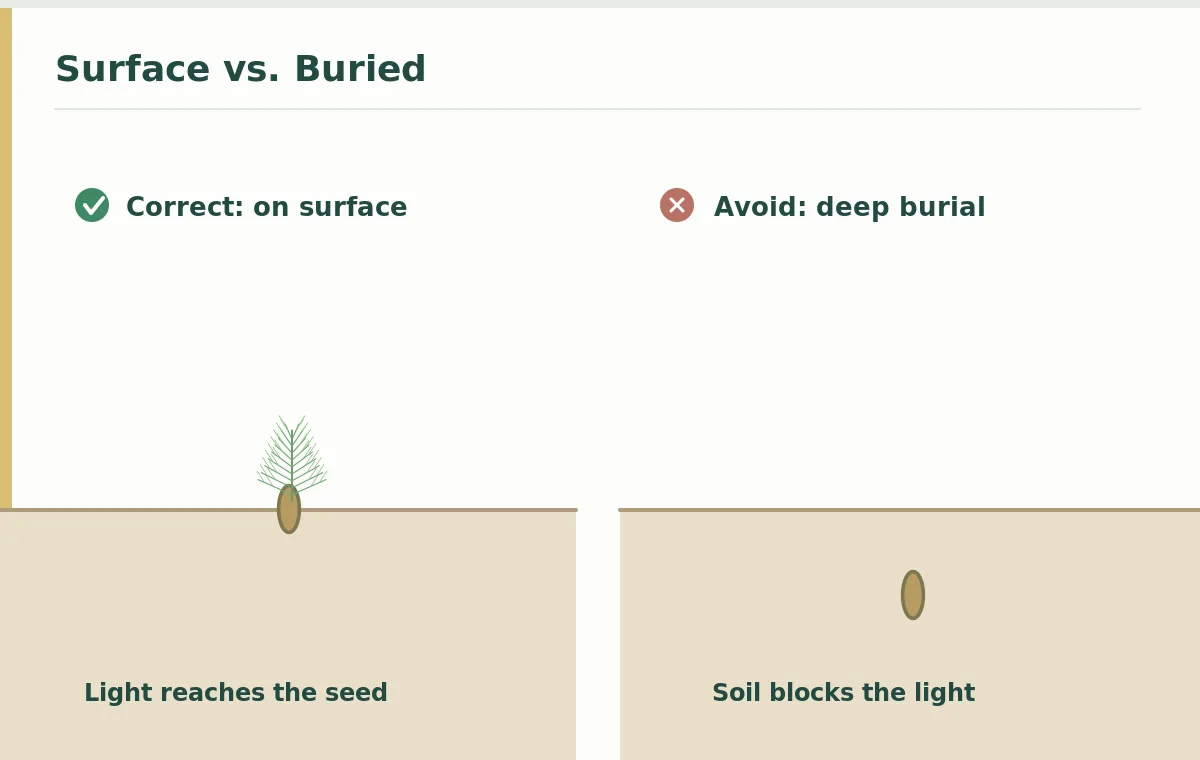
If a tray remains bare, examine the seed-sowing position first: deep coverage can block light, while an unpressed seed on an uneven dry surface may never hydrate. Then consider seed age, temperature and persistent waterlogging. Do not automatically add fertilizer to a germination tray; seeds need the right environmental conditions before nutrition becomes important. Keep a small note of sowing date and how the seed surface was watered.
If seedlings emerge unevenly, continue gentle care and thin to prevent crowding. A healthy plant should gradually form branched finely divided leaves and eventually bloom. The comparison image shows surface contact with light versus an inappropriate deep covering; both seeds are illustrated accurately at the soil line. Avoid extrapolating a strict number of days for every home, because temperature, moisture and seed condition vary.
Related Guides
- How to Grow German Chamomile From Seed Without Burying the Seedlings
- How to Grow German Chamomile From Tiny Seeds to Flower Harvest
How We Research This Guide
We checked and compared plant structures, propagation steps and relevant harvest stages with www.rhs.org.uk; www.uvm.edu; www.rhs.org.uk on October 28, 2026. Recommendations are designed for home gardeners, but weather, cultivars and local regulations vary. We prioritize observable plant cues over calendar promises. The diagrams explain the physical structures and actions discussed; they are not evidence of field trials or product endorsement.
No paid product placement or affiliate recommendation is included in this guide. See our affiliate disclosure. If a plant has visible disease, verify identification through locally relevant IPM advice before acting. Use proper food handling and never rely on an illustration alone to identify an unfamiliar edible species.
RHS states chamomile seeds need light to germinate; scatter thinly onto the surface and press for contact rather than covering with soil.
No. German chamomile is typically an upright flowering annual; Roman chamomile is a lower perennial with different growth habits.
It has a cluster of tiny yellow disc florets surrounded by white ray florets, often with a raised central disk.
No. Allow seedlings to mature and produce newly opened flower heads; timing depends on growing conditions.
Insufficient light, crowding or improper watering can make them leggy; improve light and reduce overcrowding rather than burying their crowns.