
Pansies are useful precisely when many warm-season bedding plants are unhappy: cool spring and fall weather suits their flowers. They are not a crop that should be started on the same indoor calendar as tomatoes or transplanted only after a hot summer begins. To choose a seed-start date, first find the outdoor window for your local climate and your intended season, then count backward far enough for seedlings to develop.
Iowa State University Extension advises sowing pansies about eight to ten weeks before outdoor planting, and it notes that young plants grow best with cool conditions and adequate light. The second decision is whether you are raising transplants for early spring or for autumn beds. The plan below treats those as two distinct projects instead of giving one nationwide sowing month.
Count backward from the season you actually want
For a spring planting, identify when local gardeners normally set out cool-season pansies, taking frost severity and site conditions into account. Count backward eight to ten weeks to estimate when to sow indoors. For a fall display, work backward from a planting window after the most stressful summer heat subsides. Iowa State Extension’s dates for Iowa are regional examples, not calendar dates to copy unchanged into warmer or colder states. If you are starting from scratch, read When to Sow Cornflower Seeds for Strong Cool-season Blooms.
Do not confuse the first safe opportunity to transplant with the last spring frost used for tender annuals. Pansies can tolerate some cold, but hardened transplants in a protected site are not the same as recently germinated seedlings exposed directly to severe weather. A late fall start may also leave inadequate light and growing time. Write the transplant target first, then plan the seed tray date around it.
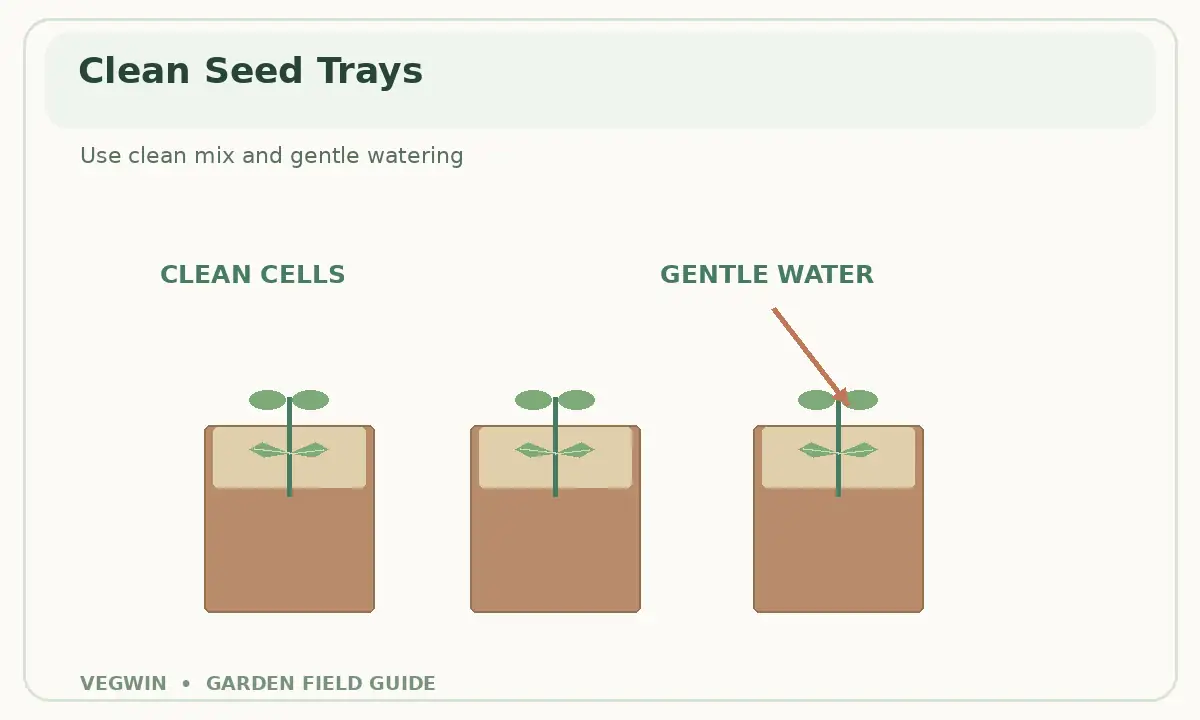
Use clean cells and carefully covered seed
Fill clean seed trays with a suitable seed-starting mix, moisten it evenly, and avoid compressing it into a waterlogged mass. Sow according to the seed packet, which should give covering and germination instructions for the specific variety. Do not assume that tiny seed must always be planted at the same depth as a large bean. Keep labels in the tray because pansy and viola seed packages can look similar after the original envelope is discarded.
If you reuse old cell packs, clean them before sowing. Seedling failures are difficult to diagnose when the tray contains decaying roots from a previous crop. A fine spray or gentle bottom watering can settle the medium without washing seed into the corners. Check the surface regularly during germination, keeping it moist but not standing in water. Irrigation habits matter more than a plastic cover left on indefinitely.

Provide light and cool air once seedlings emerge
Iowa State Extension recommends cool conditions, around 55–65°F for pansy growing, and warns that insufficient light or excessive warmth can make plants lanky. Keep newly emerged seedlings under appropriate grow lights or in a genuinely bright position; do not expect a dark windowsill to build sturdy transplants. Gradually improve air circulation and remove protective covers once emergence makes them unnecessary.
Cool conditions do not mean leaving a damp tray in an unheated location that may freeze. Roots still need adequate moisture and oxygen. If seedlings stretch, assess light distance, duration and ambient temperature before applying fertilizer. A plant can be long and weak because of poor light even when its leaf color looks acceptable. Turn trays where light is one-sided and prevent crowding as leaves expand.
Move seedlings into larger cells before roots tangle
When plants have developed enough true leaves to handle safely and roots begin holding the cell medium together, move crowded seedlings into appropriate individual containers. Handle the root ball gently and avoid burying foliage. Do not wait until several plants are woven together and require tearing apart. The goal is a compact transplant with adequate roots, not the tallest possible plant by the chosen outdoor date. For the basics, see our guide: When to Plant China Aster Seeds for Strong Summer Flowers.
Water the new container to settle medium around roots and then let excess water drain. Gradually manage moisture and light so that the small plant keeps growing rather than remaining in a permanently wet cell. If seedlings show collapsed stems or fuzzy growth, isolate the problem and revisit sanitation, airflow and watering. Avoid preventive chemical claims without an identified issue and a current legal label.
Harden off plants before they enter an outdoor bed
Plants raised inside are accustomed to sheltered light, still air and relatively even temperatures. Harden them off by introducing appropriate outdoor exposure gradually, beginning in a protected position and adjusting to sun and wind over several days. Watch the actual forecast; a brief mild freeze that a mature pansy may tolerate is not an invitation to leave tender indoor starts outside during an extreme cold event.
Keep the root ball moist while plants adapt and return them to protection if the weather turns harsh. A successful transplanting day starts with an established, sturdy plant and workable soil. Avoid crowding beds for an instant carpet of color. Proper spacing lets air circulate and reduces the need to disturb the plants later. Water after planting to make root-to-soil contact, not to saturate the entire bed for days.
Plan for summer heat rather than fighting the season
Iowa State Extension describes pansies as cool-season annuals that often decline in hot weather. Even healthy transplants can look tired in a sustained warm period. In many gardens, it is more sensible to enjoy their spring display, replace them with warm-season annuals, and start fresh for fall. A few improved cultivars handle some heat better, but that is not a reason to promise reliable midsummer flowering everywhere. Our walkthrough on how to start pansy seeds indoors with cool germination and strong seedlings sets out each step.
If a fall planting follows summer flowers, clear the exhausted plants and adjust irrigation for the cooler season rather than carrying over heavy midsummer watering unchanged. Container roots may dry at different rates from garden beds. Choose a spot with suitable sun and drainage and monitor the new transplants until they establish. The value of a fall start is timely color in cooler weather, not proof that pansies have become summer annuals. Our walkthrough on how to start snapdragons from seed indoors successfully sets out each step.

Record which window produced sturdy transplants
Make a simple record of sowing date, emergence, tray location, first true leaves, outdoor acclimation and transplant date. If seedlings were too small, move the next sowing earlier within the recommended lead time. If they were large and rootbound weeks before planting, the next sowing may be later or the container size may need adjustment. Also, if stems stretched, light and temperature deserve attention before changing seed count.
Spring and fall runs can have different indoor temperatures and natural light even in the same home. Keeping separate notes prevents the mistake of applying a successful late-winter schedule to a hot late-summer greenhouse. A useful result is not merely a tray of seedlings: it is a repeatable plan that produces compact transplants ready when outdoor conditions are suitable. Our walkthrough on how to plant crocus corms in pots without winter waterlogging sets out each step.
Make a quick decision from what you observe
| What you observe | What it may mean | Useful next action |
|---|---|---|
| Spring flowers wanted | Find local cool-season planting window | Start indoors about 8–10 weeks earlier |
| Fall flowers wanted | Wait for cooler transplant weather | Count back from regional fall setting-out date |
| Pale, tall seedlings | Weak light or overly warm growing space | Improve light and cooler growing conditions |
| Seedlings collapse at soil line | Wet or contaminated starting conditions | Check sanitation, drainage and airflow |
How We Research and Check This Guidance
We base this guide on identifiable plant-science sources and distinguish their regional advice instead of presenting one universal calendar. We reviewed the cited institutional horticulture references on October 22, 2026 and checked whether the advice concerns the correct plant type, the growing stage, and the climate. The unique aim of this page is a practical decision the reader can make by observing the plant and conditions. Sources are identified below so gardeners can verify the reasoning; this is educational guidance, not a substitute for local Extension advice, product labels, or diagnosis of a damaged plant.
References verified October 22, 2026: Source 1 — Iowa State Extension advises sowing pansies eight to ten weeks before outdoor planting and growing them in cool conditions.; Source 2 — Iowa State Extension explains distinct spring and fall planting windows and replacement during summer heat.; Source 3 — Iowa State Extension explains balanced seed-starting moisture, light, and ventilation.. No affiliate partnership or paid product recommendation is asserted in this article. Our general policy is available in the VegWin affiliate disclosure. No commercial links are necessary for this guide. Verify species, local regulations and climate-specific instructions before taking actions that could harm plants or nearby habitat.
Frequently Asked Questions
Iowa State Extension recommends about eight to ten weeks before the intended outdoor planting date.
No. Growing seedlings prefer cool conditions and good light; prolonged warmth can cause lanky growth.
Yes. Count backward from your locally appropriate cooler fall transplanting window.
They usually perform best in cool seasons and may decline in prolonged heat.
Inadequate light, excessive warmth, and crowding are common conditions worth checking.