
Red twig dogwood is valued for the color of its leafless winter stems. That color is usually strongest on relatively young growth, so a shrub that has become crowded with thick older canes may look less red even when it remains healthy. For red-osier dogwood (Cornus sericea, also called red twig dogwood), the useful routine is renewal pruning near the base, not shearing the whole plant into a tight ball. The best general window in cold-winter landscapes is late winter to early spring, before active new growth. Start by identifying which canes are old, which are healthy and young, and how many can be removed without unnecessarily stripping the shrub.
Confirm You Have a Red-Stemmed Shrub Dogwood
Red-osier dogwood is a broad, multistemmed deciduous shrub, not a single-trunk flowering dogwood tree. Red twig stems rise from a common base and may spread by suckering. In summer, it has opposite, oval to lance-shaped leaves with conspicuous arcing veins; small pale flower clusters are followed by light-colored fruits. Different dogwood shrubs and cultivars can have red, yellow, green or variegated foliage and stems. Confirm the plant label or local identification before following this cane-renewal routine, because cutting the branches of a flowering dogwood tree to the ground would be destructive. The goal here is brighter winter bark on a cane-forming shrub. If you are starting from scratch, read When to Prune Red-twig Dogwood for Brighter Winter Stems.
Choose Late Winter or Early Spring for Renewal
In regions with a distinct dormant season, examine the shrub near the end of winter before the buds open. It is easier to see the canes and decide which are old. Removing old wood then encourages younger shoots during the growing season, which can develop strong winter color. Avoid treating a hardiness-zone number as a calendar date: weather and bud break vary by region. If buds are already unfolding, assess the shrub before making heavy cuts; on an established plant moderate selective removal may still be possible, but a recently planted, stressed or severely winter-damaged shrub may need recovery rather than another substantial loss of stems.
Find Older Canes by Bark, Diameter and Position
Compare several canes before reaching for the pruners. Older stems tend to be thicker, branched, less vibrantly colored and crowded toward the center, while the youngest flexible stems are often the brightest red. Bark color also depends on cultivar, sun exposure and season, so age cannot be judged by a shade chart alone. Look where each cane emerges from the base and whether it crosses or rubs a neighbor. Preserve sound younger shoots spaced around the plant. Dead, cracked or obviously diseased material deserves separate attention: do not assume every dark stem is merely old, and clean your tools when moving from suspect wood to healthy tissue.

Remove Aging Canes All the Way to the Base
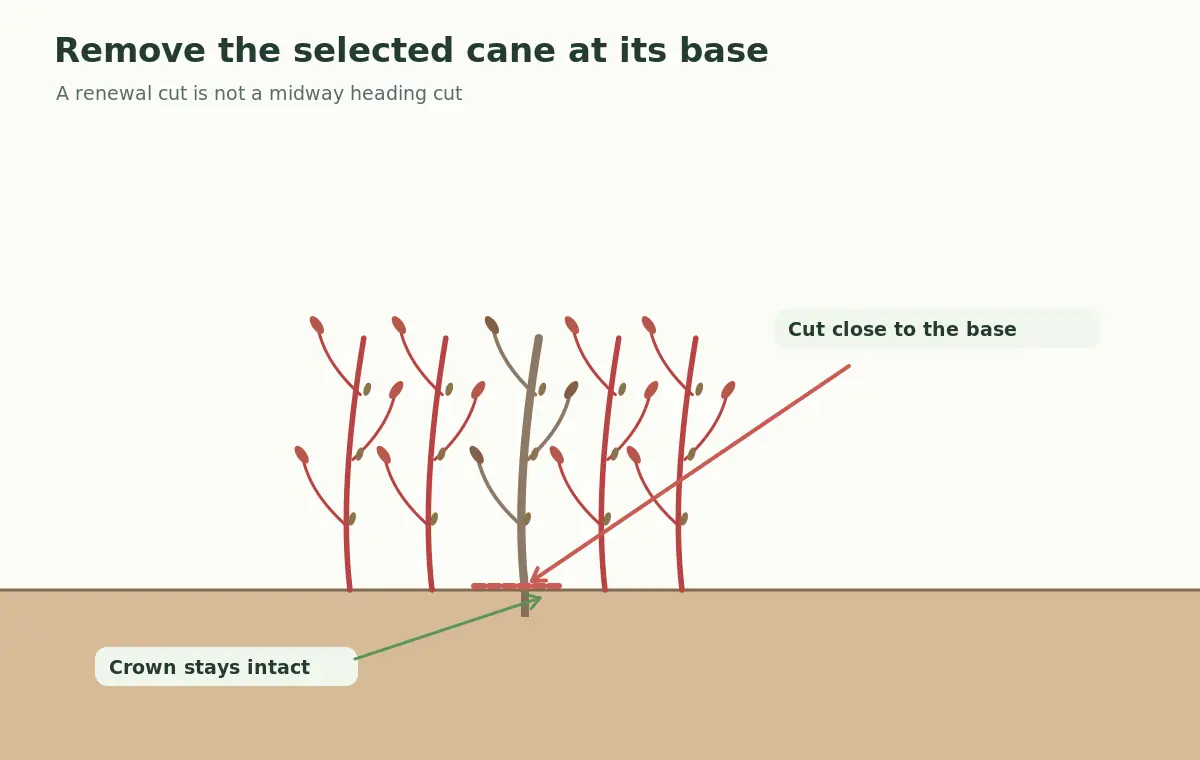
For a manageable shrub, choose a limited number of the oldest, thickest canes distributed through the crown. Follow each cane down and cut it as close to the ground as practical without digging into the crown or severing adjacent stems. This is a thinning or renewal cut: the entire selected cane is removed, not shortened halfway up to a stub. The University of Minnesota describes taking up to roughly one-third of the oldest stems in annual renewal of overgrown multistem shrubs. Treat that as an upper guideline for an established, vigorous plant, not a required quota. Stand back between cuts and recheck the structure.
Know When Not to Coppice the Whole Shrub
Some robust established cane-forming shrubs tolerate rejuvenation pruning in early spring, where nearly all old canes are cut low. But that drastic treatment sacrifices that season’s existing structure, flowers and fruit and is not the default choice for every dogwood. Selective annual renewal spreads the change across seasons and keeps a more natural shape. Avoid complete cutback on plants that are newly planted, drought-stressed, declining or growing in a location where cover is needed immediately. If the goal is a wildlife-friendly hedge or erosion control along a slope, conserving stems and root stability may matter more than obtaining the brightest possible red twig display.
Keep Pruners and Cut Placement Safe and Clean
Use bypass hand pruners on small canes and loppers or a pruning saw on thick, woody stems. Keep the cutting edge controlled and your hands clear of the line of the blade; use gloves and eye protection around springy stems. Make a tidy cut near the cane origin rather than chopping through the shared crown. Do not coat normal clean pruning cuts with homemade paint, and do not use a hedge trimmer to flatten every top: that leaves branching stubs instead of replacing old canes. If a stem has signs of canker or unusual dieback, get a local Extension diagnosis instead of spreading suspect material among healthy shrubs.
Expect Vigorous Summer Shoots Before Winter Color
After renewal pruning, the root system supports developing replacement shoots through spring and summer. Those stems may begin green or dull-colored and become redder as they mature into cold weather; immediate bright red growth is not a sensible expectation. Flowering on removed older wood will also be reduced, and any wildlife berries those canes would have carried are lost. Judge the first year by strong new canes and a balanced outline, then assess winter color after leaf fall. Heavy fertilizer applications are not a shortcut and should not be recommended without evidence of a deficiency or a soil test.
Control Spread Without Damaging Nearby Roots
Cornus sericea may send suckers outward, particularly in a moist planting area. If the shrub is escaping its planned space, locate new shoots and decide whether to leave them for a naturalized thicket, move small plants where appropriate or remove excess suckers with care. Avoid repeatedly trenching through the whole root area, because dogwoods can stabilize soil on a moist bank. Mulch over bare earth if needed, but keep a gap around the crown rather than burying it. Match the eventual mature spread of your cultivar to the space; aggressive shearing every month is a poor substitute for adequate room.
Troubleshoot Poor Color Without Overpruning
If winter stems remain dull after several seasons, check whether old wood still dominates the shrub. Also examine light: red twig dogwood can tolerate partial shade but often shows stronger stem color in sunnier conditions. Water stress, cultivar and disease can affect vigor and color too. On a shrub that produces few replacement shoots, investigate moisture and root problems before removing more canes. Blackened tips, bark injury and branch death are not ordinary winter coloration; photograph symptoms and consult local plant diagnostics. Do not respond by pruning all stems until you know what is wrong.

Plan an Ongoing Two- or Three-Season Routine
At each late-winter review, compare the newest canes with last year’s retained stems. Remove just enough older growth to keep the shrub open and renew its color, allowing healthy young canes to take the place of those lost. A simple photo from the same position after leaf fall is often more informative than a rigid cutting schedule. In compact cultivars or already bright young shrubs, little or no removal may be needed. If maintaining berries and stems for wildlife is also a priority, choose a lighter cycle and accept that not every stem will be intensely red at once. For a step-by-step method, see how to prune elderberry canes in late winter for healthy new growth.
Related Guides
How We Research and Check Recommendations
Sources checked October 23, 2026. Our review compared species-specific university Cooperative Extension material with broader gardening recommendations and separated observations that apply widely from regional planting, dormancy and weather decisions. An illustration is a simplified teaching aid rather than a diagnostic image or substitute for inspecting a live plant. This guide does not report original trials, promise cultivar-specific results, endorse pesticides or make claims of sponsorship.
Sources reviewed: Penn State Extension — Shrub Dogwoods for the Home Landscape (young red-osier dogwood stems have brighter color and spring removal of aging canes promotes shoots); Penn State Extension — Rain Garden Plants: Red Twig Dogwood (Cornus sericea form, flowering, water preference, and spread); University of Minnesota Extension — Pruning Trees and Shrubs (renewal-pruning method: up to a third of the oldest stems removed at ground level). VegWin does not claim partnership with these institutions; see the site affiliate disclosure.
No. Selectively removing aging canes is a less disruptive standard for established shrubs; total rejuvenation is a special-case choice.
Removing canes removes the flower buds on those canes. Renewal prioritizes new winter-color stems over maximum flowering.
Older canes generally are thicker, more branched and duller. Compare multiple stems and follow them to the base.
Shearing the outside does not accomplish ground-level cane renewal and can leave unsightly branching stubs.
No. It is for multistem shrub dogwoods such as Cornus sericea, not single-trunk flowering dogwood trees.