
A blackcurrant can look healthy and still bear fewer berries because the base has become crowded with aging, dark canes. The answer is not to shorten every branch until the shrub fits a tidy outline. For Ribes nigrum, fruit production is closely tied to vigorous younger stems. Removing selected old canes near the base makes room for replacements while keeping the younger fruit-bearing framework.
The timing and amount of pruning depend on whether you have just planted a dormant bush, own a young developing bush, or are maintaining an established plant. RHS guidance treats those stages differently. Oregon State University Extension also warns, by implication of its separate pruning advice, that blackcurrants should not be pruned as if they were redcurrants. Use the cane-age checks below before picking up the loppers.
Confirm blackcurrant identity and fruiting habit
Check the label or record for the plant rather than assuming all currants respond to the same cuts. Blackcurrant is Ribes nigrum; red and white currants are commonly trained to retain fruiting spurs on older wood. Oregon State Extension distinguishes these growth habits explicitly. If you inherited an unidentified Ribes shrub, observe the fruit color, cluster shape, buds and growth pattern, and seek an identification before removing a large share of the canopy.
Your aim for blackcurrant is an ongoing cycle of new shoots replacing aging stems, not a permanently fixed framework. Before you cut, look at the base and trace each main cane to where it emerges. Some branches may split high up, but the important unit is the whole cane. Marking old stems with a loose tie can help you avoid cutting the same younger wood from several angles.

Choose dormant timing rather than a fixed date
RHS recommends annual pruning of established blackcurrants during winter dormancy. In places with very different winters from Britain, use the period when leaves have fallen and the plant is not actively extending shoots; avoid severe work when conditions make woody stems brittle or when the soil around roots is saturated. Regional Extension guidance can refine the timing for your local climate. Hardiness zone numbers do not provide a day-specific pruning calendar.
Dormancy is helpful because the entire base is visible, letting you compare cane thickness, bark color, and crowding. It also gives you a chance to check for broken stems and rubbing branches. If a branch has suddenly wilted during summer, that is a separate diagnostic problem: inspect it for mechanical injury or disease rather than waiting for scheduled pruning and treating every symptom as old age.
Identify old dark canes without discarding strong new ones
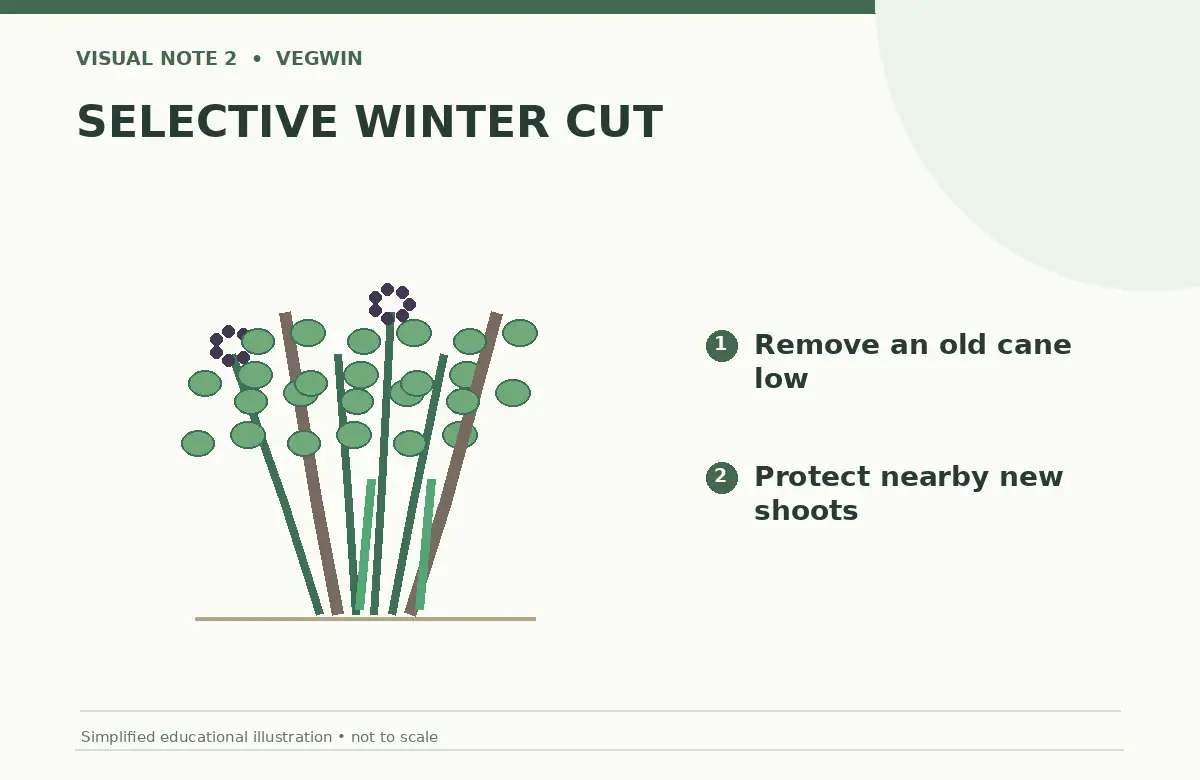
Older blackcurrant stems often show thicker, darker bark and can be less vigorous, whereas young replacement growth is usually more flexible and lighter colored. These are clues, not perfect age stamps. Trace each selected cane to its base, then check whether it carries vigorous side shoots that would be sacrificed. A previous renovation may have produced unusual branching, so use the whole plant as evidence instead of making decisions from bark shade alone.
In an established shrub, RHS advises removing up to roughly one-third of the oldest main stems in winter as gradual renewal. This does not mean remove one-third of every branch tip. Work at the base with sharp, clean loppers or a saw, cutting chosen canes as low as practical without damaging adjacent young stems. If the shrub has few replacements, be conservative and reassess its growing conditions. For the basics, see our guide: When to Prune Red-twig Dogwood for Brighter Winter Stems.
Prune a newly planted bush differently
A dormant bare-root blackcurrant at planting time is not maintained exactly like an established fruiting bush. The RHS planting guidance describes cutting new bushes back strongly to a few buds to encourage a base of new shoots. That sacrifice of a possible first-year crop can be appropriate when establishing a plant. It does not justify repeating the same drastic approach every winter on a healthy mature shrub. Our walkthrough on how to prune blueberry bushes sets out each step.
For a bush in its first few years, evaluate the strength of new basal growth. Vigorous young bushes may only need weak or low shoots removed. Weak ones may need more intervention, but poor water supply, root establishment or shade should also be addressed. Avoid treating the pruning illustration on a nursery tag as an instruction for all ages. If the plant is already leafed out when purchased, consider guidance for its actual planting condition. For the basics, see our guide: When to Prune Gooseberry Bushes by Cane Age and Growing Form.
Keep a balanced base and avoid shearing the top
Stand back after every couple of main-cane cuts. The base should have space for healthy replacement stems, but it should not be stripped of the season’s productive growth. Dense shoots rubbing together or lying on the soil are reasonable candidates for removal. Tops can be lightly shortened if damaged, but shearing the entire shrub turns a selective renewal job into indiscriminate tip removal and hides the cane-age structure.
Remove prunings from the planting area, clean tools after working on suspect diseased material and do not leave cut branches woven into the shrub. When using bird netting later in the season, check that it is secured so wildlife cannot become trapped. A short record of how many old canes were removed and how much new growth emerged next summer helps you refine the following winter’s choices. Our walkthrough on how to prune elderberry canes without sacrificing next season’s fruit sets out each step.

Investigate weak crops before cutting harder
Fewer berries do not always mean the bush needs more pruning. Shade, water stress, inadequate pollination conditions, winter injury, disease, and a lack of vigorous replacement shoots can also affect production. An old crowded bush may benefit from renewal, but a newly planted one might simply be establishing roots. Look at leaf vigor and annual shoot growth as well as the harvest; pruning cannot compensate for chronic root stress.
Where a variety is prone to particular regional Ribes diseases or planting restrictions, consult local Extension advice. Not all currant species are allowed in every jurisdiction, and pest symptoms should be identified before treatment. Do not invent sprays or fertilizer rates from pruning symptoms. The low-risk first response is a careful inspection, selective removal of dead material, and a site check. If you are starting from scratch, read When to Prune Red-flowering Currant Without Losing Spring Blossoms.
Match the Observation to Your Next Step
| What you find | What to do next |
|---|---|
| New dormant bare-root blackcurrant | Follow establishment pruning guidance; first-year fruit may be sacrificed |
| Young bush with strong new shoots | Lightly remove weak or poorly placed stems |
| Established crowded blackcurrant | Remove selected oldest canes at the base in dormancy |
| Red or white currant | Use a separate spur-pruning plan rather than copying blackcurrant cuts |
How We Research and Verify This Guide
This article was reviewed on October 22, 2026 using subject-specific recommendations from university Cooperative Extension and/or the Royal Horticultural Society. Those checks cannot substitute for a full paragraph-by-paragraph audit of every previously published article. Simplified original illustrations explain decisions but are not exact horticultural measurements.
Sources checked: RHS describes blackcurrant winter pruning, cutting oldest canes and the different treatment of young bushes.; Oregon State Extension distinguishes blackcurrant fruiting on young wood from redcurrant spur-fruiting habits.; RHS explains selective renewal of older blackcurrant stems in winter..
Editorial disclosure: This is independent educational information; no paid endorsement or approved affiliate relationship is claimed. For the site’s standing policy, read the affiliate disclosure.
During winter dormancy in the local climate, after leaves have fallen; follow regional guidance for severe weather.
No. Maintain a cycle of young fruiting canes by selectively removing older stems at the base.
For established bushes, RHS describes removing up to around one-third of the oldest stems each winter.
The establishment cut encourages strong shoots from low buds, although it sacrifices immediate fruiting.
No. Redcurrants have a different fruiting-spur habit and need a distinct pruning framework.