
Watercress is a moisture-loving edible green, not simply a lettuce that needs extra watering. Its growing conditions are unusual: roots thrive in continually wet media, but the water that touches a crop intended for eating must be managed thoughtfully. This guide focuses on a controlled container system rather than harvesting plants from streams. Utah State University Extension describes both the crop and a simple pot-in-water approach, while FDA guidance explains why avoiding dirty growing water matters more than relying on a final rinse. The goal is a harvestable planting you can inspect, clean and manage from sowing to serving.
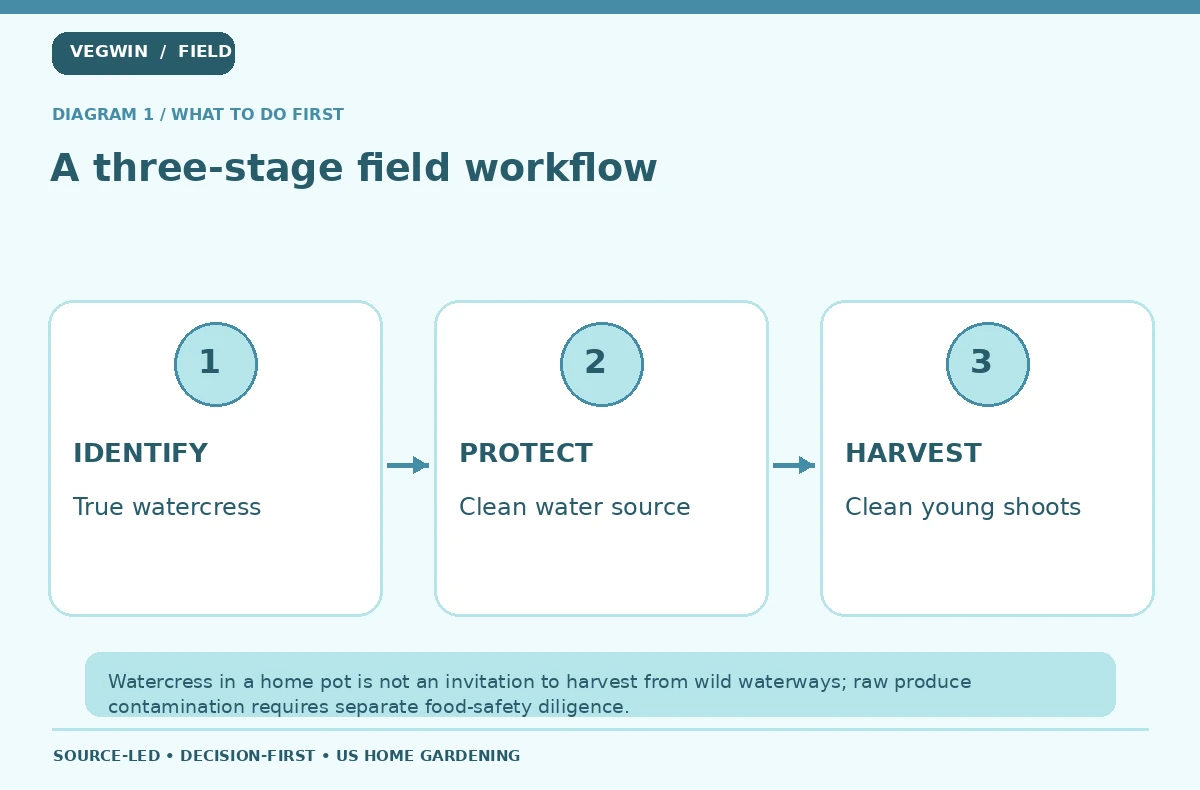
Identify true watercress before selecting a growing method
Watercress, Nasturtium officinale, is not interchangeable with garden cress or wintercress, despite overlapping common names. Utah State University Extension distinguishes these plants, which have different life cycles and moisture requirements. Start with labeled watercress seed or transplants from a reputable supplier and keep its botanical name in your growing notes. A random cutting taken from a ditch or pond may be misidentified or exposed to contaminants. Plant identification is particularly important when collecting any plant for food; this guide does not endorse eating unknown wild greens.
Choose an outdoor location where you can check the crop frequently, or a suitably bright indoor area with enough air movement for sound plant growth. Watercress likes generous moisture and generally produces better-tasting leaves during cooler periods, but water needs and sunlight stress will differ with weather and site. A sunny location with a pot surrounded by clean water can work, yet a container exposed to sustained heat may warm, evaporate and grow algae quickly. In that situation, monitor conditions rather than treating the water depth written in a guide as an excuse to leave standing water unattended indefinitely. Our guide “Grow Indoor Microgreens With Clean Trays and a Safe Harvest” goes into more detail.
Build a container that separates roots from dirty runoff
A practical system begins with a growing pot and a larger reservoir or saucer. Use appropriate soilless potting media and keep it consistently moist from below, following Utah State’s description of container watercress. The key design choice is that water is added intentionally, not collected from a roadside ditch, roof drain, stream of unknown quality or runoff from livestock areas. Place the setup on a stable, washable surface where you can move or empty it safely. Check local mosquito-control rules, since standing containers can become breeding sites if neglected. Never add an unregistered chemical to the growing water to solve an algae or mosquito problem.
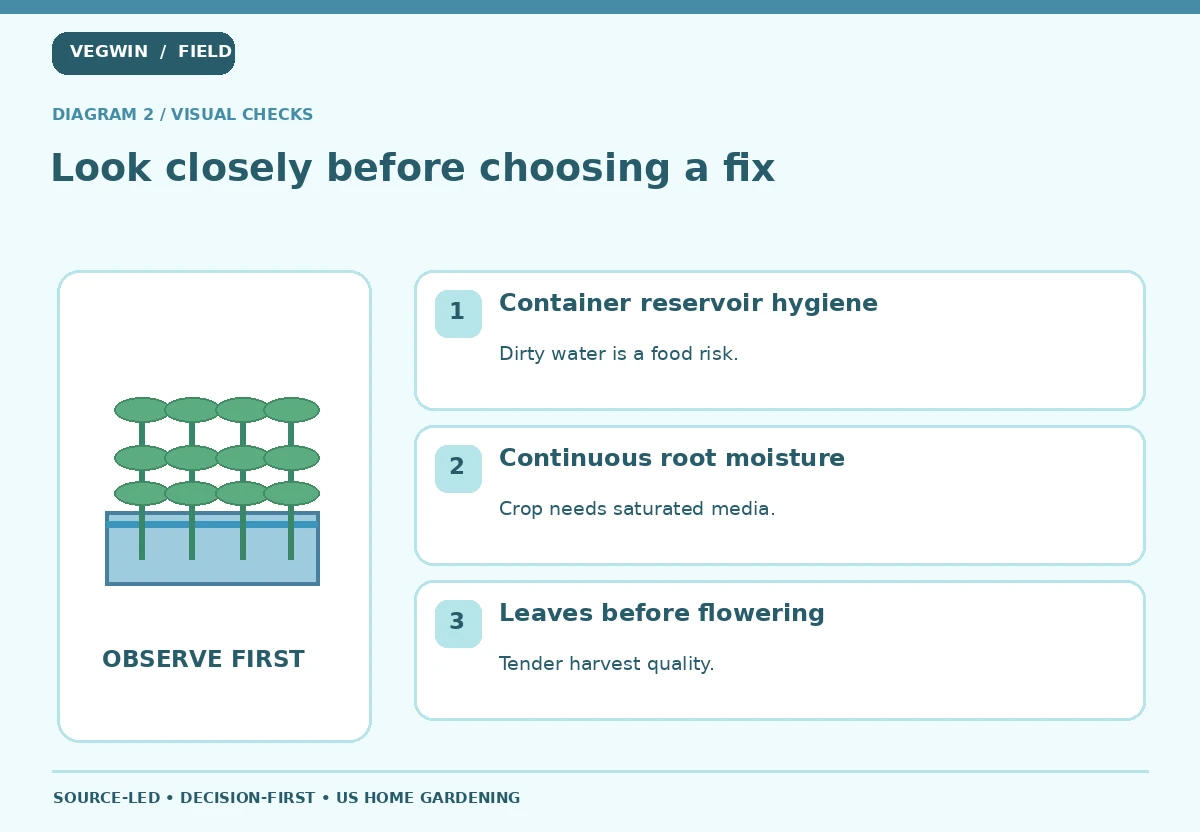
Give the container enough room to drain and be cleaned without washing dirty water into other edible crops. Utah State suggests changing reservoir water regularly in its bucket model; the precise interval depends on temperature, dirt and biological growth, so inspect rather than obey a timer blindly. The reservoir may contain water, but it should not become a hidden cache of decaying leaves or animal waste. Clean your tools and hands before handling food crops. Use water appropriate for edible crop production; if the source is questionable, fix the source rather than expecting the harvested foliage to become safe after rinsing.
Establish plants without letting the medium dry out
Watercress can be started from seed or known healthy cuttings. Use the seed packet and local Extension’s crop-specific guidance for depth and timing instead of borrowing a lettuce protocol. The medium should be evenly damp through germination, not periodically allowed to dry out completely. Sow a manageable quantity so that emerging shoots have airflow and room to be inspected. If seeds fail, consider moisture fluctuation, unsuitable temperature and poor seed quality before adding fertilizer. An indoor light can help in dim rooms, but do not assume water alone supplies enough energy for a dense stand of leafy growth.
When transplanting, handle roots gently and avoid putting an unrooted cutting directly into a dirty outdoor water feature. Label the establishment date and note where the source plant came from. If a seedling melts at the stem or leaves discolor rapidly in a stagnant container, remove affected material and inspect hygiene, moisture and light conditions. The medium’s wetness requirement does not make every standing-water condition healthy. You can compare two small clean containers under different light exposures to understand your home setup, but avoid changing water, location and fertilizer simultaneously or you will not know which adjustment helped.
Control moisture without mistaking wetness for food safety
The big horticultural difference between watercress and most salad greens is the tolerance for saturated roots. Yet the plant’s preference for wet media does not make contaminated water acceptable. FDA notes that contaminated water and soil can carry human pathogens to raw produce and that rinsing does not eliminate every microorganism. Choose a clean input water source, protect pots from pets and wildlife, keep tools sanitary and discard plants exposed to known sewage or chemical contamination. An apparently healthy green leaf is not proof that the water around it has been safe.
Top up clean water as necessary, then periodically inspect and refresh the reservoir according to actual conditions and Extension instructions. Sunlight, dissolved organic matter and leaf debris can create an unpleasant or cloudy setup; clean it before planting the next crop rather than hiding it with more water. Watercress is a food crop, so do not add unlabeled pesticides, detergent solutions or household disinfectants to an inhabited reservoir. Leaf yellowing can result from several causes, including nutrients and environmental conditions; get reliable local advice before applying any fertilizer to water that may be handled or discharged near storm drains.
Harvest young shoots with a clean routine
Young leaves and stems are generally the useful harvest, and Utah State describes better flavor before the plant flowers. Use clean scissors, take what is needed for a meal and avoid cutting into an obviously damaged or contaminated patch. A modest harvest that leaves healthy growth can regrow under favorable conditions, but a crop repeatedly cut too low or stressed by heat may not recover as expected. Because outdoor weather strongly affects growth, do not promise a fixed weekly yield or year-round supply for every location. Harvest observations help show whether cooler-season growing suits your conditions. Our guide to growing horseradish without letting the roots take over adds more detail on this.
Wash harvested produce thoroughly under running water before preparation, as FDA recommends, but be clear about what that does and does not do. Washing reduces surface contamination; it cannot reliably rescue produce grown in known unsafe water. Keep washed greens separate from raw meat, clean utensils between jobs and refrigerate perishables promptly. If a family member is at increased risk for foodborne illness, consult relevant health and food-safety advice about eating raw produce. The gardening instructions here are not a medical or food-processing protocol. Never use a household bleach wash on harvested leaves based on an improvised concentration.
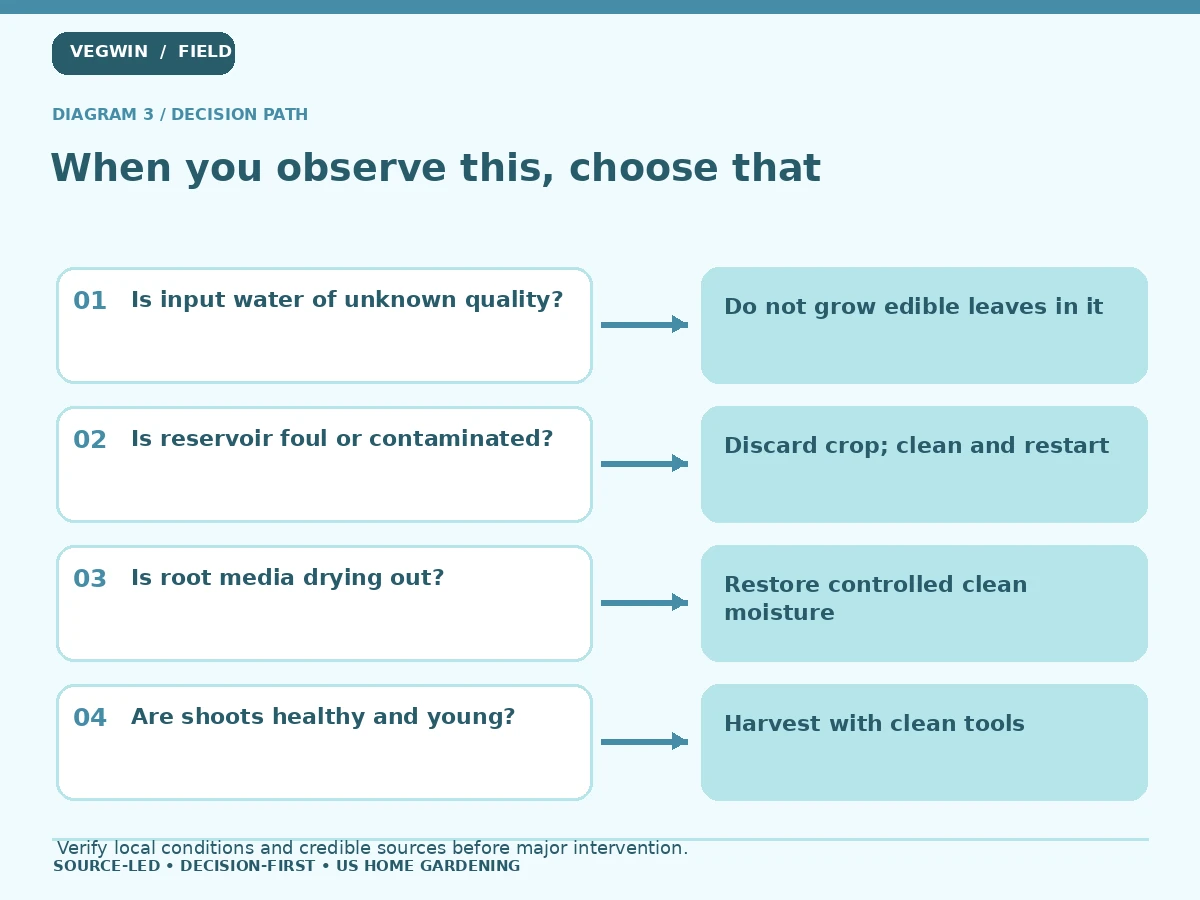
| Observation | Interpretation | Safer action |
|---|---|---|
| Water comes from unknown ditch or pond | Potential contamination | Do not use; secure a clean source |
| Wet media; clean maintained reservoir | Expected crop environment | Monitor roots, water and growth |
| Water fouled by animals or runoff | Raw-produce food safety concern | Discard affected crop; clean and restart |
| Plant flowers; flavor declines | Maturity or heat effects | Harvest suitable young growth earlier |
Diagnose poor growth and decide when to restart
When a watercress container struggles, check the simplest observable variables in order: identity of the plant, clean water source, moisture at the roots, light exposure, temperature and leaf condition. Wilting with a dry medium suggests the water supply failed, while foul water with soft, decaying tissue suggests a hygiene or root-health problem. Yellow leaves alone cannot identify one nutrient deficiency, and an insect seen near a reservoir may not be the cause of leaf damage. Photograph the plant and container together, not just a single leaf, when requesting diagnostic advice.
A controlled small planting is usually easier to repair or restart than an improvised mini-pond connected to untreated runoff. If suspected contamination is chemical, sewage-related or of unknown origin, do not guess that changing water once makes the crop edible. Discard compromised growth appropriately, clean the container and restart with known safe inputs. Avoid directing contaminated liquid into food beds. If the crop simply bolts or tastes harsher as conditions warm, treat that as seasonal crop behavior rather than an emergency requiring spraying. Keep the useful part of the system—clean materials, predictable water, recorded observations—and change just one management factor for the next sowing.
Related Guides
How We Research and Check the Evidence
We checked these named horticultural and food-safety sources on October 20, 2026: extension.usu.edu (1), www.fda.gov (2), www.fda.gov (3). This does not establish that every existing or unpublished WordPress URL was accessible.
Disclosure: This page does not claim any approved affiliate relationship and contains no compensated product recommendation. Read the VegWin affiliate disclosure for site policy; accessibility of the page has not been verified here. Any pesticide use must follow a current applicable product label and local rules, and crop nutrients should be based on site-specific evidence, not generalized invented rates.
Yes. Utah State Extension describes a potted plant maintained in a clean water-filled container.
Do not assume so. Contaminated water can expose leaves to pathogens that washing cannot reliably eliminate.
Consistently wet or saturated is the crop-specific goal; use a managed reservoir and watch for dirty stagnation.
They are different plants with different water needs. Check the botanical name on the seed label.
No. Clean or replace the reservoir water and address sanitation; do not add unlabeled chemicals to an edible crop.