
Komatsuna, often sold as Japanese mustard spinach, is a leafy member of the Brassica rapa group rather than true spinach. It has smooth dark green leaves on relatively slender stalks and a mild mustard character that becomes more noticeable as plants mature. The seed packet may not make the most important decision for you: should you sow a closely spaced patch of baby leaves, or leave room for a few larger plants? Those two plans need different thinning and harvest choices. A cool season, consistent soil moisture, and inspection for cabbage-family pests matter more than elaborate companion-planting claims. This guide helps a home gardener build either crop without confusing komatsuna with mizuna, tatsoi, or spinach.
The aim is a condition-based decision that works with the actual plant and local growing conditions. Keep the plant label and local Extension guidance handy rather than treating a nationwide calendar as a guarantee.
Choose baby greens or mature stems first
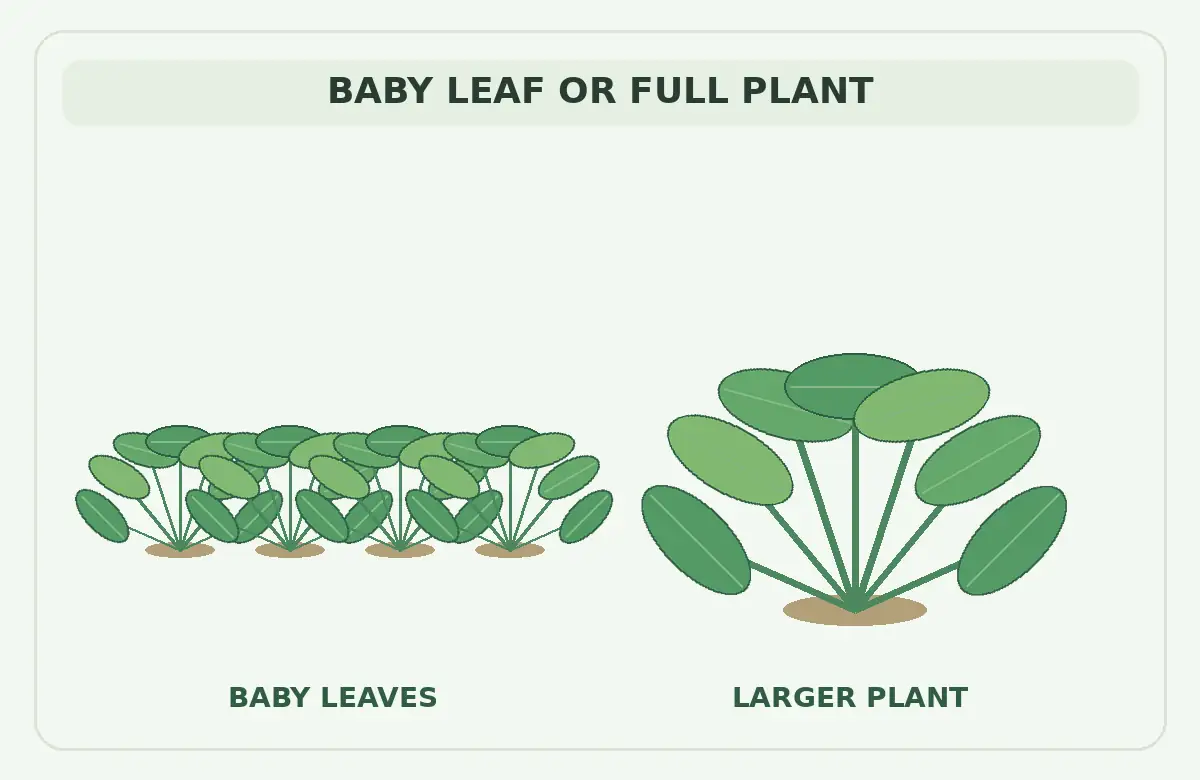
Baby-leaf production makes efficient use of a small area, with seeds sown relatively close and leaves removed while tender. Mature production gives individual plants room to form larger upright leaves and substantial stalks. The University of California Master Gardeners describes growing komatsuna closely for baby greens or at wider spacing for larger plants. Decide which you prefer before sowing. If a recipe calls for handfuls of little salad leaves, a dense crop is useful; if you want broad leaves for sautéing, separate individual plants. Our walkthrough on how to grow mizuna for tender baby leaves and repeat harvests sets out each step.
A half-filled container is not automatically a miniature version of a field crop. Roots still need moisture, nutrients, and drainage. If you use a planter, start with enough usable depth and width for the harvest size you want, and check how quickly the pot dries on warm days.
Time sowing by actual growing weather
Komatsuna shares the cool-season preference of many mustard-family leafy greens. Spring and fall are often easier than hot midsummer for tender leaf quality, while regional winters vary widely. The Oregon State University winter vegetable guide discusses komatsuna among Asian brassicas used for cool-season production. Treat any calendar on a seed packet as a starting point: check your local frost pattern, greenhouse or tunnel conditions, and the expected run of warm days. Lengthening days and heat can contribute to bolting, when plants channel energy toward a flower stalk. For a step-by-step method, see how to grow mustard greens for tender repeat harvests.
Do not try to cure a bolting crop with heavy fertilizer. Once stems are elongating and flowers are forming, the plant is entering reproduction. Sow another short row when conditions return to a more favorable range instead of expecting old stems to turn back into baby leaves.
Prepare an even seedbed without making it soggy
Rake the surface to remove large clods so small seeds can make good contact with soil. Sow at the depth recommended by your actual seed supplier, cover lightly, and water gently enough not to wash seed into a corner. Check moisture daily while the upper surface is germinating; a hose blast after the surface dries into a crust can disrupt thin seed rows. Use a clean, drained growing medium in containers rather than compacted garden earth in a shallow tray. A fine mulch or other local seedbed protection may be useful where rain is intense, but keep it from burying the delicate seedlings.
Make a note of the sowing date and whether the seeds were intended for baby greens or spaced plants. If emergence is patchy, inspect the soil surface, recent watering, and seed age before reseeding a whole bed. A few healthy seedlings are informative even in an uneven stand.
Thin for the harvest size you actually want
For baby greens, the goal is a uniform leafy canopy without chronic crowding that traps moisture. For full-size plants, select the strongest seedlings and gradually create the spacing advised for the cultivar; UC’s komatsuna notes allow wider spacing for larger plants. If you sowed too densely, snip surplus seedlings at ground level rather than pulling every plant and disturbing the roots of those left behind. Good airflow becomes increasingly important as stems and leaves grow larger.
Do not confuse close sowing of intentionally young greens with leaving mature plants tangled. A field method using frequent baby-leaf harvests has a different nutrient and hygiene burden than an occasional home-garden cutting. Wash harvest tools and keep produce away from animal contamination. Our walkthrough on how to direct-sow leaf amaranth seeds for tender warm-season greens sets out each step.

Use leaf color and texture to judge readiness
Take young leaves when they are firm and tender enough for your planned use, not merely because a particular number of days appears on a chart. Bigger leaves can still be good cooked. If harvesting individually, remove selected outer leaves while leaving a growing center; if picking whole plants, make the harvest in one operation and plan another sowing. The cut-and-come-again concept works only while plants remain healthy, have an active growing point, and weather remains suitable. A hard cut below that point is not guaranteed to regrow. For the basics, see our guide: When to Harvest Komatsuna Leaves and Keep the Growing Crown Intact.
Check the underside of harvested leaves for insects and rinse appropriately before use. Harvest promptly if flowering starts, recognizing that texture and flavor may already be changing. Avoid making food-safety promises about greens simply because they were grown organically.
Watch for flea beetles and caterpillars first
Komatsuna is a brassica, so small holes and chewing damage may reflect flea beetles or caterpillars familiar from mustard and cabbage crops. Identify the actual culprit by inspecting both leaf surfaces and looking for eggs, larvae, or characteristic feeding patterns. Tiny holes alone are not proof that one treatment will solve the problem. Physical exclusion with properly installed insect netting or row cover can be useful in appropriate settings if it is in place before pests enter; remove or manage coverings as required for access and plant health.
Rotate beds where feasible, remove heavily damaged old residues safely, and encourage diverse garden habitat. If chemical controls are considered, check current local Extension recommendations and the exact product label for edible brassicas. Do not improvise pesticide mixes or assume a home remedy is safe for food crops.

Distinguish nutrient stress from seasonal bolting
Yellowing, weak leaves, or slowed growth may result from many causes: persistent saturation, repeated drought, nutrient shortage, pests, or the crop’s shift toward flowering. Compare several plants, feel soil at root depth, and examine new versus old foliage. A soil test is more reliable than guessing one fertilizer dose. In a warm spell, irrigation helps prevent needless water stress but cannot force a cool-season crop to remain vegetative indefinitely.
If a planting was meant for baby leaves yet develops tall central stems, finish any usable harvest and reset the bed for another sowing. The objective is an edible, tender crop, not keeping every plant alive as long as possible. Record which sowing dates gave the best texture in your own microclimate.
| Goal | Sowing and spacing approach | Harvest choice |
|---|---|---|
| Tender baby leaves | Close sowing with ventilation and clean handling | Cut suitable young foliage |
| Larger individual plants | Thin wider as plants grow | Pick outer leaves or whole plants |
| Cool-season succession | Sow small batches when conditions suit | Harvest sequentially |
| Plants already flowering | Stop expecting tender leafy growth | Use what remains suitable; re-sow later |
Plan a second sowing instead of one giant crop
Rather than sowing all your seeds on one day, start with a modest row or container, learn its growth rate, and sow another at intervals suited to your household’s consumption and weather. UC Master Gardeners suggests succession planting for mustard greens; the principle is useful for komatsuna when seasonal conditions permit. A staggered crop also makes pest observation easier: one row may be harvested while the next is still protected and growing.
Keep notes on seed company, flavor at different leaf sizes, and how much produce you actually use. If you already grow mizuna or bok choy, assign komatsuna a distinct culinary job. Otherwise, several similar brassica greens can mature together and overwhelm a small kitchen. Our walkthrough on how to grow dill in a pot sets out each step.
How We Research These Plant Care Decisions
This guide was researched and cross-checked on October 23, 2026 using university Cooperative Extension materials and/or the Royal Horticultural Society. We compared the growth habit, seasonal risks, and planting or pruning technique before writing the recommendations. The specific information below is educational, not a substitute for diagnosing an individual tree, plant, or site.
Sources reviewed: university Extension source 1; university Extension source 2; university Extension source 3; university Extension source 4. Each linked source supports the particular facts recorded in the editorial source list. Local climate, plant species, and cultivar characteristics can change the best action.
Editorial and affiliate disclosure: This is independent informational garden guidance. No paid product endorsement or affiliate relationship is claimed in this article. See our affiliate disclosure for site-wide details.
No. Komatsuna is a mustard-family brassica, although its mild leaves are used in similar ways.
Yes. Use a drained container and choose whether you are producing young leaves or larger spaced plants.
You can selectively take outer leaves while the growing center is intact and conditions remain favorable.
Lengthening days, heat, and plant maturity can promote bolting; consider a new cool-season sowing.
Flea beetles are one possibility among brassica pests. Inspect the plant and identify the actual cause before treating.