
In late winter, a hellebore can look like two plants occupying the same crown. Last year’s leathery leaves sprawl outward, sometimes brown or spotted, while fresh flower buds push up beneath them. It is tempting to cut everything away for a clean photograph, but that can destroy flowers or remove functional foliage from the wrong species.
Lenten rose, usually Helleborus × hybridus, responds differently from some stem-flowering hellebores. University horticulture sources distinguish the old basal leaves of Oriental hybrids from foliage borne on flowering stems in other species. The most useful task is not “cut all hellebores in February”; it is to trace each leaf to its origin and identify what new buds and stems must remain.
Identify Lenten rose rather than assuming all hellebores match
A typical Helleborus × hybridus grows leathery, divided leaves on stalks coming directly from the crown, while flower stems arise separately. This arrangement lets you lift the old foliage aside to see the buds. Other hellebore species, including stinking hellebore, Helleborus foetidus, may carry flowers and foliage on the same stem. Cutting those stems at ground level before they finish flowering removes the display you intended to keep.
Check a plant label when available, and observe where leaf stems and flower buds actually join. Use a clean, close photograph if the center is difficult to see. RHS guidance treats Oriental hybrids differently from other kinds, which is why a one-line internet instruction can mislead. If species identification is uncertain, remove only visibly dead or badly damaged leaves until new growth makes the structure obvious.
Wait for emerging buds on Oriental hybrids
For Lenten rose, the practical window is when flower stems begin emerging in late winter or early spring, rather than one fixed calendar date. Wisconsin Horticulture describes previous-season leaves becoming worn and being cut off as flowers emerge. RHS also advises removing old H. × hybridus foliage to show the blooms and help limit leaf spot. In mild areas this can happen earlier than in gardens with deep snow.
Gently move old leaves aside instead of cutting blind into the middle. Notice fresh plump flower buds near soil level and new, bright green leaf growth that will develop later. Only then decide where the old leaf stalk ends. Do not pull stalks violently; the crown is compact and a tug can damage nearby emerging tissue. A careful few-minute inspection avoids a much longer wait for another flowering season.
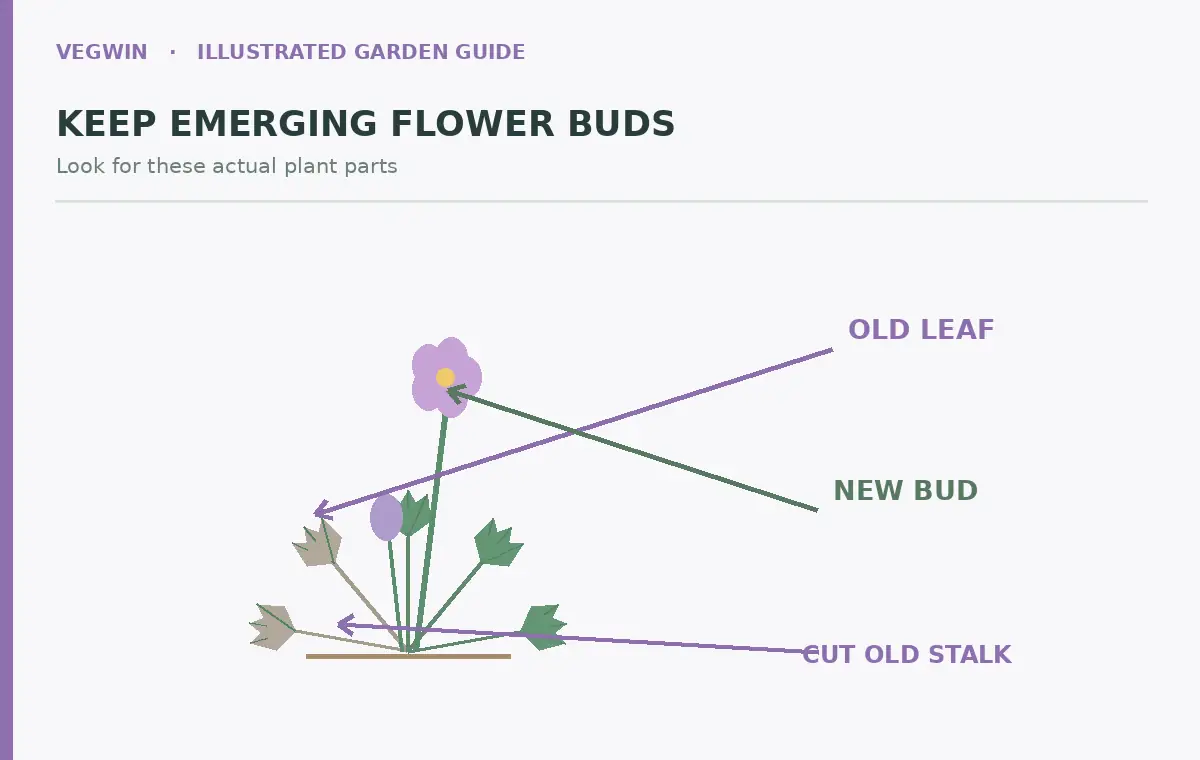
Cut individual old leaf stalks rather than shaving the crown
Use clean sharp pruners and follow one old, ragged leaf stalk down toward the base. Snip that stalk low enough to tidy the plant while keeping the blade away from flowers, small buds and fresh green shoots. Move the severed leaf out of the bed and repeat only for leaves that need removal. Brown spots, curled edges and physical damage are more useful removal signals than the fact that winter has arrived.
A low angle can make it hard to distinguish a stalk from a flower shoot. Lift foliage with one gloved hand and cut with the other, never reaching inside blindly. Do not twist off flower buds while tidying. Removing all green material from a hellebore that is not an Oriental hybrid can take away important foliage. Keep the work species-specific and modest when the identification remains uncertain.
Treat spotted leaves as a sanitation question, not a license to spray
Hellebores may develop leaf spot, but not every discoloration identifies a pathogen. Some leaves simply suffer frost, wind or winter age. Note whether marks are expanding and whether neighboring stems also look unhealthy. Removing badly spotted older leaves can reduce debris around the crown, but severe or spreading symptoms deserve diagnosis using a regional Extension resource before any treatment is considered.
Do not make up a home pesticide mixture or assume a fungicide is necessary. Remove suspect debris from the immediate bed rather than distributing it as mulch, and avoid wetting foliage unnecessarily. Make the fewest cuts that meet the sanitation goal. The aim is to protect a functioning plant, not to create a bare crown that is attractive for one day but less resilient afterward.

Preserve useful foliage on stem-flowering hellebores
Some hellebores carry flower clusters on leafy stems, so pruning logic changes. RHS advises that many non-Oriental hellebores need only damaged leaves removed in autumn, with older flowering stems addressed after they fade in late spring. An early cut across the whole stem can remove live flowers and the leaves that support them. Take a moment to identify the type rather than copying a before-and-after image of Lenten rose.
If a stem looks tired while the flowers are still healthy, it may be better to leave it until the flowering sequence finishes. For a weak plant, avoid total renovation simply because the leaves are imperfect. Record what the plant produces through the season and compare with reliable photographs. A plant that holds foliage through winter is not necessarily in need of pruning: evergreen habit is normal for many hellebores.
Protect skin and remove debris carefully
Hellebores contain compounds that can irritate skin, and leaves or seeds should not be eaten. Wisconsin Horticulture recommends gloves when exposure is possible. Wear gloves, keep children and pets away from cut material, and wash hands afterward. Avoid using trimmed hellebore foliage in play activities or as an edible garnish; the plant is strictly ornamental. If you are starting from scratch, read When and How to Divide Hellebores Without Damaging Crowns and Roots.
If you remove many old leaves, check whether the mulch has drifted up against the crown. Pull it back slightly so flowers emerge into open air, while still protecting the wider root zone appropriately for local winter conditions. Do not cultivate deeply through shallow roots. A clean visible crown and intact young growth are the two successful outcomes; a perfectly empty-looking bed is not the objective.

Check replacement leaves after flowering
As flowers finish, new foliage normally expands on many Lenten roses. Watch the transition rather than making another major pruning pass automatically. Old flowering stems may be removed once they are spent if you do not want self-sown seedlings, but seed production can also be a deliberate choice. The decision depends on the particular species, the garden’s available space and whether seedlings have become a problem.
Review the plant in summer. Healthy replacement leaves suggest the pruning left enough crown and roots intact. Persistent spotting, sudden wilt or recurring dieback call for a closer health assessment rather than an extra haircut. Label the plant’s species if you discover it; that single detail is a more useful guide for next winter than a calendar reminder set to the same date every year. If you are starting from scratch, read When to Cut Back Delphiniums After Bloom for Healthy Regrowth.
A Quick Decision Table for Your Next Step
| Observation | What it suggests | Next practical action |
|---|---|---|
| Old Lenten rose leaves, separate flower shoots | Basal old foliage can be selectively cut | Remove each old leaf stalk low |
| Flower and foliage share one tall stem | May be a stem-flowering species | Retain stem until flowering is over |
| Small buds hidden at the crown | New flowers vulnerable to damage | Move foliage aside before each cut |
| Leaves have spreading dark spots | Possible disease or old weather injury | Remove damaged debris and confirm diagnosis |
Related Guides
How We Research These Garden Recommendations
Research was checked against the named university Extension and botanical horticulture guidance on October 22, 2026. We focused on species differences, observable growth stages, regional limits and interventions that a home gardener can verify. This does not establish a complete full-text audit of every previously published page. The original illustrations are simplified educational diagrams, not measurements or photographs of individual plants.
Sources checked October 22, 2026: Source 1 — Wisconsin Horticulture describes tattered previous-year foliage and its removal as Lenten rose flowers emerge.; Source 2 — RHS separates foliage removal for Oriental hybrids from different pruning for other hellebores.; Source 3 — Penn State Extension explains that hellebore leaves stay green in winter and contribute before replacement leaves emerge.. No paid partnership or approved affiliate arrangement is claimed for these informational steps. See the VegWin affiliate disclosure for site policy.
Not for every type. Lenten rose old leaves are often removed as flowers emerge, while other hellebores retain flowering leafy stems.
It should not if only separate old leaf stalks are removed carefully and new flower buds remain intact.
Use the local stage of emerging flowers and the type of hellebore rather than a universal month.
No. Winter damage and aging can also discolor leaves; check symptoms and consult Extension for uncertain cases.
Gloves are advisable because its sap and tissues can irritate skin; keep plant parts out of mouths.