
Balloon flower (Platycodon grandiflorus) has swollen buds that open into broad, five-lobed blue or white bells. A careful spring seed start is more important than an early planting date: this clumping perennial dislikes unnecessary root disturbance once established.
Choose the spring window rather than a fixed month
RHS propagation guidance places Platycodon seed sowing in spring, in pots or in situ. For a home gardener, the practical date depends on when the growing place can support seedlings and when cold nights no longer threaten plants raised indoors. A USDA cold-hardiness zone does not predict that date. In mild climates, direct sowing may be reasonable when conditions are suitable; in a short season, use individual cells or small pots and move the entire root ball later. Look for a known Platycodon seed packet rather than a generic bellflower packet, because Campanula species are different plants with different mature structures.
Recognize the genuine balloon bud
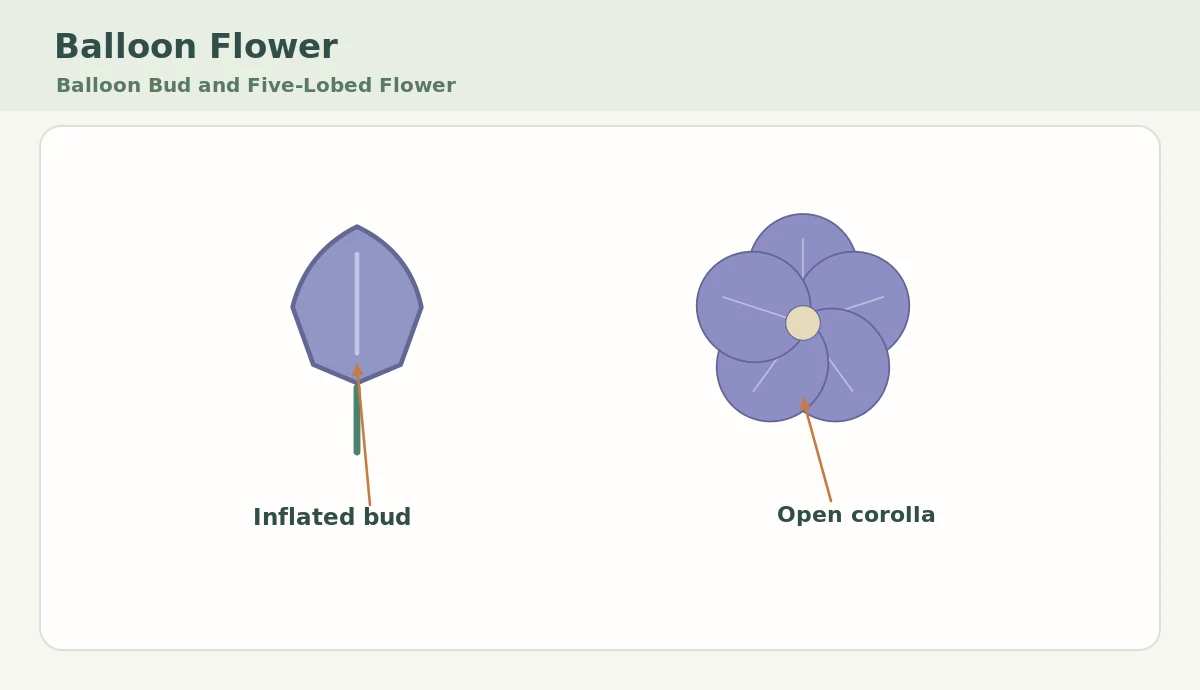
The swollen, pentagonal bud is the best-known identifying feature of balloon flower. Its lobes expand before the flower opens into a wide starry or bell-shaped corolla, typically blue to violet or white. The bud sits on a living pedicel connected to the flowering stem; it is not a separate blue balloon floating above leaves. NC State describes the open flower as five-pointed and upward or outward facing. Toothed blue-green leaves occur below these flowers. Labeling bud, open corolla, leaf and stem separately prevents confusion when choosing a plant at a nursery before it reaches full bloom.
Prepare an airy seed pot that will not hold water
Use a clean, small pot with drainage holes and a fresh seed-starting medium that moistens evenly without becoming sodden. Fine seeds should not disappear into deep cracks: smooth the medium gently before sowing. Check the cultivar packet for the precise covering instructions and apply only a light treatment if directed; the cited references support spring sowing but do not establish one universal planting depth for every seed lot. A shallow layer of mix must remain in contact with seed without compacting. Label each pot with the scientific name and sowing date, so slower seedlings are not discarded as weeds.
Give emerging seedlings light and controlled moisture
Provide bright, suitable seedling light after germination, and avoid placing a covered pot in direct hot sun. The University of Minnesota explains why seedlings grown in weak light may stretch and become fragile. Water from below when practical or use a fine spray that cannot uncover seeds. The surface should not alternate between completely dry and saturated. Remove a humidity cover once new seedlings are established to improve air movement. If several seedlings share one cell, cut weaker plants at medium level rather than tugging their roots through the root system of the strongest neighbor.
Understand the hidden fleshy root before transplanting
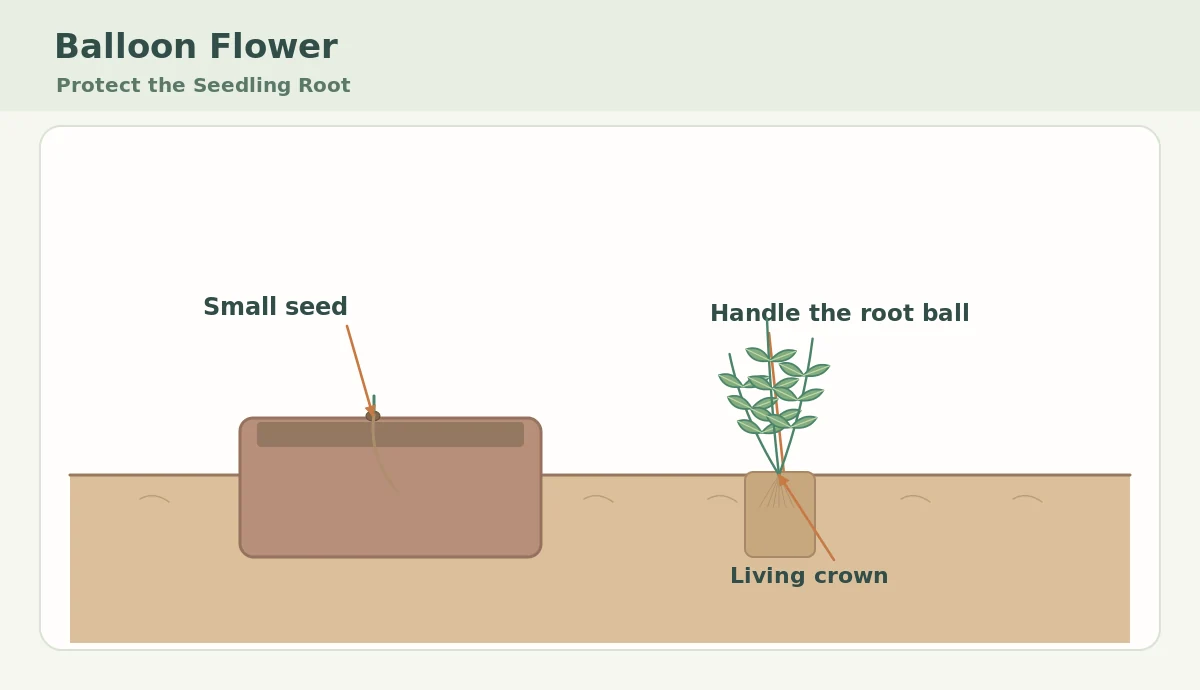
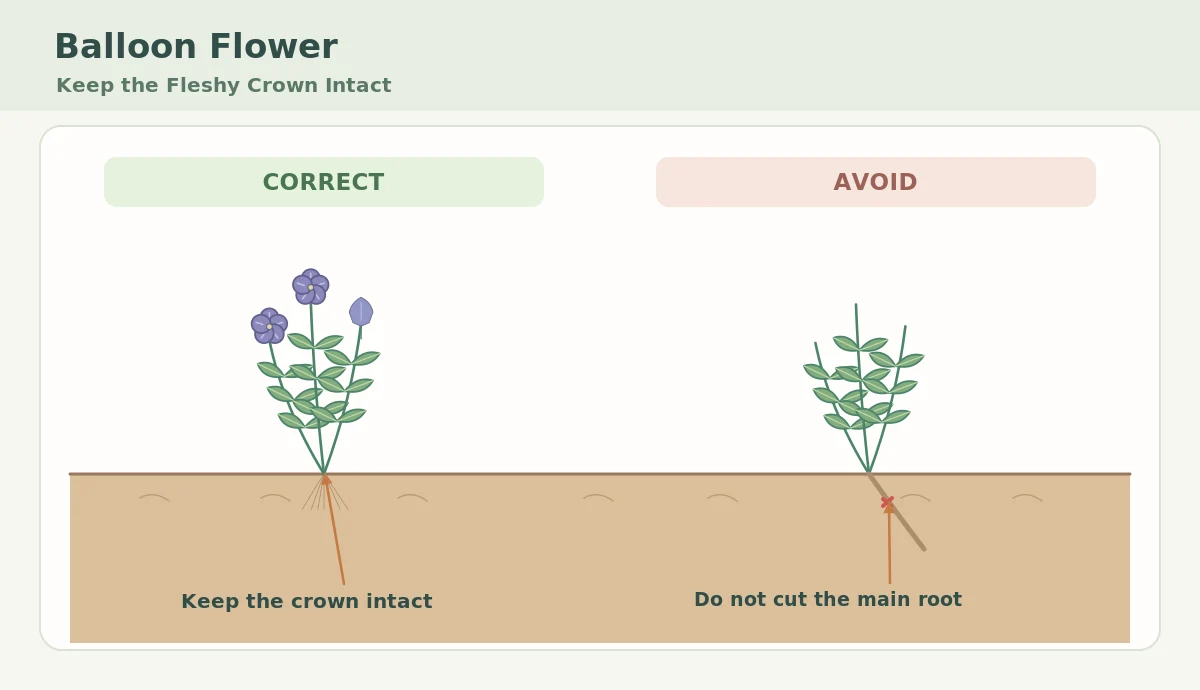
Balloon flower is often described as easy from seed but reluctant to be moved later. NC State notes that its fleshy root system is fragile and makes division and transplanting difficult. The root emerges directly below the crown where leaves and stems arise. It does not dangle above a soil layer and should not be severed just to make a plant fit a smaller hole. Start in containers that can release a coherent root ball. Inspect the bottom rather than repeatedly pulling seedlings out by their stems; circling or bent roots call for timely careful planting, not another round of unnecessary potting.
Harden off and set the root ball at its original level
Move young pot-grown seedlings outdoors gradually, beginning in a protected position and increasing light and wind exposure. University of Minnesota describes this acclimation process for indoor-started plants. Choose an overcast planting time or a cooler part of the day. Tip the plant from its pot without pulling its fragile stem, keep the root ball together, and set the crown at approximately the same depth it grew previously. Do not bury several leaves or pack heavy wet soil around the crown to hide a leggy seedling. Water gently to settle soil around the intact root ball.
Place the perennial where it can remain for years
A position with full sun or partial shade and well-drained soil suits balloon flowers in the NC State and RHS accounts. Afternoon shade can be useful in a hot garden, but heavy shade may produce weak stems or fewer blooms. Choose the planting spot with mature spread in mind instead of planning to divide the clump every season. Prevent standing water around the crown while keeping newly planted roots from drying out before establishment. Use mulch over nearby soil if appropriate, leaving an open collar around the living shoots. Put a discreet marker beside the site because a deciduous clump may vanish above ground in winter.
Care for foliage and distinguish buds from seed capsules
During the active growing season, leaves are the plant’s energy-producing tissue. Avoid cutting down healthy leafy stems immediately after flowering just because a few flowers have faded. Removing spent flowers may prolong flowering, as NC State notes, but leave selected mature capsules if your goal is seed collection and you can identify them confidently. The inflated floral bud comes before a flower; the capsule is a later seed-bearing structure. Removing one cannot be substituted for removing the other. Sterilize cutting tools after working with diseased plants, and never treat every unusual spot as a fungal infection without examining moisture and conditions.
Diagnose weak seedlings before adding fertilizer
Stretched stems generally point toward insufficient light, while a suddenly collapsing seedling in constantly wet mix calls for checking sanitation, air movement and the root zone. Slug or snail feeding can remove emerging foliage outdoors, and NC State lists these as potential pests. If new leaves are pale, first inspect light, roots and water rather than automatically increasing fertilizer. A seedling should be sturdy, with a coherent root ball and healthy leaves, before it is planted. Keep a record of which sowing containers succeeded; these observations are more useful than assuming a hardiness-zone map supplies a universal germination schedule.
Use a simple season-by-season success check
In spring, confirm the packet says Platycodon, sow in suitable conditions, keep seedling roots contained and harden off before moving. During summer, recognize the characteristic inflated buds and five-lobed flowers, water the root zone as conditions require and remove only genuinely spent flower stalks. In fall, allow foliage to finish contributing to the crown before normal seasonal dieback. Mark the crown position so it is not dug up the next spring. This sequence keeps the article focused on successful establishment rather than promising first-year flowers or uniform growth rates across regions, cultivars and different weather patterns.
How We Research and Illustrate These Garden Steps
For this guide we reviewed horticultural guidance from plants.ces.ncsu.edu; www.rhs.org.uk; extension.umn.edu on October 30, 2026. Sources distinguish species identification, practical timing, transplanting, and care. Conditions and cultivar differences mean that a local Cooperative Extension service and the actual seed packet remain important for site-specific decisions. Botanical drawings illustrate connected plant anatomy but are not measured planting-depth templates.
VegWin provides independent educational garden information. The navigation links in this article lead to VegWin content, not paid recommendations, and no affiliate relationship is claimed. Read our affiliate disclosure. For uncertain plant identity, poisoning exposure, or serious disease, seek appropriate professional or Cooperative Extension help.
RHS describes spring sowing in pots or outdoors where conditions permit; choose dates from local weather and seed packet guidance.
Division is possible but difficult because the fleshy root system is fragile, so avoid unnecessary disturbance.
Platycodon has distinctly inflated buds before the five-lobed flowers open.
Set the intact root ball with its crown near the original growing level and avoid burying leaves.
Flowering timing varies with cultivar and conditions; do not assume every newly sown plant flowers the same season.