
A tomatillo, typically Physalis philadelphica, forms a green or sometimes purple berry inside a papery inflated calyx. The husk is part of the flower structure, not a second fruit and not a leaf tied around the berry. The branched plant has broad, somewhat toothed leaves and small yellow flowers with darker markings near the centers. It spreads more loosely than many gardeners expect.
Distinguish Tomatillos From Ordinary Tomatoes
Look beneath the branches to find lantern-like husks hanging from stalks after a flower has finished. A small young berry may have plenty of room inside the green husk. As the berry grows, it gradually fills that envelope. A plant can carry husks at different stages at once; do not assume that a brown outer husk always means every fruit inside is identical in color or flavor.
Install Support Before Branches Become Heavy
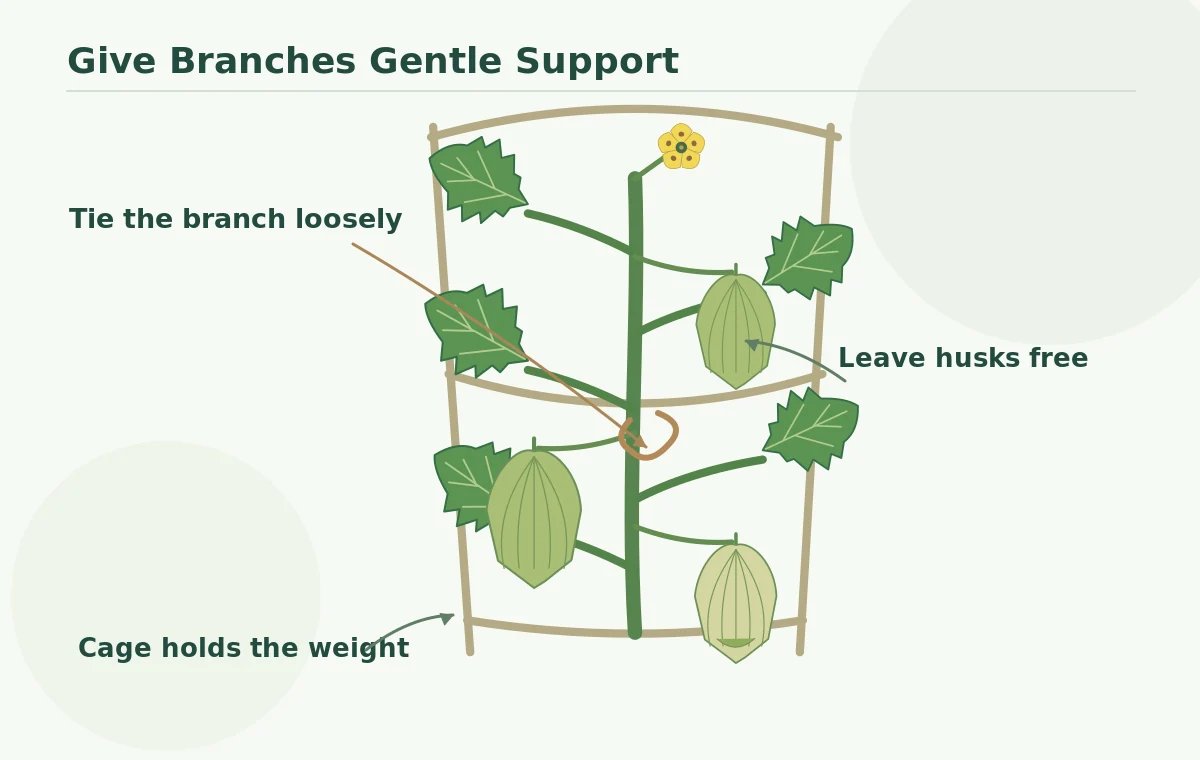
Utah State University Extension recommends staking or caging tomatillos because they naturally sprawl and branches can bring developing fruit close to the soil. Set a sturdy cage around a young transplant while its branching outline is still manageable. Press the cage supports securely into the soil beyond the main root ball, taking care not to pierce the planted stem or damage established roots.
The goal is a scaffold that branches can lean against, not a narrow sleeve that crushes the growing plant. Tomatillos often spread outward and require more elbow room than a tiny seedling suggests. Choose support width by anticipated mature plant habit and the amount of pruning you plan, and position access paths so you can reach fruit without wrestling with sharp metal or bent branches.

Guide a Branch Through Without Pinching a Node
As stems lengthen, gently direct growing branches through the cage openings while they are flexible. Their leaves and developing fruit should remain outside sharp wire junctions where possible. If a heavy branch needs help, use a broad soft tie with room for the stem to thicken, securing it to a vertical support rather than cinching it tight around a delicate husk.
Never fasten a tie around a flower, calyx or filled lantern. A developing fruit hangs on its own small pedicel, which must stay free to expand. Check support points after wind or rapid growth. Replace a tie that rubs bark, cuts into a branch or pulls a main fork into an unnatural angle. Add extra support rather than bending older brittle stems back into place.
Recognize the Flower, Calyx and Berry
A tomatillo flower has five yellow lobes with darker spots and a central cluster of reproductive parts. After fertilization, the calyx expands into the characteristic veined green husk. Inside, the actual smooth round fruit enlarges while the husk turns paler and papery. This sequence is a useful identification clue and prevents the common mistake of treating each empty husk as a fully formed fruit.
In the cutaway, the smooth berry is surrounded by a visibly separate calyx wall, with an air gap in the young stage. The enclosure is attached at its narrow base to the fruiting stalk. A ripe fruit may nearly fill or split the covering, depending on variety and weather. Be careful not to damage the fruit when lifting and inspecting the husk.
Use Support to Improve Airflow and Ground Clearance
Keeping tomatillo branches lifted can make harvesting easier and reduce direct contact between husks and damp soil. Utah State also notes that improved air circulation may lessen some disease and slug problems. Support does not create immunity, however. Water soil rather than repeatedly soaking the foliage when possible, and remove obviously diseased fallen material according to local garden advice.
Do not crowd several vigorous plants within a single undersized cage. Openings should be wide enough for routine inspection of both sides of the plant. If you see curled leaves, odd spots or poor set, identify the cause instead of automatically blaming inadequate support. Diseases, temperature, water stress and nutrient imbalance can all alter appearances; local Extension IPM is the appropriate next step.
Allow for Pollination and Fruit Set
Many tomatillo cultivars produce more reliable fruit when a second genetically different plant flowers nearby; a lone isolated plant can have poor set. Check your cultivar notes and local Extension recommendations, and make room for pollinators to visit the small flowers. A cage should surround branches without putting the whole plant inside a fine barrier that blocks pollinating insects.
Warm, settled weather supports growth; cold damage and frost can abruptly stop a season. Water adequately while plants establish and fruit develops, but avoid creating a permanently saturated root zone. If the plant blooms without filling its husks, investigate pollination and local weather first. An empty lantern is a stage or symptom to understand, not automatically a pest problem.
Compare an Empty Green Husk With a Filled One
An early husk can look inflated even while the berry inside is small. A mature tomatillo usually fills much of its papery envelope, and a fruit may eventually push against or split the husk. Some varieties remain green when ripe, while others change toward yellow or purple. Check the seed packet and the firmness of fruit rather than using a single husk color as a universal rule.
The comparison illustration cuts one young lantern open to reveal a small central berry and places it next to a fuller husk wrapping a large smooth fruit. It does not show seeds growing on the outside of the calyx. If the husk is damp, damaged or rotten, examine the fruit separately. Handle ripe fruit with care; tearing at a branch can break a heavy fruiting fork.

Harvest While Preserving Branches for New Flowers
When a fruit reaches the mature stage for its variety, support the branch with one hand and detach the fruit carefully, preferably by snipping the little fruit stalk rather than yanking hard. Keep the natural husk if you want a protective covering for short-term handling, then remove it before washing and kitchen use. The surface of freshly husked tomatillos can feel sticky.
At season end, collect dropped fruit if you want to reduce volunteer seedlings next year. Remove or clean plant supports as appropriate for your garden’s disease history. A good tomatillo cage makes three tasks easier: supporting branch weight, checking lanterns at eye level, and cutting the fruit stalk without damage. None of those actions depends on making every plant look like a pruned single-stem tomato.
Related Guides
- How to Save Tomatillo Seeds From Ripe Husked Fruit Without Pulp
- How to Tell When Tomatillos Are Ready Inside Their Papery Husks
How We Research and Verify These Field Diagrams
These instructions were checked against university horticulture publications on October 28, 2026. In particular, we used Utah State University Extension tomatillo guide; University of Minnesota Extension tomatillo care. The drawings distinguish actual plant structures from generalized gardening symbols; conditions, cultivars, local climate and development stage can change exact timing.
This independent educational guide has no sponsored product recommendation or confirmed affiliate link. Read our affiliate disclosure. Consult your local Cooperative Extension for climate-specific advice and follow any applicable food handling or pest-control guidance.
A sturdy cage or stake is useful because mature branches sprawl and hold many hanging husks.
It is the flower calyx, which inflates around the developing berry.
No. Tie or rest a stem on support; keep the fruit and its delicate stalk free.
Very young fruits may be tiny inside the husk, and poor pollination can reduce fruit development.
Many tomatillos are ready as the fruit fills the papery husk, sometimes splitting it; use cultivar-specific cues.