
California poppy is recognized by vivid orange to yellow cup-shaped flowers and finely cut blue-green foliage. The seed-starting mistake to avoid is treating its seedlings like bedding plants to move around later. Eschscholzia californica develops a taproot that does not enjoy being damaged. Direct sowing into the final place usually lets roots establish without repeated disturbance, while very young plugs are an exception rather than the preferred routine.
Identify the Golden Flower and Fine Foliage
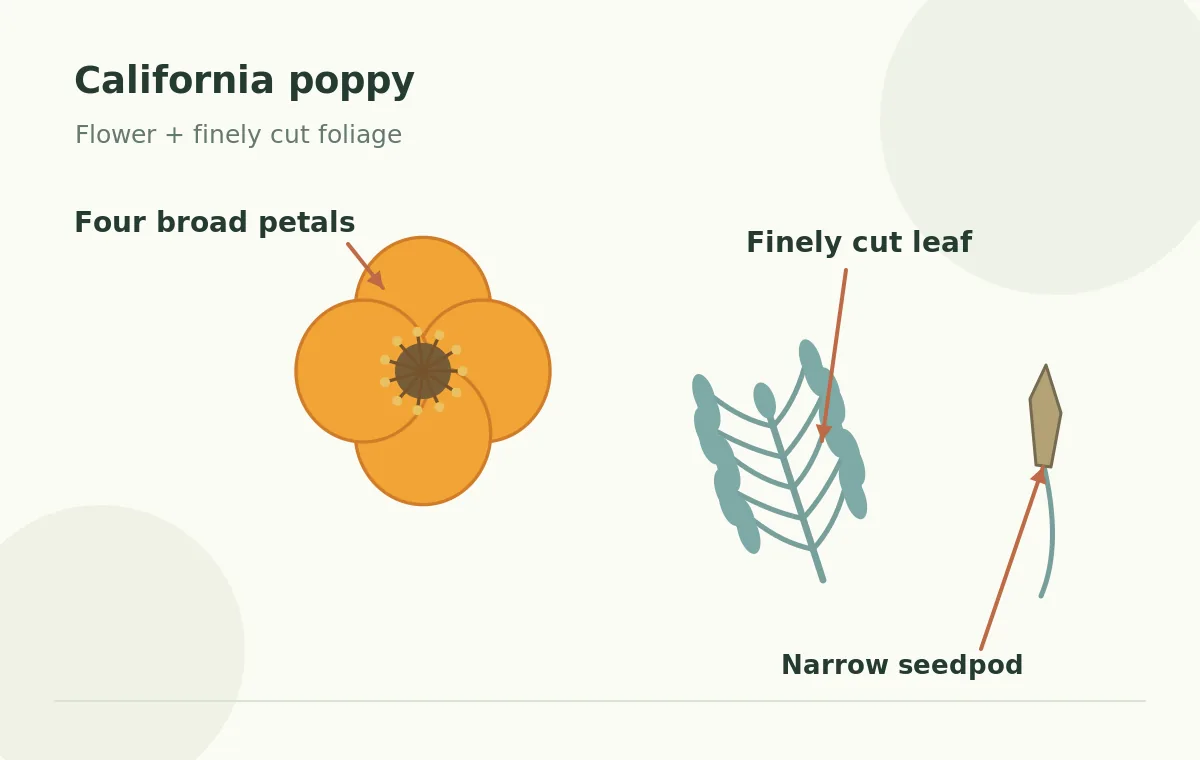
California poppy is Eschscholzia californica, not the same as the red field poppy Papaver rhoeas or the cultivated seed poppy Papaver somniferum. Its flowers generally have four broad, silky petals forming an open cup above gray-green, delicately divided leaves. Narrow elongated seed capsules form after flowering. Drawings should show the foliage as finely segmented rather than broad ovate leaves, and the root as a long central taproot with smaller laterals.
Orange is the classic flower color, but garden selections can have cream, yellow, pink, or mixed hues. Some plants persist as short-lived perennials in mild areas, while others behave as annuals, reseeding where adapted. The correct growing approach depends partly on regional rainfall and winter conditions. A species identification and a seed packet from a trusted supplier are better starting points than assuming every flower sold as a poppy needs the same sowing depth.
Choose a Permanent Sunny Planting Area
Plant directly where the flowers can remain. Full sun and well-drained soil are generally preferable. UC Master Gardeners describe California poppies growing well even in modest, relatively poor soils and warn against waterlogging. Select a place where tall neighboring plants will not shade seedlings during establishment. Remove major weeds first because the fine emerging leaves can be mistaken for weeds until you learn their appearance.
Avoid planting where the plants would be invasive or undesirable after they reseed; local recommendations should take precedence. If the species is native and suitable in your region, a massed drift can suit a low-water border after establishment. Keep the area accessible for weed removal and light watering. Do not enrich the bed heavily merely to encourage foliage, and avoid a site where sprinklers continually soak the root zone once plants are established.
Sow Small Seeds on a Prepared Surface
Rake the soil surface to a fine tilth, scatter seed thinly over a marked patch, and press it in gently. UC guidance describes raking seed into the top loose layer or even lightly pressing it without a deep covering. The exact method can depend on rainfall, soil texture, and the packet instructions; a shallow position is far safer than burying tiny seeds in a deep trench. Water with a fine spray if the season is dry at establishment.
The practical diagram shows small seeds close to the surface rather than at the bottom of a one-inch hole. It also distinguishes a compacted crust from an open fine seedbed. For a broad wildflower patch, mix seed distribution carefully instead of dropping all the seeds in one clump. If irrigation is needed, use a gentle application that does not wash the seed downhill. Mark the area so you do not cultivate through tiny seedlings later.

Match Sowing Season to Local Rainfall
In Mediterranean-climate parts of California, fall sowing with the arrival of seasonal rain is common. In colder or wetter climates, a suitable spring sowing period may be more practical. Use local native-plant advice and the seed packet, not a universal calendar based on USDA winter-hardiness zone. Freshly germinated seedlings need time to establish before severe heat or persistent frost, and drainage matters in prolonged winter wet.
UC Master Gardeners note that natural rainfall can trigger fall-sown seeds. If sowing outside that pattern, maintain enough moisture for germination but avoid saturating the soil. A thick bark mulch layer placed directly over tiny seed can prevent emergence or keep the wrong moisture balance. A light, clean surface and careful watering are simpler. Keep notes on the first rainy period and the appearance of seedlings in your own garden.
Recognize Seedlings and Thin Carefully
New plants begin with seed leaves, then develop deeply dissected bluish foliage that becomes a useful species clue. Wait for true leaves before confidently distinguishing them from unrelated volunteers. If seedlings emerge crowded, snip selected extras at soil level instead of pulling a whole group and disturbing adjacent roots. The goal is enough open space for individual plants without breaking the taproots of plants left behind.
If only a few seedlings appear, check for washed-away seed, a surface crust, old seed, or poor timing before re-sowing. Avoid flooding an unresponsive bed. Some garden seed lots germinate unevenly, particularly under variable field temperatures. The detail illustration shows a small seedling with a central downward root that should remain anchored. Its fragile root explains why repeated potting-up often causes more damage than simply sowing into the final planting place.

Avoid Transplant Shock and Root Damage
NRCS explains that California poppy tolerates transplanting poorly except when a plug is very young. A mature plant with a long taproot is difficult to lift without tearing it. If relocation is unavoidable, minimize disturbance of the root ball, move the plant only when small, and water it in gently. Do not pull on stems or attempt to shorten the taproot to fit a shallow hole. Success is less certain than with direct sowing.
Our comparison panel shows an intact taproot growing downward in the original bed next to a transplant with its long root bent or broken. The visual is instructional, not a guarantee that every transplant fails. Newly purchased small plugs can sometimes establish when handled delicately, but this is not a reason to dig up crowded older plants during bloom. For most home sowings, use seed rather than treating moving plants as routine propagation.
Water Seedlings Then Reduce Intervention
Keep the sowing surface gently moist long enough for germination and establishment; then reduce unnecessary irrigation as plants become rooted and local conditions allow. Overwatered soil can encourage poor roots and disease. A well-drained sunny planting often requires less routine maintenance after establishment than a rich, constantly wet border. Inspect leaves and the soil rather than watering automatically on a rigid daily schedule.
California poppies can attract pollinators, so leave flowers standing while they bloom. Deadheading can affect repeat flowering and seed production, but if you want natural reseeding you must leave some mature capsules. Do not cut all seed-bearing stalks and then expect new plants next season. If spreading is unwanted, remove pods before they open. Follow local rules for collecting wild plants or seed; taking material from public land can be restricted.
Distinguish Seedlings From Mature Seedpods
Flowering ends with a slender elongated capsule that dries and can release seed. This capsule is not the plant part to bury as a new plant; the individual seeds inside are what you sow. The final diagram compares the early seedling, mature orange flower and dry narrow pod. It also locates the narrow capsule beneath the former blossom, preventing the common mistake of portraying a big round poppy capsule associated with other poppy genera.
For next year, choose between collecting a labeled quantity and allowing natural reseeding in a suitable area. Work with clean dry seed, and do not plant wild-sourced seed in locations where it is prohibited or could harm existing vegetation. Your best measure of success is a stand of healthy plants with intact roots and true species-specific foliage, not an artificially high number of seedlings crowded together.
Related Guides
- When to Sow California Poppy Seeds and Why Direct Sowing Helps
- How to Direct-Sow Nasturtium Seeds Without Disturbing Their Roots
- How to Direct-Sow Common Poppy Seeds Without Disturbing Roots
- How to Direct-Sow Sunflower Seeds at the Right Depth After Frost
- How to Direct-Sow Cosmos Seeds and Thin Seedlings for Strong Summer Flowers
How We Research and Verify Botanical Details
Sources reviewed October 28, 2026: www.nrcs.usda.gov — USDA NRCS California poppy plant guide describes the species and notes that it tolerates transplanting poorly except when plants are very young. ucanr.edu — UC Master Gardeners describe direct seeding, good drainage, light surface raking, and the long taproot that makes transplanting difficult. ucanr.edu — UC Master Gardeners note that California poppy seeds can be scattered in fall with initial rains and that plants may reseed themselves. This guide distinguishes documented species facts from timing that varies by climate, weather and cultivar. Botanical diagrams simplify scale without changing the relevant structures. Consult your local Cooperative Extension for regional recommendations.
This independent educational guide does not include paid placements or verified product affiliate offers. Please read the VegWin affiliate disclosure. Identify pests and diseases before considering controls, and follow local integrated pest management guidance rather than untested recipes.
Very young plugs may succeed, but direct sowing is generally preferred because of the sensitive taproot.
No. Prepare a fine surface and follow shallow sowing or gentle pressing guidance.
Match sowing to the local rainfall and temperature pattern, often fall in Mediterranean climates.
No. Eschscholzia californica differs from Papaver species in foliage, flower and fruit anatomy.
They may reseed naturally where adapted if you leave mature capsules on suitable ground.