
Grow stevia from a labeled starter plant, locate its leaf nodes, pinch stems for branching, and protect the tender plant from cold. These illustrations explain visible botanical structures and practical decisions rather than offering a universal calendar. Match the steps to your cultivar and local weather.
Start With the Correct Sweetleaf Species
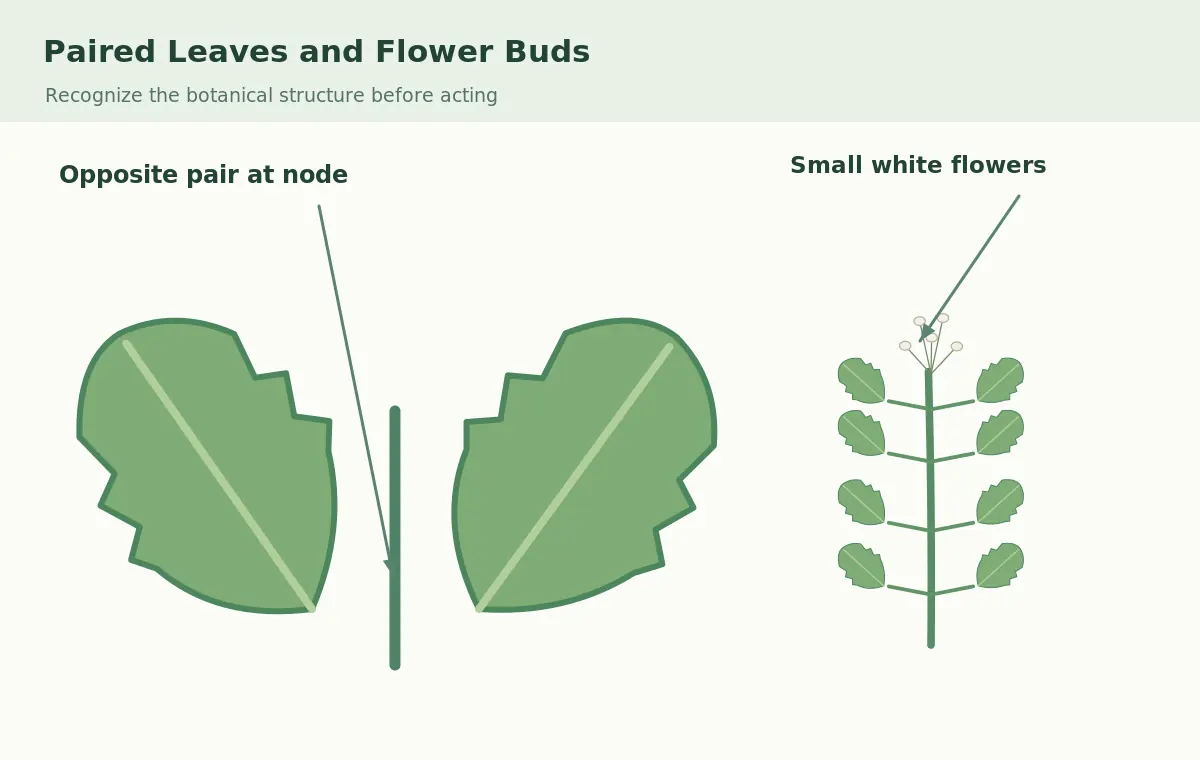
Stevia rebaudiana is a tender member of the daisy family, grown for sweet-tasting leaves rather than ornamental rays of yellow petals. Its green leaves are usually oblong to lance-shaped with toothed edges and occur in opposite pairs along upright shoots. Small white tubular flowers can develop in loose clusters at the stem tips. These features distinguish living stevia from a pot labelled only sweet herb, which might contain an entirely different crop.
The NC State Plant Toolbox and RHS both describe stevia as a tender perennial. In colder gardens it is often treated as a warm-season annual or grown in a pot that can be protected from freezing temperatures. A known rooted starter gives predictable identity and is easier than depending on seed lots with variable germination or sweetness. The botanical detail drawing makes the paired leaves, shoot node and terminal flower cluster visible.
Pick a Sunny Site With Moist but Aerated Roots
Place stevia in bright light, introducing a greenhouse plant gradually to strong outdoor sun. RHS notes full sun to partial shade, while NC State describes moist, well-drained soil. Those phrases go together: stevia is not an arid succulent and not a marsh plant. Give it a pot with open holes and quality potting mix that retains some moisture without standing wet. Leaves can wilt in hot dry wind even when the plant has no disease.
Use a container broad enough for a leafy crown to develop and one you can move when cold weather approaches. Check moisture below the surface and water thoroughly whenever the root zone is becoming dry, then let excess drain. A saucer of standing water does not give additional useful irrigation. If a small starter is placed in an enormous pot of permanently soaked mix, its still-limited roots may struggle for oxygen; avoid exaggerated pot sizes as well.
Recognize the Growth Tip and Opposite Nodes
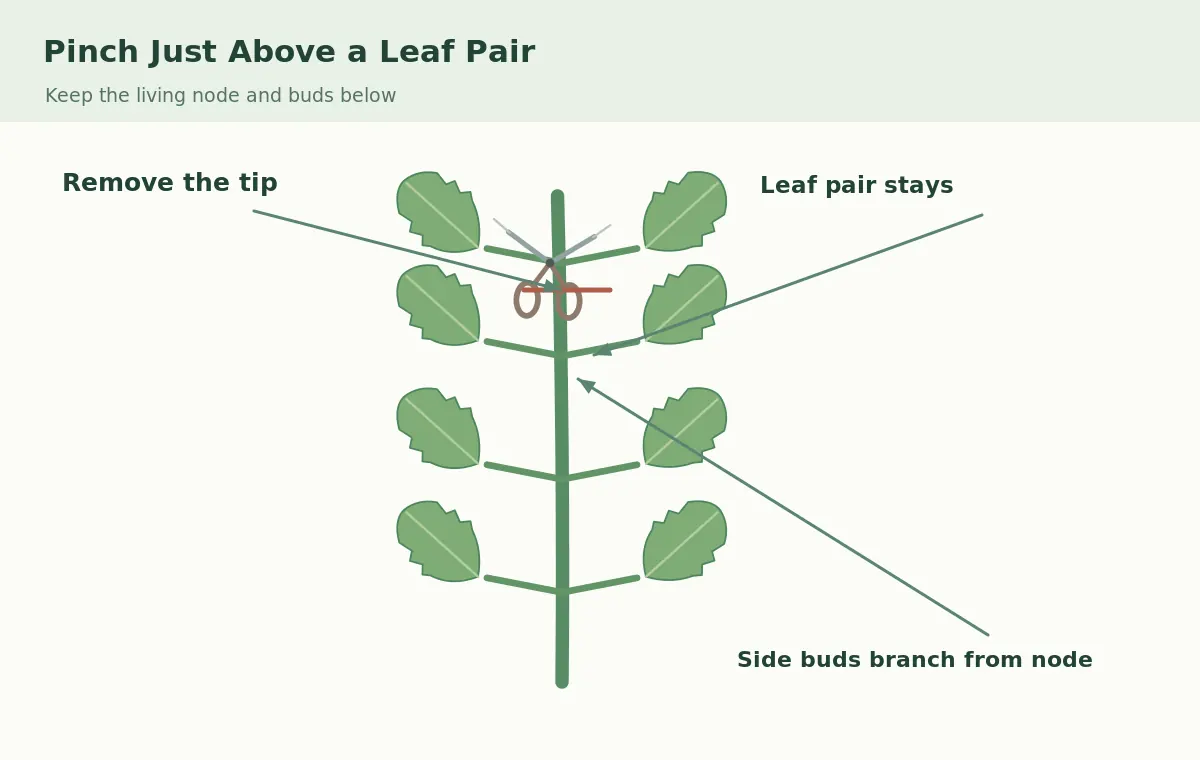
Look closely at an upright stevia stem: at each node, two leaves extend in opposite directions. A small growing tip continues above the highest complete leaf pair. When a young plant has several healthy nodes, a light pinch above a leaf pair removes the terminal tip while leaving two living axillary buds below. Those buds can form new shoots that produce additional leaves. The effect is delayed, not an immediate doubling of harvest on the same day.
Use clean fingers or snips, and keep the stem above the pair intact for a short distance so the blades do not bruise the node. Do not cut below every visible leaf or strip the entire crown. The action diagram shows the exact node left behind and the small tip removed. On a weak newly rooted cutting, prioritize root establishment over heavy pruning; a plant cannot replace leaves vigorously if it has not formed a working root system.
Repeat Light Harvesting Without Exhausting Stems
Select firm healthy leaves and tender growing tips for household use. Remove a portion of the foliage and allow time for new branches to develop instead of shearing the whole plant bare repeatedly. Leaves from stevia differ in sweetness by plant, growth stage and handling; a pinch of fresh foliage is not nutritionally or chemically equivalent to a measured commercial purified sweetener. Test flavor carefully rather than promising an exact sugar substitution.
UF/IFAS notes that stevia leaf sweetness and harvest quality are generally favorable before flowering, and describes dried leaf use. If your goal is foliage, pinch developing white flower clusters after identifying them correctly. Do not mistake a pale leaf emerging at the apex for a flower bud. An open white flower is part of normal plant development, not mildew. A plant deliberately left to bloom should be managed differently from one routinely cut for leaves.
Protect a Tender Stevia Plant From Cold Weather
Stevia is frost-sensitive. Move a portable container to suitable shelter before freezing nights rather than relying on a USDA plant zone to specify a universal date. Indoor survival depends on adequate light, modest watering relative to slower winter growth and protection from very cold windows. A leaf drop after an abrupt move may reflect light or temperature shock, not necessarily fatal root disease. Inspect the crown before deciding to discard the pot.
If growing as an annual, harvest usable leaves before damaging frost and plan a fresh planting next warm season. If retaining it indoors, shorten growth as needed while leaving healthy nodes, and check for aphids or mites around tender tips. Indoor dry air can change leaf appearance and moisture use. Do not keep watering at midsummer rates when the plant is barely growing. A correctly managed pot is neither waterlogged nor bone-dry through winter.
Use Cuttings When Consistent Plants Matter
Commercial stevia seedlings grown from seed can differ in vigor and sweetness. Cuttings from a known healthy parent give a closer match because they preserve that parent’s genotype. Select a nonflowering shoot with several leaf nodes, remove lower leaves that would sit in the rooting medium and place the base in a clean, airy moist substrate. Provide bright indirect light until roots develop. Use fresh clean tools and avoid cuttings from wilted, diseased or infested stems.
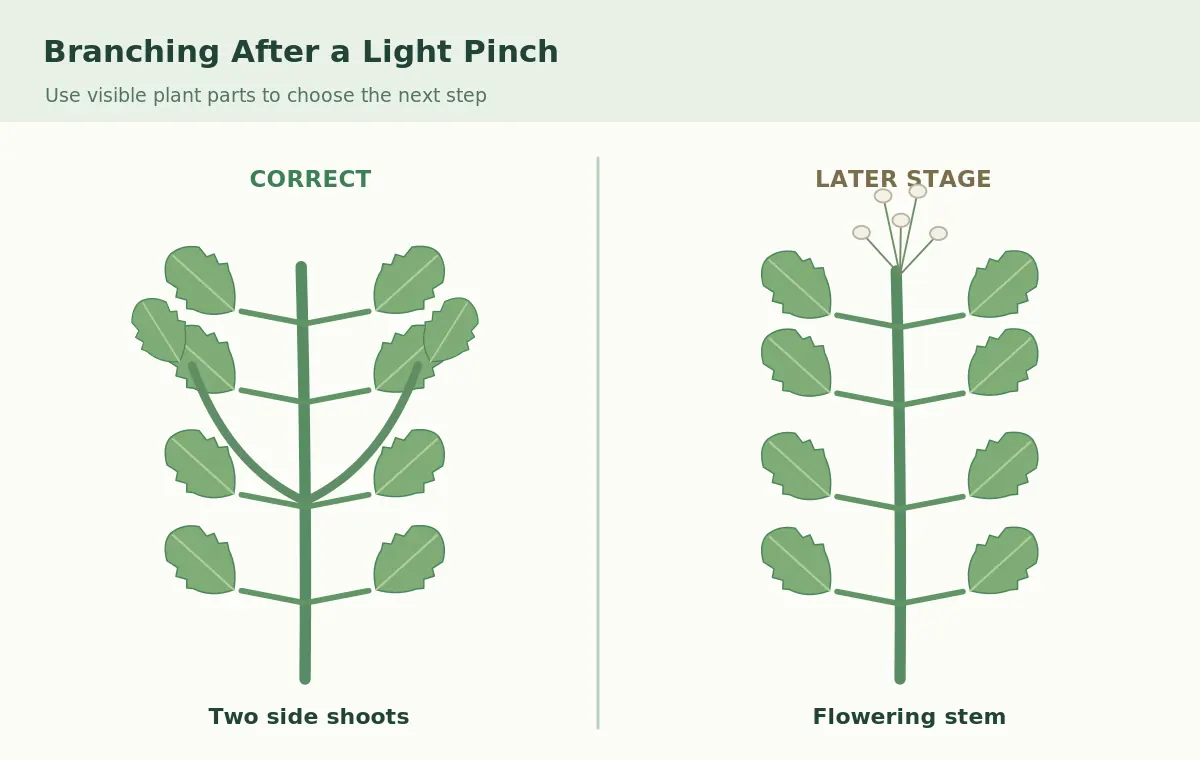
General Extension propagation guidance supports placing nodes appropriately and maintaining moisture without waterlogging. Rooted stevia cuttings should be moved with their new roots intact. Do not describe root formation from any random leaf blade as guaranteed; whole-plant propagation requires a suitable bud or stem node. The comparison illustration shows branching from a retained pair of nodes, not new leaves materializing from a severed naked stem.
Know What Home-Grown Stevia Can and Cannot Promise
A homegrown leaf can flavor drinks, but its taste depends on cultivar, maturity, preparation and individual preference. Commercial stevia extracts are processed products with standardized ingredients; the leaf on your plant is not the same concentration or form. Avoid medical claims about blood sugar treatment or dosing. People who need dietary guidance should follow professional advice rather than treating a garden herb as medication.
Keep a simple growing record: plant source, pinching dates, cold exposure and response to harvest. If flowering reduces leafy growth, adjust pruning while leaves are still healthy. If wet soil damages roots, fix the drainage before increasing feeding. The successful result is a branched green plant with many paired leaves and a firm living crown. Its best management decisions come from visible plant structure, not claims that stevia grows identically everywhere.
How We Research and Verify Plant Identification
Sources checked on 2026-10-27: gardeningsolutions.ifas.ufl.edu: UF/IFAS identifies stevia as a sweet-leaved plant whose leaf quality is generally best before flowers develop. plants.ces.ncsu.edu: NC State describes Stevia rebaudiana as a tender perennial with green leaves needing moist but well-drained growing conditions. www.rhs.org.uk: RHS describes the tender bushy species with lance-shaped leaves and loose clusters of small white flowers. The botanical figures are explanatory drawings, not photographs; actual cultivars vary in appearance and scale. Specific sowing timing must follow local conditions.
This educational article has no sponsor or paid product placement. Read our affiliate disclosure. Follow local Cooperative Extension directions and legally approved product labels before using any pest-control product.
It is botanically a tender perennial but may need frost protection or be grown as an annual in cold climates.
Immediately above a sound opposite leaf pair, leaving living nodes that can produce side shoots.
No. This species produces small whitish flowers in clusters, not big showy sunflower heads.
No. Keep it reasonably moist while allowing surplus water to escape freely.
No. Whole leaves vary, whereas commercial sweeteners are processed and often standardized.