
Angelica archangelica is an architectural herb with thick stems, broad divided leaves and large rounded umbels of pale flowers. Getting it started can be confusing because advice for an ordinary fast-germinating summer annual does not fit this plant. The RHS angelica guide stresses fresh seed, adequate light, cool moisture and patience, while older dried seed may benefit from moist cold stratification. The next challenge arrives when a seedling begins to build a deep taproot: moving it late and bare-rooted can check growth. This guide separates the two seed pathways and shows how to keep the growing point and root intact.
Identify True Angelica Before Sowing
Angelica archangelica is a member of Apiaceae, the carrot family. Mature plants form sturdy stems and deeply divided, compound leaf structures, with many tiny flowers grouped into rounded or hemispherical umbels. This appearance is not shared by every plant sold under the loose name angelica: ornamental Angelica gigas has striking purple umbels, while several dangerous wild umbellifers can look superficially similar. Buy correctly labelled seed from a dependable grower rather than collecting plants or seed from an unidentified roadside stand.
Young seedlings will not yet resemble a mature towering flowering stem. Cotyledons precede the adult divided foliage, and identification improves as later leaves emerge. Do not recommend eating any plant on the basis of this garden article alone. For edible or medicinal uses, reliable botanical identity and appropriate food-safety guidance are essential. The cultivation pictures focus on seed, true leaves, a live basal growing point and the root system rather than suggesting a wild-foraging shortcut.
Choose the Fresh-Seed Route First
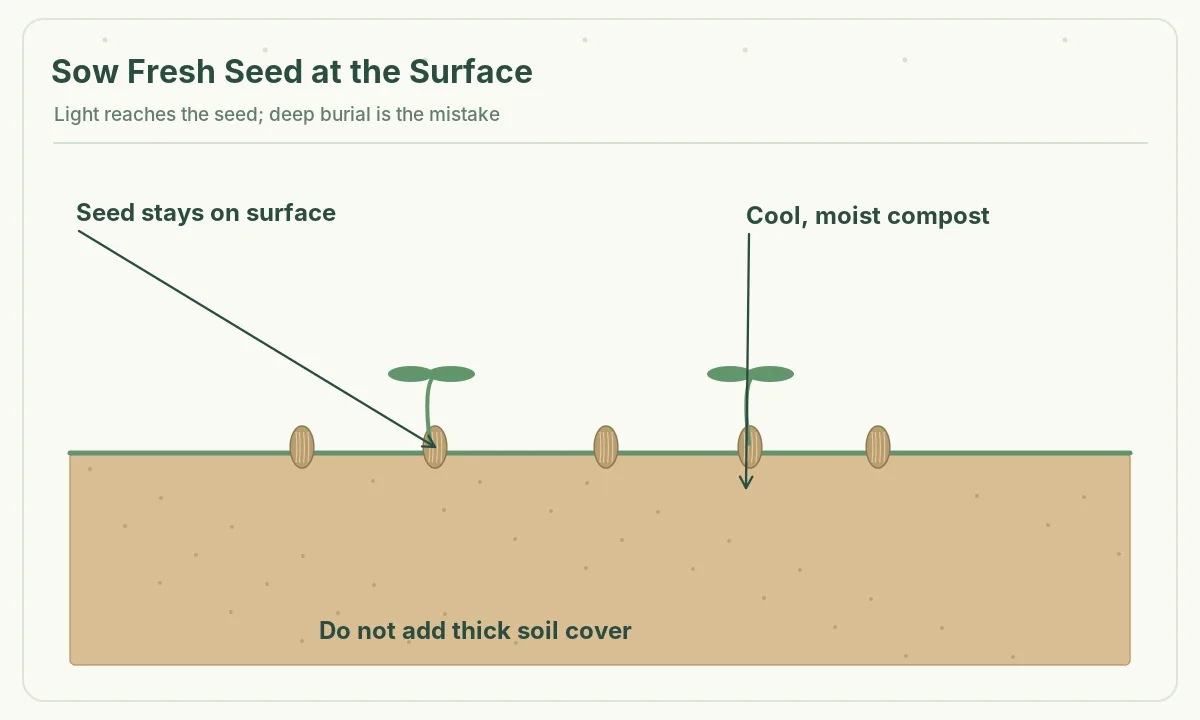
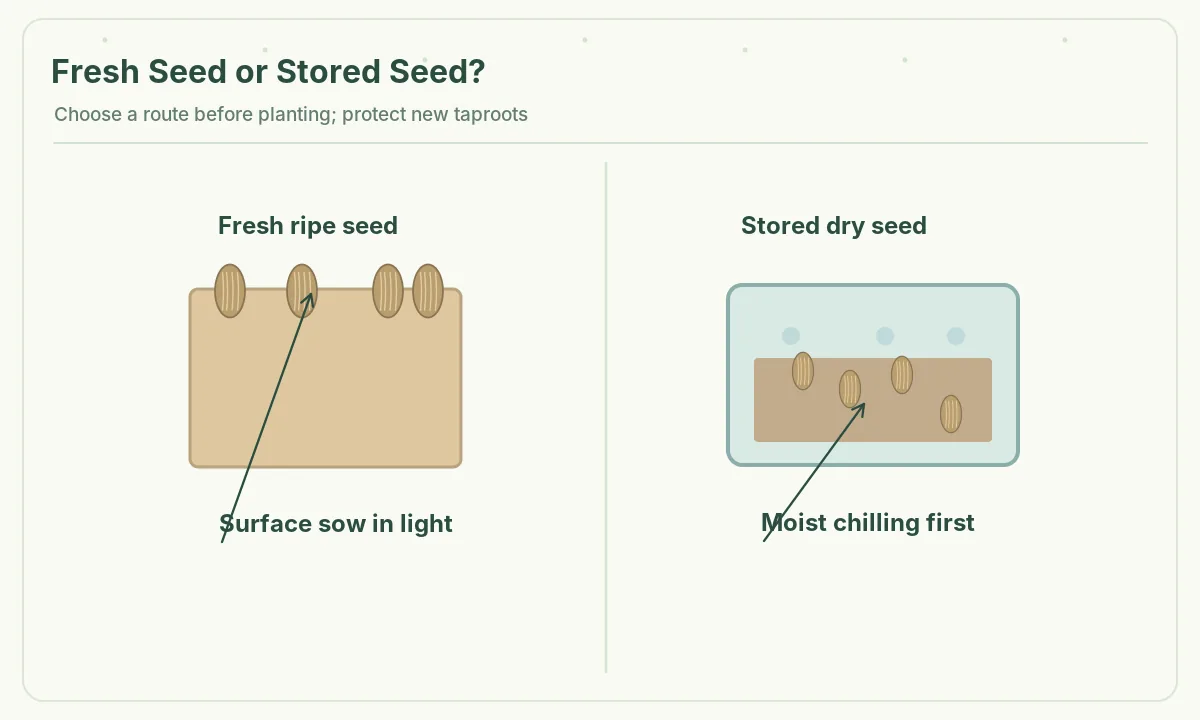
The RHS guide recommends obtaining angelica seed as fresh as possible because its storage life for germination is short. Fresh ripe seed can be sown on the surface of a suitable fine seed compost with good light, keeping it moist in a cool protected place. Unlike many larger garden seeds, the current species-specific RHS recommendation is not to cover these fresh seeds with a heavy layer of mix. Use a shallow tray or pot in which small seeds will not wash away when you water.
Mark the sowing date and species. Keep conditions consistently moist without leaving the tray in a standing water bath; roots need oxygen. RHS describes a cool environment around 10–13°C (50–55°F) as useful for the fresh-seed method. An unheated greenhouse, cold frame or suitable cool window can be more appropriate than a hot propagator. Do not call an ungerminated tray dead after a week: RHS says germination may take one to three months.
Treat Stored Seed Differently From Fresh Seed
Dry seed that has been stored often needs a period of cold moist stratification before sowing. The RHS angelica guide describes mixing stored seed with damp compost in a sealed container, holding it near 4°C (39°F) for about four to six weeks, then returning it to appropriate sowing conditions. That is a simulated winter exposure, not freezing dry seed or dropping seed directly into ice. Check for premature germination during treatment so living roots are not left tangled in a bag.
Put the seed and damp medium in a clean labelled container and keep it safely away from food contamination. Avoid making the compost wet enough to drip. After the specified cool period, sow under the light and temperature conditions recommended for angelica, then maintain patience. Do not present stratification as a guarantee: older seed may have lost viability, and cultivar and seed history matter. The central choice is known fresh seed versus dry stored seed, not a blanket statement that every angelica seed must be chilled.
Watch Seedlings for a Developing Taproot
RHS explains that angelica produces a substantial taproot and resents having an established root system disturbed. Move young plants into deeper individual pots once their true leaves appear, before roots fill the starting container. A seedling drawing should show the stem emerging above the surface, the new leaf between early leaves, and a single central root growing downward with smaller branches. It should not depict a shallow mat like a common turf grass.
Prepare the receiving container before touching seedlings. Ease them up with enough surrounding compost to shield fine roots; handle foliage rather than crushing the tender stem. Replant at approximately the same depth, keeping the growing point visible and not pressing a thick mound across it. Water gently, then inspect drainage. A long bare root left exposed in sun or wind loses moisture faster than one transferred promptly within a plug. Slower growth after rough transplanting is not proof that a stimulant is needed.
Give Young Plants Moist Soil and Some Shelter
Angelica thrives in fertile, deep soil and does not favor an extremely hot dry position, as the RHS botanical profile notes. Select a location where the soil remains reasonably moist but still drains. Choose afternoon protection where summers are hot, rather than assuming that all seed-grown herbs thrive in reflected patio heat. Space final plants with regard to their eventual large leaf spread, not their tiny seedling dimensions. Windy exposed positions may require support for mature flowering stems.
Acclimate protected seedlings gradually to outdoor conditions before planting. In containers, confirm that drainage holes remain unobstructed and check moisture at depth. The crown should stay at its established soil level. Angelica is not an instant small indoor herb: its growth pattern extends through at least two seasons, with foliage and root establishment before large flowering heads develop. A healthy first-year leaf rosette is progress, not a failed flowering plant.
Understand the Flowering and Seed Cycle
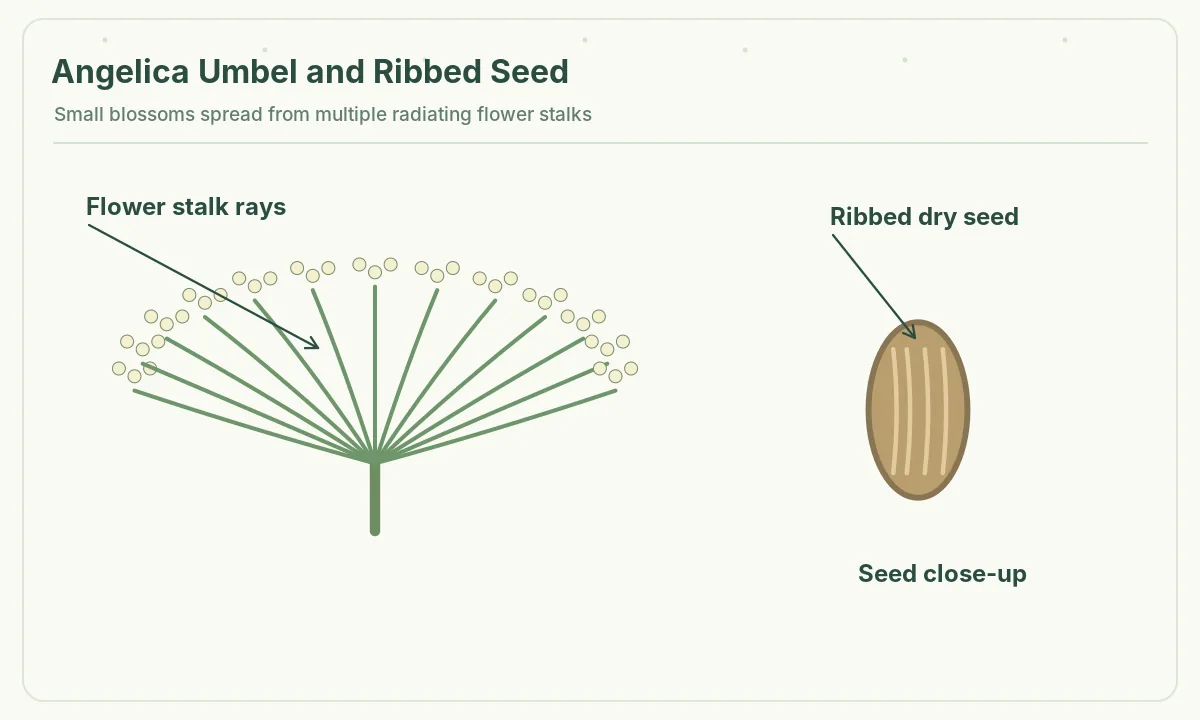
Angelica is frequently biennial or short-lived, often flowering after storing energy in a large root and then completing its life cycle. RHS notes that preventing seed set or removing flowers may extend the life of some plants, although no individual can be promised to persist indefinitely. Rounded umbels carry many tiny florets and later numerous dry seeds. A diagram of an actual umbel has radiating spokes supporting clusters of flowers, not a single composite daisy head or a ball of unrelated petals.
If you wish to save seed, isolate the plant from confusing lookalikes and label the collected material immediately. Seed from a named selection may not always reproduce identical traits. Gather it when mature according to specialist advice, then sow fresh where practical instead of assuming a long shelf life. Wear gloves if sap sensitivity is a concern and keep unidentified plant material away from children and pets. Do not advise tasting leaves or roots to identify a young umbellifer.
Diagnose Low Germination Without Guessing
When few seedlings emerge, review the seed’s age first. Next check whether the tray was overheated, excessively wet, darkened by a thick covering layer or allowed to dry repeatedly. A documented fresh seed lot sown in light under cool conditions deserves more patience than a warm windowsill sowing from unknown old stock. If you used stored seed, verify the length and moisture of the cold treatment instead of repeating it blindly. Open and inspect only a small test area rather than disturbing every remaining seed.
If seedlings germinated but collapse later, inspect drainage, air movement and handling at transplant. Angelica is not rescued by burying a weak stem deeply. Keep notes for a second sowing: a fresh batch in the recommended cool setting is usually a better diagnostic experiment than repeatedly changing fertilizer or watering the same failed tray. The actionable rule is fresh seed on the surface, stored seed with assessed chilling, then early movement of a protected taproot.
How We Research This Guide
We reviewed the following authoritative horticultural references on October 27, 2026: www.rhs.org.uk — RHS explains that fresh angelica seeds should be surface-sown without cover in good light at cool temperatures; stored seeds may need 4–6 weeks of moist cold stratification.; www.rhs.org.uk — RHS botanical profile identifies Angelica archangelica, its large divided foliage and umbels, and advises transplanting seedlings young due to root disturbance.; www.rhs.org.uk — RHS genus germination table documents cool conditions and potentially slow angelica emergence; species-specific current guidance takes precedence for covering.. Recommendations about outdoor timing must be adjusted for local conditions and cultivar.
No manufacturer or product endorsement is implied. Read VegWin’s affiliate disclosure for the site-wide policy.
RHS advises surface sowing fresh seed without covering it, because light is useful for germination.
RHS recommends moist cold stratification of dried stored seeds for about four to six weeks near 4°C.
Even fresh seed may take one to three months under suitable cool conditions, according to RHS.
Move them young once true leaves appear, into deeper pots before the taproot becomes difficult to move.
No. Do not eat or collect unidentified carrot-family plants; dangerous lookalikes exist.