
A tomatillo is not a small green tomato and is not the same crop as a ground cherry. Its tart fruit grows inside a lantern-like papery husk, and its many small, flattened seeds sit in moist flesh. Saving those seeds is straightforward when you choose healthy, sufficiently mature fruit, remove pulp, rinse and dry the material thoroughly. The more difficult part is genetic: tomatillo flowers generally need cross-pollination, so the presence of a named parent variety does not guarantee the same traits next year. This guide separates seed cleaning from pollination and labeling decisions.
Recognize Tomatillo Fruit and Its Seeds
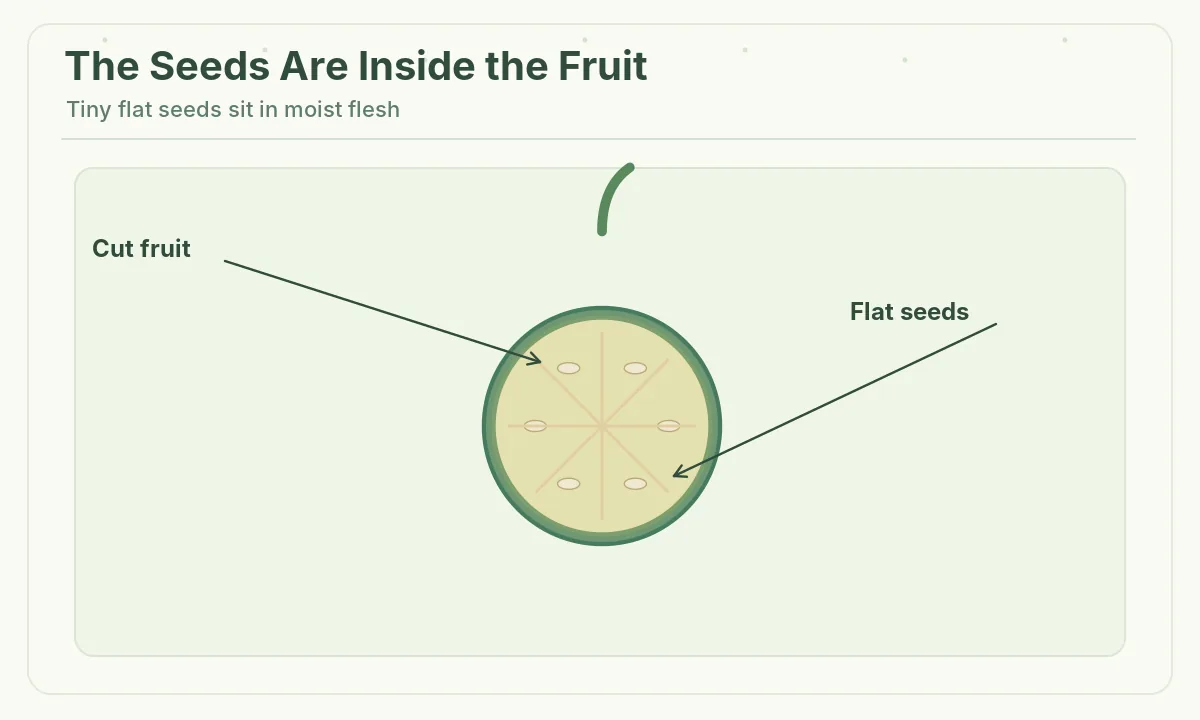
Tomatillos are Physalis philadelphica (also called P. ixocarpa in older materials), relatives of tomatoes but enclosed by a husk formed from the flower calyx. Their foliage is broad and often toothed, flowers commonly yellow with darker markings, and the fruit pushes outward until it fills or splits the papery husk. Ripe usable fruit may be green, purple or another cultivar-specific color; not every tomatillo turns red. Inside the flesh, numerous small pale, flat seeds radiate in chambers, rather than one large pit.
A clear botanical drawing should show the husk around the spherical fruit, plus a cross-section with tiny flattened seeds in the wet interior. The husk itself contains no seed and should not be confused with the fruit flesh. A ground cherry fruit and husk may look similar, but ground cherries usually ripen and fall; University of Minnesota Extension distinguishes that behavior from harvesting firm, filled tomatillos.
Select Healthy Fruits and Reliable Parents
Seed Savers Exchange notes that tomatillo seeds are mature when fruit is ready to eat. University of Saskatchewan recommends leaving selected sound fruits on plants as long as reasonably possible before frost when saving seed. Choose fruit from healthy vigorous plants with the traits you want to retain. Avoid obviously diseased or rotting material; mature does not mean moldy. Mark a few fruits specifically for seed so they are not all used for salsa before collection. Keep cultivar labels and planting notes with the chosen plants.
Do not assume that saving from a named hybrid recreates it. Seed from F1 plants may segregate, and even a designated open-pollinated cultivar can be crossed by another tomatillo variety visited by pollinators. This is a parent-selection issue, not something fermentation or washing can repair after the seed formed. Honest labeling is therefore part of the seed-saving job.
Understand Why Several Plants Help Set Fruit
Tomatillos are generally self-incompatible, meaning pollen from a genetically compatible second plant is usually needed for reliable fruit set. Pollinators move pollen between flowers; planting one lone plant may give little fruit even if it looks healthy. University of Saskatchewan describes the crossing issue, and Seed Savers Exchange recommends a population rather than relying on one isolated plant. When multiple varieties bloom nearby, offspring may differ visibly from the fruit’s parent plant. You cannot assess paternal ancestry by inspecting the seed.
For seed saving true to a named variety, separation and managed pollination matter. A household garden without controlled isolation can still produce useful experimental seed; simply label the lot as possibly crossed. Do not claim that spacing plants by a few feet prevents bees from carrying pollen. The best protection is realistic expectation and a record of all flowering tomatillo types in the area.
Scoop Out Small Seeds and Pulp
Remove the dry husk, rinse the fruit and cut it over a bowl. Squeeze or scoop out the wet seed-bearing pulp, working carefully so the smallest seeds are not lost. A little clean water helps loosen the sticky mixture. Seed Savers Exchange describes short fermentation to separate seed from pulp, followed by rinsing; the instructions apply specifically to tomatillos, not an assumption that every vegetable seed should ferment. Alternatively, Utah State University Extension describes separating seeds from mature fruit and thoroughly drying them, so small clean batches can be processed without inventing a complicated treatment.
Use clearly labeled containers and process only one variety at a time. Keep seed bowls away from kitchen food preparation and wash tools afterwards. If a batch has an abnormal odor or excessive contamination, reconsider whether it came from healthy fruit. Wet-processing removes material around the seed but does not sterilize a diseased lot or undo any crossing in the flowers.

Wash Away Pulp Without Losing Seeds
For a short fermentation workflow, follow the specialist seed-saving guide and do not let containers sit for an arbitrary week. After pulp begins separating, add clean water, stir gently and allow heavier seeds to settle. Pour off floating debris carefully, refill and repeat until little pulp remains. Use a fine mesh strainer for a last rinse so the many small seeds are not lost down the drain. Visible mold may develop during controlled fermentation; wear gloves if needed and do not treat an unlabeled, neglected jar as safe merely because one website mentions mold.
A staged illustration should depict three distinct objects: a bowl with wet seeds and flesh, a strainer receiving clean seeds, and a screen with separated seeds drying. The actual tomatillo seeds are flattened and tiny, not round bean seeds. Do not rely on floating alone as a perfect laboratory viability test; it is a practical debris-separation method that may lose some viable seed.
Dry the Flattened Seeds Before Storage
Spread washed seeds in a thin single layer on a nonstick fine screen or coffee filter in a clean, airy place out of harsh direct sun. Break up clumps gently as they dry. Do not pack damp seeds in a closed envelope or jar, since trapped moisture encourages mold and reduced storage quality. Fully dried seeds feel firm and separate from one another. Seed Savers Exchange describes checking whether they fracture rather than bending; if unsure, extend gentle drying rather than using strong artificial heat.
Write the crop name, parent cultivar where known, date and crossing notes on an envelope before filling it. Cool, dry, stable storage is usually more important than an elaborate container. Do a modest germination test the following season if the lot has experienced humidity or age. Avoid promising that seed from a hybrid or crossed plant will match the harvested fruit color.

Distinguish Tomatillos From Ground Cherries
Both are Physalis species with husks, but the harvest cues are not interchangeable. University of Minnesota Extension describes tomatillos as usually picked firm while the fruit fills the husk; ground cherries typically develop dry husks and drop when ripe. Do not show the classic tiny golden fallen ground cherry as the only tomatillo reference photo. Tomatillo fruit is generally larger and chosen for salsa or other savory dishes, while ground cherries are commonly smaller and sweeter. Seed-saving decisions still depend on sound mature fruit and the plant’s pollination history, not only the husk color.
If you are unsure which crop is growing, compare the plant tags, flower structure and fruit size. Do not save a mixed bowl and label all its seeds tomatillo. A side-by-side fruit comparison is useful if it illustrates accurate differences instead of copying a generic lantern shape and assigning two labels.
Keep a Seed-Saving Record You Can Trust
A short record is enough: original packet name, number of plants, other flowering tomatillo varieties nearby, date of ripe fruit collection, cleaning method and drying date. If all of that is known, you can make informed decisions when next season’s seedlings differ from expectation. If it is not known, label the collection simply as seed saved from tomatillo fruit. Distinguish a planted edible crop from a controlled breeding or preservation project rather than pretending the same standards apply.
The takeaway sequence is fruit identification, mature healthy selection, pulp removal, final rinse, thorough drying and accurate labels. Each step answers a different question. Wet-processing produces cleaner seeds; only pollination management controls genetic identity. A good set of pictures shows the actual husk, cross-section, seed workflow and crossing warning without turning the article into empty decorative text boxes.
Related Guides
- How to Cage Tomatillo Plants Without Crushing Their Papery Husks
- How to Tell When Tomatillos Are Ready Inside Their Papery Husks
How We Research This Guide
We checked the following specialized references on October 27, 2026: seedsavers.org — Seed Savers Exchange: seed maturity at edible fruit stage, brief fermentation/washing, drying, and multiple parents for pollination.; gardening.usask.ca — University of Saskatchewan: tomatillos are self-incompatible insect-pollinated plants, save seed from healthy ripe fruits and manage varietal crossing.; extension.usu.edu — Utah State University Extension: mature tomatillo fruit seeds should be separated from flesh and dried thoroughly.; extension.umn.edu — University of Minnesota Extension: tomatillos fill their husks while firm and have different harvest behavior from ground cherries.. These guides support specific botanical claims, but local weather and cultivar behavior require separate judgment.
There are no paid product placements or confirmed affiliate recommendations in this article. Review our affiliate disclosure for site policy. Product labels and regional Extension advice take priority wherever they are relevant.
They generally mature by the stage when sound tomatillo fruit is ready to eat; choose healthy, well-developed fruits.
Seed Savers Exchange describes short fermentation for separating pulp, while careful washing and full drying are the essential practical goals.
Tomatillos are generally self-incompatible and benefit from multiple compatible flowering plants for pollination.
Yes. Insects can move pollen, so seed from a named variety may not breed true when other varieties flower nearby.
Dry them completely, label the source and crossing risk, and keep them cool, dry and protected from fluctuating humidity.