
Leaf amaranth can produce tender cooked greens when cool-season spinach struggles in summer heat, but only when the right crop is selected. The name amaranth covers many species and ornamental forms, and globe amaranth belongs to a different genus altogether. Small Amaranthus seeds need a fine seedbed, a very shallow covering and soil that has warmed enough for prompt emergence. The practical challenge is not burying those tiny seeds or allowing crowded seedlings to become a solid tangle. Here is a crop-specific outdoor sowing and harvest method.
Confirm the Packet Says Edible Leaf Amaranth
Start by reading the botanical name, intended use and variety information. Vegetable amaranths in the genus Amaranthus can be grown for leaves; ornamental plume and grain types have different plant architecture and harvest goals. Globe amaranth, Gomphrena, is a separate flowering plant and is not the same seed or crop. RHS describes the Amaranthus genus as diverse, containing both edible and decorative forms. Do not collect leaves from unidentified weedy amaranth or ornamental plants treated with non-food-crop pesticides. Buy seed specifically marketed for edible greens from a reputable source and keep the original label. This matters for food safety as much as for harvest texture.
Wait Until the Soil Is Actually Warm
Amaranth is a warm-season crop; planting into spring chill invites slow emergence and weeds that outgrow the seedlings. University of Minnesota Extension advises waiting until garden soil reaches roughly 60°F before outdoor planting. Use a soil thermometer and your region’s last frost pattern rather than treating a USDA hardiness zone as a sowing calendar. In warm coastal regions, the appropriate date may differ greatly from northern inland gardens. The warm soil guidance applies to leaf amaranth, not every annual flower called amaranth. Avoid a wet, cold seedbed even if daytime air briefly feels hot, because seed conditions are determined in the top layer of actual soil.
Prepare a Level Fine Seedbed First
The seeds are small enough to disappear into deep clods or coarse mulch. Loosen compacted surface soil, remove stones and big debris, rake to a fine level texture and lightly firm it so watering will not wash seeds into pockets. A sunny, well-drained position with access to irrigation supports even germination. RHS notes that Amaranthus performs well in a warm, sheltered sunny site; moderate consistent moisture aids leafy growth. Avoid adding concentrated fertilizer in seed rows or promising a universal nitrogen rate without testing the soil. A level bed simplifies thinning, inspection and harvest, and gives shallow-sown seeds a consistent path to light.
Barely Cover Tiny Seeds With Soil
Scatter seed thinly along a short prepared row or marked small patch. University of Minnesota describes the planting depth as very shallow, with seeds barely covered. The objective is good seed-to-soil contact, not a deep furrow that entombs germinating seedlings. A fine dusting of sifted soil may be appropriate for leafy Amaranthus; never apply an inch of heavy clay over these tiny seeds. Press gently after sowing and water with a delicate shower that does not displace seed. If you sow in a mix, follow that named cultivar’s label for depth. Draw a permanent row marker so emerging amaranth seedlings are not accidentally weeded out.
Keep the Surface Moist but Not Waterlogged
During germination, the uppermost soil layer must not form a dry crust. Check daily in hot windy spells; a fine spray or carefully adjusted drip system can moisten the bed without eroding seed rows. After emergence, water sufficiently to support even leaf growth while allowing drainage and air movement. Overwatering is not a shortcut to faster germination; constantly saturated seedbeds can rot seedlings and encourage disease. Consider a temporary light shade from intense midday heat during establishment only if it does not prevent adequate light or air circulation. Once roots are functioning well, adjust watering to actual weather and soil texture, not a rigid daily volume.
| Situation | Suitable action | Common error |
|---|---|---|
| Soil below roughly 60°F | Delay direct sowing | Planting in cold wet beds |
| Seed just placed | Barely cover and mist | Burying under a deep furrow |
| Crowded seedlings | Thin or harvest as baby greens | Keeping mature plants packed tightly |

Thin Early According to Harvest Goal
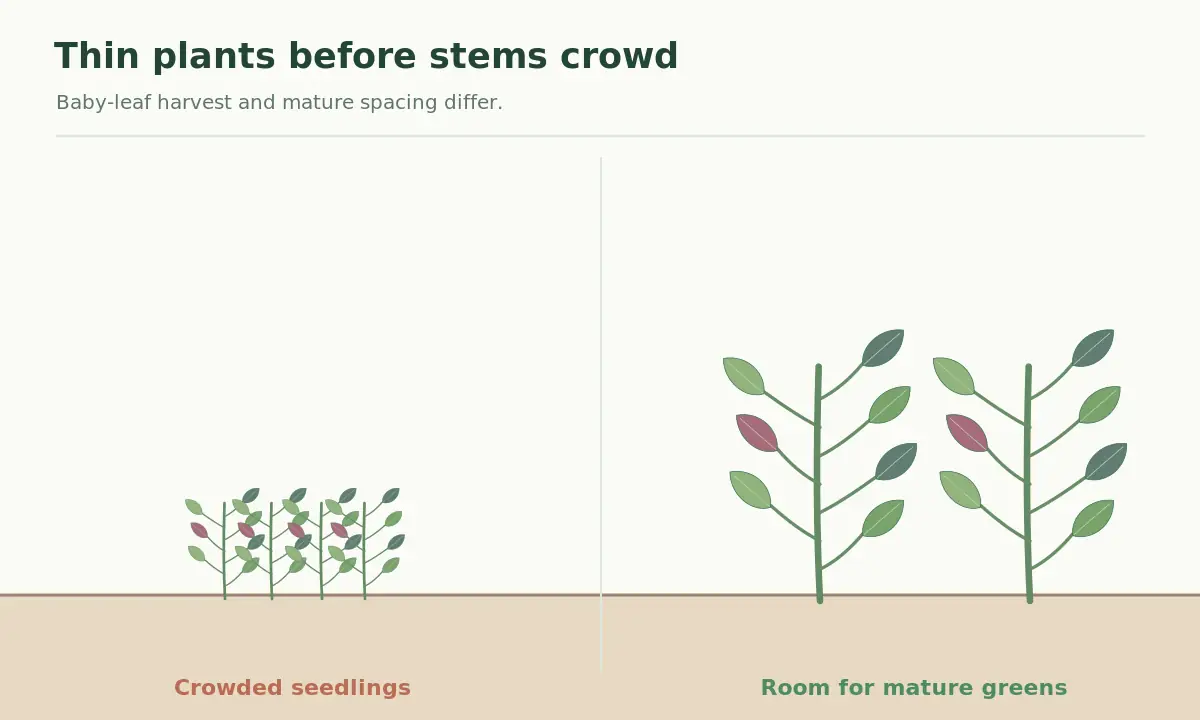
Thick germination produces dozens of weak competing stems. Minnesota’s vegetable amaranth guidance lists approximately 8–12 inches between mature plants and 12–24 inches between rows for larger leafy production. For very young baby greens, a denser temporary stand may be deliberately harvested early, but do not expect full-size plants to thrive at seedling density. Snip unwanted seedlings at soil level to avoid wrenching nearby roots. Use clean edible thinning material only if identification is certain and plants have not received unsuitable treatments. Work through the row while seedlings are small and leave the strongest individuals for reliable harvest later in the season.
Harvest Young Leaves Without Stripping Stems
Leaf amaranth can be sampled once the plants have enough foliage to keep growing; Minnesota Extension describes leaf harvest starting when plants are roughly eight inches tall. Take usable tender tips or several older leaves while retaining growing points and a significant photosynthetic canopy. For a bunching harvest, allow enough further growth for your desired leaf size and texture. Harshly removing every leaf in extreme heat can delay recovery. Wear clean gloves and place cut leaves immediately into a clean container. Young amaranth leaves are commonly cooked, but use only varieties known to be edible and follow normal produce hygiene and preparation practices for the intended recipe.
Distinguish Plant Flowers From Leaf Quality
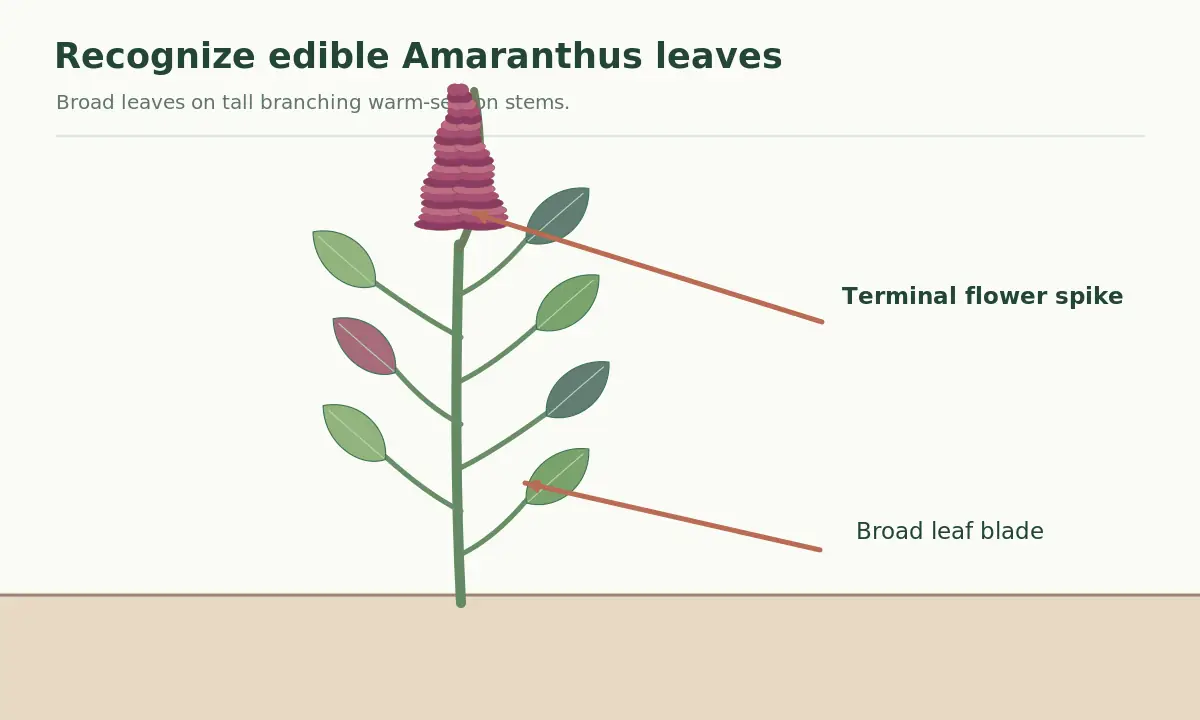
As Amaranthus plants mature, upright or sometimes drooping clustered flower structures develop. Leaf texture may change as stems become tall, but a colorful flower plume alone does not identify the crop as a good cooking green. Growing plants for grain requires an entirely different maturity and harvest plan than repeated greens picking. If a stand is being kept only for tender leaves, succession planting can be more useful than harvesting increasingly coarse foliage from a flowering plant. Keep seed production under control; some amaranths self-sow and a few related species are serious agricultural weeds. Check local weed restrictions and remove unwanted seed heads before they shed.
Avoid Common Mistakes With Lookalike Seedlings
Pigweeds are also Amaranthus relatives, and some can look very similar to garden amaranth early on. Do not assume that any broad-leafed weed growing near the seeded row is the intended edible crop. Confirm emergence in the labeled row against known seedling images and preserve the seed packet details. Remove competitors before they seed, and never consume plants that cannot be positively identified or that may have been sprayed. If thin leaves show chewing damage, identify the culprit before trying pesticides. Products registered for ornamental amaranth are not automatically labeled for edible leafy amaranth; follow food-crop uses and harvest intervals where treatment is legally permitted.
Keep a Simple Sowing and Harvest Record
Write down soil temperature, sowing date, variety, seed depth and how many days passed to emergence. Then note thinning distance, the first young-leaf harvest and whether plants recover well. This small log gives more practical information than a hardiness-zone slogan, because microclimate and cultivar change establishment speed. If a patch emerges irregularly, check whether rain moved seed, a crust formed, or it was planted too deep before purchasing new fertilizer. Next time, use small sequential rows with space for airflow instead of sowing an entire packet in one tight clump. The goal is dependable edible leaves, not the maximum number of stems.
Related Guides
- Direct Sowing Seeds Outdoors: A Crop-by-Crop Success Checklist
- How to Start Red Amaranth Seeds Indoors Without Leggy Seedlings
How We Research and Verify This Guidance
Sources reviewed on 2026-10-24: University of Minnesota Extension; Royal Horticultural Society; University of Maryland Extension. We read the crop-specific or pest-specific material, checked timing and species distinctions, and made these simplified instructional drawings as teaching aids rather than photographs. This guide does not replace site-specific soil testing, local restrictions or recommendations from your Cooperative Extension office.
Sources, Disclosures, and Local Safety
Factual scope for each source is also recorded in the article metadata. No specific product, sponsorship or affiliate relationship is claimed. Read our affiliate disclosure. Only harvest from correctly identified edible Amaranthus varieties. Confirm local weed restrictions; never use ornamental-only pesticides on food crops.
Wait for suitable warm soil and avoid frost risk; University of Minnesota recommends soil around 60°F for vegetable amaranth.
Very shallowly; tiny seeds should be barely covered, with gentle watering to preserve seed-to-soil contact.
No. Globe amaranth is Gomphrena, while the leafy vegetable crop discussed here belongs to Amaranthus.
Yes, if the plant remains healthy and enough growing tissue and foliage are left after each moderate harvest.
Many amaranths can produce abundant seeds; remove unwanted flowering stalks before seed shed and check local weed rules.