
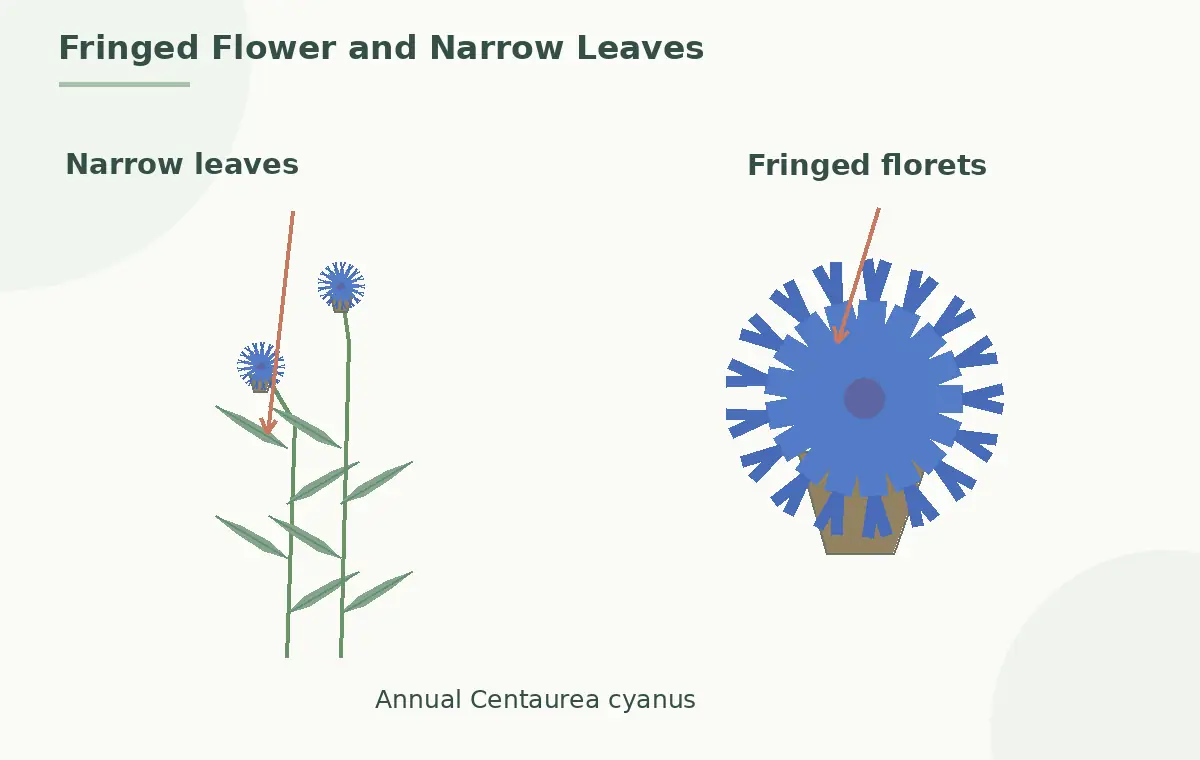
Annual cornflower, or bachelor’s button (Centaurea cyanus), is a cool-season flower with narrow gray-green leaves and striking fringed blue flower heads. It is not the perennial mountain bluet (Centaurea montana), even though both may be sold as cornflower. Direct-sow when your local conditions favor cool growth and give each seedling enough space before stems stretch. RHS teaches spring sowing in shallow prepared drills, while NC State notes that fall direct sowing can suit mild-winter climates. The following workflow helps you choose the right season, recognize the emerging plant and prevent the annual from spreading farther than you intend.
Identify Annual Cornflower Before Buying Seed
Look for the botanical name Centaurea cyanus on the seed packet. Annual cornflower produces finely fringed composite flower heads, commonly vivid blue but available in pink, white and darker selections. Its slender upright stems carry narrow gray-green leaves, not the broader leaves of perennial mountain bluet. This identity matters because transplant behavior, flowering season and management differ among similarly named ornamentals. Botanical images can help, but the packet name is the final practical check. If your aim is a predictable row of annual cut flowers, buy fresh labeled seed rather than collecting unidentified seeds from a mixed roadside planting. Keep cultivars labeled; seed from a mix may not reproduce exactly the parent colors. For a step-by-step method, see how to direct-sow cosmos seeds for strong, airy summer flowers.
Select Spring or Fall Sowing From Climate
Cornflower performs well in cool conditions, but a universal month is misleading across U.S. regions. RHS recommends spring direct sowing in its climate, while NC State notes fall sowing outdoors in places with mild winters. Where soil remains frozen through winter, wait for spring soil that can be prepared without smearing; where winter is mild and summer heat arrives rapidly, autumn may be more promising. Follow local Extension frost and seasonal guidance rather than converting a USDA plant hardiness zone into a seeding date. An unusually hot spring may shorten the best flowering window even when seeds germinate. You can sow a modest test strip first to learn the timing. For the basics, see our guide: When to Sow Cornflower Seeds for Strong Cool-season Blooms.
Prepare a Sunny Row With Fine Surface Soil
Choose a sunny site with drainage that does not stay waterlogged. Remove large weeds before sowing because they are difficult to disentangle from small emerging cornflower seedlings. Rake just the surface into a fine crumbly tilth rather than turning the entire bed deeply. Cornflowers tolerate modest fertility and generally need no heavy fertilizer program; too much lush growth and shade can encourage lodging. Water very dry soil first and let it settle. Mark the intended row with stakes or a small label so a helpful gardener will not mistake seedlings for weeds. If your soil crusts after rain, break the crust carefully between rows without disturbing the seed line.
Sow in a Shallow Drill and Cover Lightly
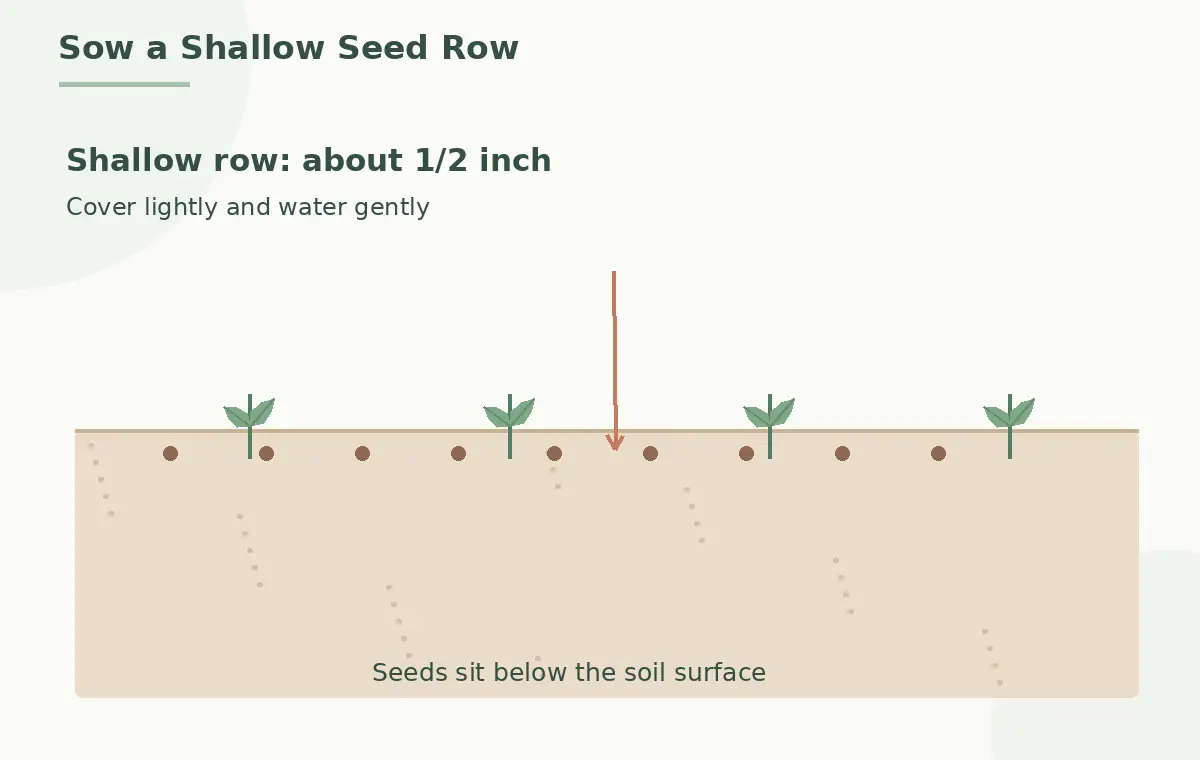
RHS describes a direct-sowing drill around 12 mm (roughly one-half inch) deep. Make a shallow furrow and distribute seed along it rather than dropping everything in one clump. Cover with loose soil, press gently for seed-to-soil contact and water with a fine rose or soft stream. A strong hose blast can wash tiny seeds into a corner where seedlings emerge as a crowded mat. Keep the surface evenly moist during establishment, not continuously saturated. Record the seed date on a label. A row need not be rigidly straight, but the ability to see the seedlings against a recognizable line makes early weed control much easier. For a step-by-step method, see how to direct-sow cosmos seeds and thin seedlings for strong summer flowers.
Recognize Germination and Thin Early
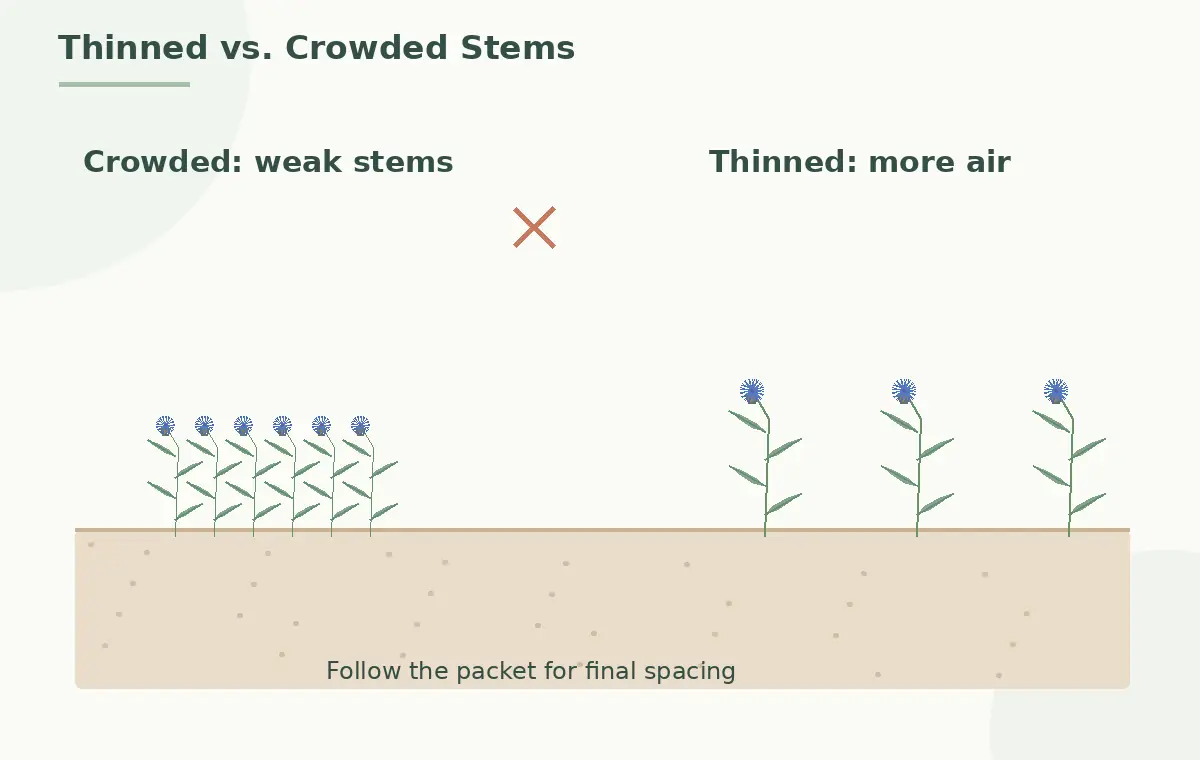
Look for young green seedlings along the marked row before assuming the sowing failed. A weed can emerge sooner than cornflower, so compare multiple seedlings in the line with a reliable plant reference rather than using one imperfect leaf to decide. As true leaves develop, gently thin crowded plants so remaining stems have light and air. RHS illustrates about 30 cm (roughly 12 inches) between larger plants; dwarf and tall seed strains may differ, so respect the packet’s mature-size guidance. Cut unwanted seedlings at soil level where pulling them would tug on neighbors. Overcrowding is not a proven way to obtain more flowers: it may increase slender, weak stems. For the basics, see our guide: When to Plant Larkspur Seeds for Reliable Cool-season Flowers.
Support Tall Stems Without Making a Tangle
Tall annual cornflowers can lean in wind or partial shade, especially if nitrogen is excessive or plants compete for sun. NC State notes that tall plants may benefit from support. Install discreet twiggy branches, a loose mesh or a simple stake early, before stems fold or flowering begins. Leave enough room to reach flowers for cutting. In a naturally sheltered, sunny bed a compact strain may not need any support. Do not bind several tender stems tightly against one stake; the goal is to prevent lodging while keeping the shape airy. After storms, lift bent stems gently rather than repeatedly twisting them back into position.
Water for Establishment, Then Watch the Soil
Newly sown cornflower needs moisture near the seed, but mature plants are more tolerant of a modestly dry site than seedlings. Water based on soil feel, local weather and signs of wilting, not a made-up daily volume. Apply water at soil level when practical to reduce leaf wetness and conserve water. Persistent wet soil can lead to weak roots even in a flower that seems easy to grow. A thin layer of mulch around established plants may help suppress new weed seeds, but do not bury tiny seedlings or the original sown row under heavy mulch before germination. Cornflower is not a substitute for a water-garden plant. For a step-by-step method, see how to direct-sow annual larkspur seeds in cool weather.
Cut Flowers Carefully to Encourage Display
Use clean shears and select flower stems that have opened enough for your intended use. Cut above healthy leaf growth without stripping so much foliage that the annual struggles to keep producing. Regular removal of spent blooms can reduce seed production and maintain a tidy appearance. Leave a few heads to ripen if you want to save seed or feed seed-eating wildlife, but understand this changes the next year’s volunteer count. Fringed petal tips and papery seedheads belong to different life stages. A flower that looks less blue and begins to dry is not necessarily a disease problem; inspect the whole plant before choosing treatment.
Manage Self-Sowing Before Seeds Leave the Head
NC State describes cornflower as a plant that can reseed and naturalize. If volunteers would be unwanted, deadhead before mature seed is released and check local invasive-plant advisories. Do not dump mature seedheads into wildlands, roadsides or neighbor borders. Some seed-grown varieties produce offspring that differ from the purchased strain, especially color mixtures. Seed saving is possible, but it is a separate aim from keeping a bounded annual bed. To reduce unwanted seedlings, cut back the last flowers and collect drying heads into a contained bag. Monitor next spring before allowing unfamiliar sprouts to spread outside the planned flower patch. For a step-by-step method, see how to grow borage from seed and manage its self-sown seedlings.
Keep a Simple Sowing and Flowering Record
Mark spring or fall sowing, the week seedlings first appear, the date you thinned, and the first bloom. These observations are better regional guidance than assuming the RHS month range will exactly match a warmer or colder U.S. location. Photograph a seedling beside its label and a flowering stem beside mature foliage. If plants lodged, record shade and spacing before blaming the seed lot. If weeds outcompeted the row, prepare a cleaner strip next season. A good test bed has a manageable width, room for thinning and a clear plan for deadheading or seed collection.
Related Guides
- How to Direct-Sow Nasturtium Seeds Without Disturbing Their Roots
- When to Sow California Poppy Seeds and Why Direct Sowing Helps
- How to Direct-Sow Sunflower Seeds at the Right Depth After Frost
- How to Direct-Sow Common Poppy Seeds Without Disturbing Roots
How We Research and Check Recommendations
We reviewed the named university Extension, land-grant IPM and specialist horticultural references for the precise species and task discussed here. The information and linked sources were checked October 24, 2026. We compared plant stage, season, climate, and risk statements rather than converting regional advice into universal planting dates or treatment instructions. The educational drawings explain structure and choices and are not presented as photographs or evidence of a controlled VegWin trial. Local Extension and product labels take precedence for region-specific problems.
Sources, Date and Editorial Disclosure
Sources checked October 24, 2026: University extension and horticultural reference — NC State Extension Plant Toolbox: cool-season annual identity, sowing alternatives, sun, slender foliage and self-sowing.; Royal Horticultural Society — Royal Horticultural Society: direct-sown spring drills about 12 mm deep, soil preparation and thinning.. The source organizations do not endorse VegWin.
Editorial disclosure: no paid product placement, sponsor or affiliate arrangement was verified for this article. Our next-step buttons use existing internal category links, not paid redirects. Read the VegWin affiliate disclosure. Gardening outcomes vary with local conditions; use a confirmed label for any crop-protection product.
Annual bachelor’s button commonly refers to Centaurea cyanus; check the Latin name to avoid confusion with perennial species.
Yes. Direct sow into fine, weed-free soil at the local cool-season planting window.
RHS describes sowing in shallow drills around 12 mm, about one-half inch, then lightly covering with soil.
Spring suits many cold-winter gardens; fall direct sowing can suit mild-winter climates. Local conditions decide.
They may self-seed. Deadhead and dispose of mature seedheads carefully if volunteers are unwanted.