
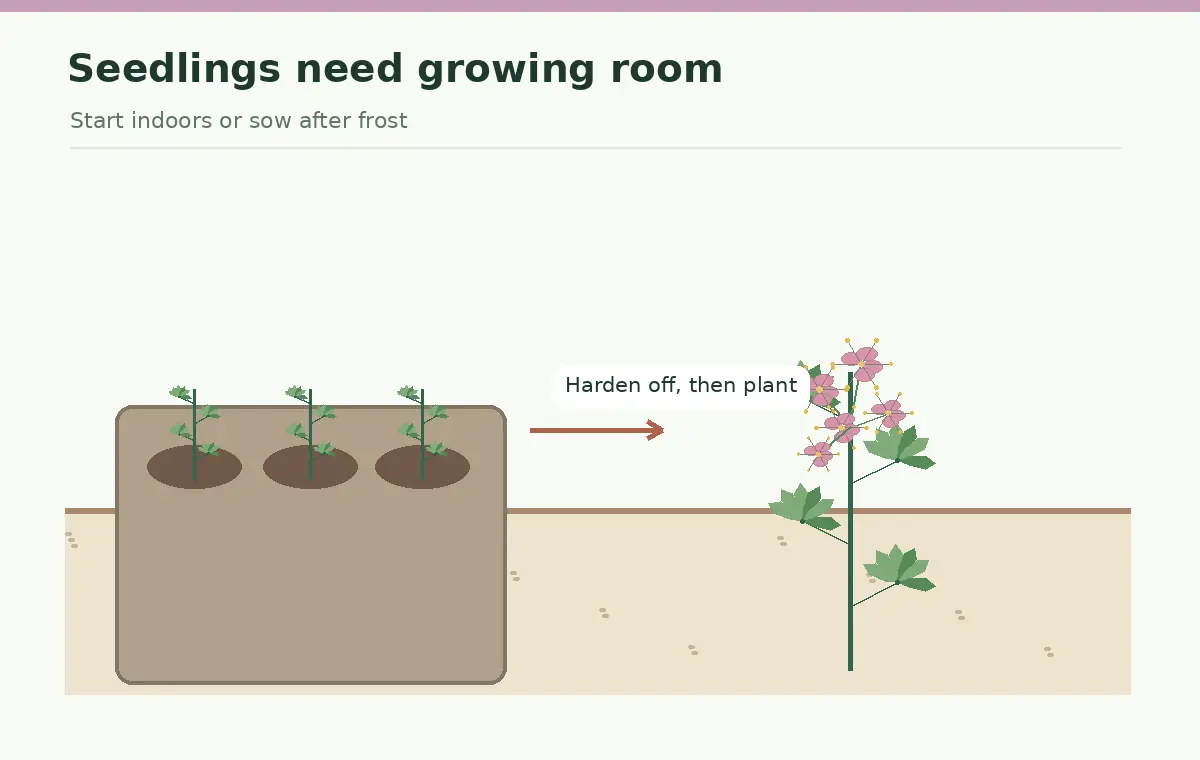
Spider flower is an unusual annual: a young cleome seedling begins with ordinary-looking leaves, then grows into a tall airy plant topped with clusters of pink, purple or white flowers and conspicuously long stamens. The main mistake is crowding seedlings because they look small in spring. Start from seed indoors if your season is short, or sow directly once frost danger is over, then give each plant enough space to branch. The following steps concern seed-grown Cleome houtteana, often sold as C. hassleriana, not sterile vegetatively propagated cleome cultivars.
Choose Seed-Grown Cleome, Not a Sterile Selection
Garden centers sell both traditional seed-grown spider flowers and modern cultivars propagated from cuttings. Some named sterile forms do not produce usable seed, so a plant label matters more than the generic word ‘cleome.’ Seed-grown plants may differ from the parent in height or bloom shade; do not promise identical offspring from saved seed. The familiar annual species develops a tall upright stem, palmately compound lower leaves and clusters of flowers with extended whiskerlike stamens. Look for that combination when choosing packets or checking volunteered seedlings. Seed-grown plants can also deposit many seeds around the bed if pods remain. Our walkthrough on how to start cleome seeds for tall summer spider flowers sets out each step.
Set a Frost-Based Sowing Window
Wisconsin Extension recommends starting cleome indoors roughly six to eight weeks before the average last spring frost, or sowing outdoors after danger of frost has passed. That is more useful than translating USDA winter-hardiness zones into dates. In a short-season garden, indoor transplants can begin flowering earlier. In a reliably warm climate, direct sowing may be easier and avoids handling delicate seedlings. Use your local historical last-frost range as an estimate, and check the immediate forecast before moving young plants outdoors. A surprise cold night can undo several weeks of good indoor growth.
Use Fresh Seeds and an Airy Growing Medium
Cleome seed viability declines during storage, so a fresh packet is preferable to seeds found in an unmarked drawer. Fill a clean tray with evenly moistened seed-starting mix that drains well. Sow according to the packet’s depth and germination directions rather than guessing at a universal depth for all cleome products. Avoid a dense crust of garden soil on top of tiny emerging seedlings. A covered tray may help retain moisture during early germination, but uncover promptly when shoots emerge and provide light and air movement. Keep the medium damp, never waterlogged.

Recognize the Seedling Before You Thin It
The first seed leaves are not the final identification feature. As the plant grows, true leaves become palmately divided, often with five to seven leaflets radiating from one point. Each leaflet tapers toward its attachment and looks very different from the divided, feathery foliage of cosmos. Mature flower stems may develop small prickles and sticky glands, so gloves are useful when handling them. Do not pull every unexpected seedling until it has enough true-leaf structure to identify. Equally, do not let a carpet of volunteers grow untouched; they compete for light and become weak, thin stems.
Harden Off Indoor Starts Gradually
A seedling grown under lights cannot immediately withstand strong midday sun, breezy weather and cool nights. Over several days, introduce indoor plants to sheltered outdoor conditions, increasing exposure as leaves remain firm. Keep trays watered without saturating their roots. Move plants into the garden only after frost risk has passed and the soil has begun warming. Pinching young plants is an optional method for a shorter bushier habit, but it can delay the first flowers; leave plants unpinched if you want the earliest tall spires. Handle root balls gently instead of loosening every fine root.
Space Plants for Their Mature Width
Traditional spider flowers can reach several feet tall and spread broadly. Wisconsin Extension says thinning at least a foot apart is important, with more room for bushier plants. Penn State lists typical annual-cleome spacing around twelve to eighteen inches; vigorous cultivars may need substantially more. Read the cultivar’s mature width and adjust the bed before the plants are crowded. Tall cleome works well behind shorter flowers or at the center of an island bed. Do not pack it against a walkway where sticky foliage and stems will brush everyone passing through.
Provide Sun Without Overfeeding the Plants
Full sun encourages strong flowering, and the soil should be well drained but not continually dry while plants establish. Supplemental watering may be needed during persistent drought, especially for young transplants. Excessive fertilizer or water can produce lanky growth, so do not assume that more feeding leads to a better display. Once established, cleome tolerates warm, relatively dry conditions better than seedlings do. Staking may be useful in exposed windy sites, but a well-spaced plant often supports itself. Check lower leaves and roots before blaming every lean or wilt on lack of fertilizer.
Understand the Flower and Long Seedpods
Individual cleome flowers have several narrow petals and long stamens extending from the flower center, giving the whole cluster its spiderlike look. The flowering spike continues to develop upward as narrow cylindrical pods form beneath older blooms. These slender pods are fruits containing seed, not insect eggs or signs of a disease. As pods yellow and dry, they can split open and scatter seed nearby. This botanical sequence matters when the next year’s volunteer seedlings are unwelcome. Seed color and size vary, and collecting a pod too early can give immature seed that does not store well.
Keep Volunteers or Remove Pods on Purpose
For seed saving, allow selected pods to yellow and begin drying, then collect them before they spring open and dry further in a labeled paper container. Keep saved seed dry and do not assume that a hybrid will return true to type. If you do not want self-sown cleome, remove developing pods well before they mature. Covering bare soil with an appropriate mulch can also reduce volunteer establishment. In some regions the species can naturalize; consult local invasive-plant guidance and remove escaped seedlings rather than releasing plants into wild areas. The nursery description ‘annual’ alone does not settle local ecological questions.
Distinguish Normal Leaf Drop From Trouble
Older lower leaves may drop late in the flowering season even on vigorous plants. Investigate if the plant is suddenly collapsing, rapidly yellowing from the center, or showing heavy pest damage. Aphids, flea beetles and other insects sometimes feed on cleome, but many plants flower well despite light cosmetic injury. Start with observation and sound watering rather than a routine pesticide spray. Check the underside of leaves, the base of stems and the moisture level in the soil. If leaves are sticky, remember that some cleome cultivars naturally have glandular hairs; stickiness alone does not diagnose insect honeydew.

Plan for Safe Handling and Next Season
Traditional spider flower stems can be prickly or resinous, and the scent of some cultivars is musky; gloves help when cutting back or pulling plants. In a frost-prone climate, the annual plants die with freezing weather, but self-sown seeds may emerge later. Note which cultivar flowered, how wide it actually grew and whether it self-seeded excessively. Place next year’s taller varieties where flowers can be viewed without crowding vegetable beds or walking paths. This short record is more valuable than memorizing a single spacing number that may not fit the selected cultivar.
Related Guides
How We Research and Verify Practical Advice
We compared authoritative Cooperative Extension and established horticultural guidance for the exact plant and decision in this article. Our review checked species names, relevant developmental stages, regional weather or soil limitations, and possible hazards rather than treating seed-packet dates or common gardening sayings as universal rules. The editorial source review was completed on October 24, 2026. Observations about your own cultivar, frost pattern and drainage still matter; if local Extension recommendations differ for your region, use those more specific conditions.
Source Notes and Editorial Disclosure
Sources checked October 24, 2026: hort.extension.wisc.edu — Spider flower morphology, indoor sowing 6–8 weeks before frost, outdoor sowing after frost and seedpod control.; plants.ces.ncsu.edu — Plant identity, full-sun growing conditions, height, flowers and seed propagation.; extension.psu.edu — Sowing annual seeds and allowing 12–18 inches or more between typical cleome plants.. We cite these materials for the particular claims described, not as evidence of sponsorship or approval of our illustrations.
Disclosure: This educational article contains no verified paid partnership, product sponsorship, or affiliate recommendation. Our illustrations are explanatory diagrams rather than photographs of a specific garden. Read the VegWin affiliate disclosure and verify local growing rules and conditions before taking action.
Yes. Sow seed-grown cleome after frost danger has passed and the soil has warmed; thin seedlings for mature spacing.
About six to eight weeks before the local average last spring frost is a useful Extension starting point.
The long protruding stamens are characteristic of spider flower; slender pods form beneath older flowers.
Traditional seed-grown cleome often self-seeds. Remove seedpods early if volunteers are unwanted.
Not necessarily. Cultivars and hybrids may produce variable seedlings, while some sterile selections do not set seeds.