
A grapevine can fill an arbor in one summer yet produce surprisingly few useful bunches if it is never pruned. The opposite mistake is equally frustrating: cutting away every long cane because it looks messy. Grapes fruit on this season’s green shoots arising from buds on last year’s mature growth. A practical pruning plan must therefore distinguish wood you keep permanently from wood whose buds make next year’s crop.
This guide is for established backyard vines trained on a fence, wire, or small arbor, not a recipe for a commercial vineyard. It explains how to choose a safe dormant window, identify cane and cordon wood, and decide which cuts belong to your training style. Cultivars, winter injury, and local pruning systems alter the details, so observe the vine before counting buds.
Wait for dormancy but work before active bud growth
The useful pruning period starts after leaves have dropped and vines have entered dormancy, and generally ends before spring buds open. Local winters differ dramatically. Oregon State’s regional discussion gives winter months for Oregon but also notes that pruning can extend into March there; those dates should not be exported to Minnesota, the Southeast, or a sheltered urban yard. In cold sites, some gardeners wait until the most severe winter weather has passed so they can inspect possible damage before selecting wood.
Check three things instead of using a wall calendar alone: leaves are gone, buds are still closed, and the weather is safe for the work. A light flow of sap from a late pruning cut can look dramatic but does not automatically mean the vine is ruined. If buds are swelling, handle canes carefully because they break easily. A grape with extensive winter damage needs a survival assessment, not an automatic heavy prune.
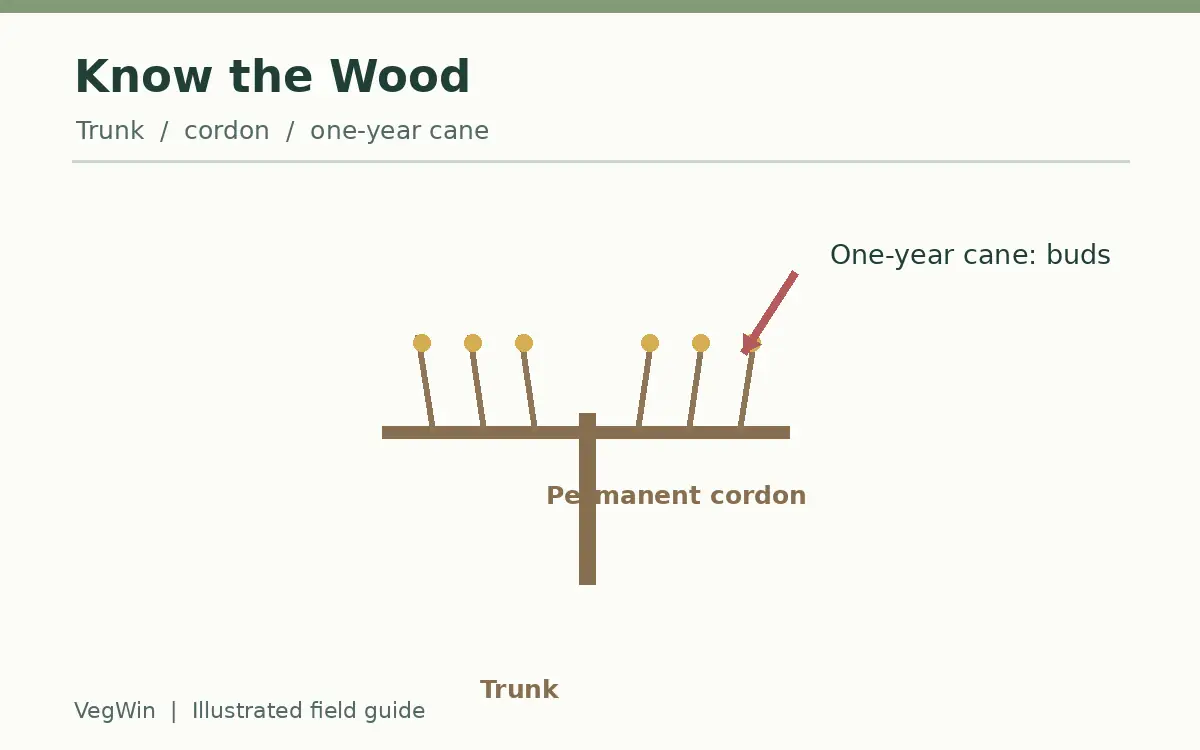
Find the trunk, cordons, canes, and dormant buds
Start at soil level. The trunk is the vertical, established stem; cordons are older horizontal arms that may remain for years. Coppery or tan canes that grew in the preceding season carry the buds from which new fruiting shoots emerge. Those terms have practical consequences. A cordon is not usually removed merely because its bark is rough. A cane is not worthless merely because its leaves fell. Look for plump buds spaced along sound, mature wood before selecting a pruning route.
On a neglected plant, trace each cane to its origin rather than following a tangled tip backwards. Dead, broken and obviously diseased wood deserves separate attention; do not assume all dark-colored bark is dead. A scratch test at a small, questionable area may help distinguish living tissue, but unusual discoloration or cankers warrant local Extension diagnosis. Label a few branches with soft ties before making irreversible cuts, especially if two people are working together.
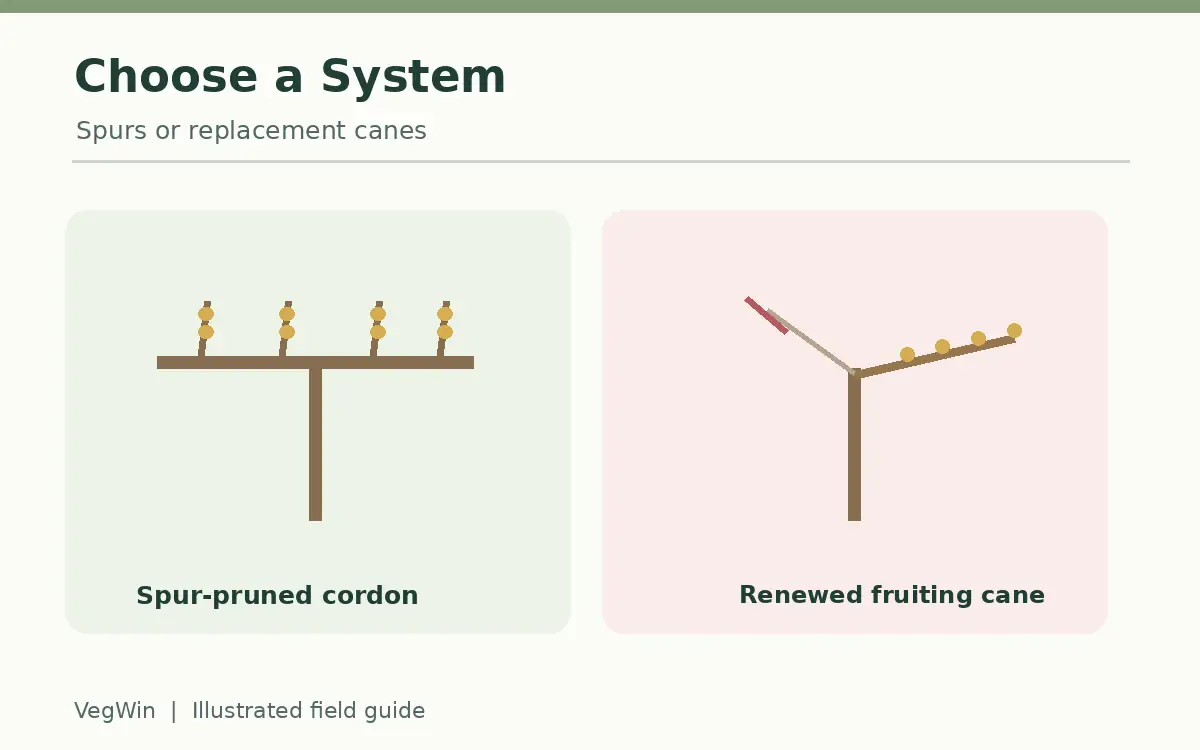
Match cuts to spur pruning or cane renewal
A spur-pruned vine carries short sections of last season’s wood on permanent cordons. New shoots grow from buds left on those spurs. A cane-pruned vine instead retains selected longer canes that are renewed, usually yearly, from an appropriate position on the plant. Neither layout is universally best. Variety, trellis arrangement, growth habit and the established system should guide the decision; changing systems abruptly on an old vine can sacrifice production and leave bare wood.
If the vine already has a maintained cordon with productive spur positions, photograph that layout and work gradually along it. If it is trained to renewed fruiting canes, identify both the chosen fruiting cane and a replacement position before cutting other growth away. The phrase “prune grape vines” conceals these two very different workflows. Follow a local guide for your cultivar and training system to decide the actual bud count rather than copying one diagram from a different vineyard.
Inspect winter injury before deciding what to retain
Cold can damage primary buds even while a cane appears intact. If a region experienced a severe cold snap, ask the local fruit Extension program how to inspect dormant grape buds and whether the cultivar is known to be vulnerable. A completely normal-looking pruning schedule may remove useful backup shoots after a bad winter. Vineyard guidance also warns against pruning immediately before an extreme cold event where further damage is possible.
Winter injury does not justify leaving the entire vine tangled forever. Instead, delay the final count until you can evaluate bud survival, choose the most sound wood, and make a plan that still fits the available trellis. Some grape growers adjust retained bud numbers according to injury; that is a diagnostic response rather than a general rule. A backyard gardener can document suspect sections and bring clear close-up photographs to an Extension specialist.
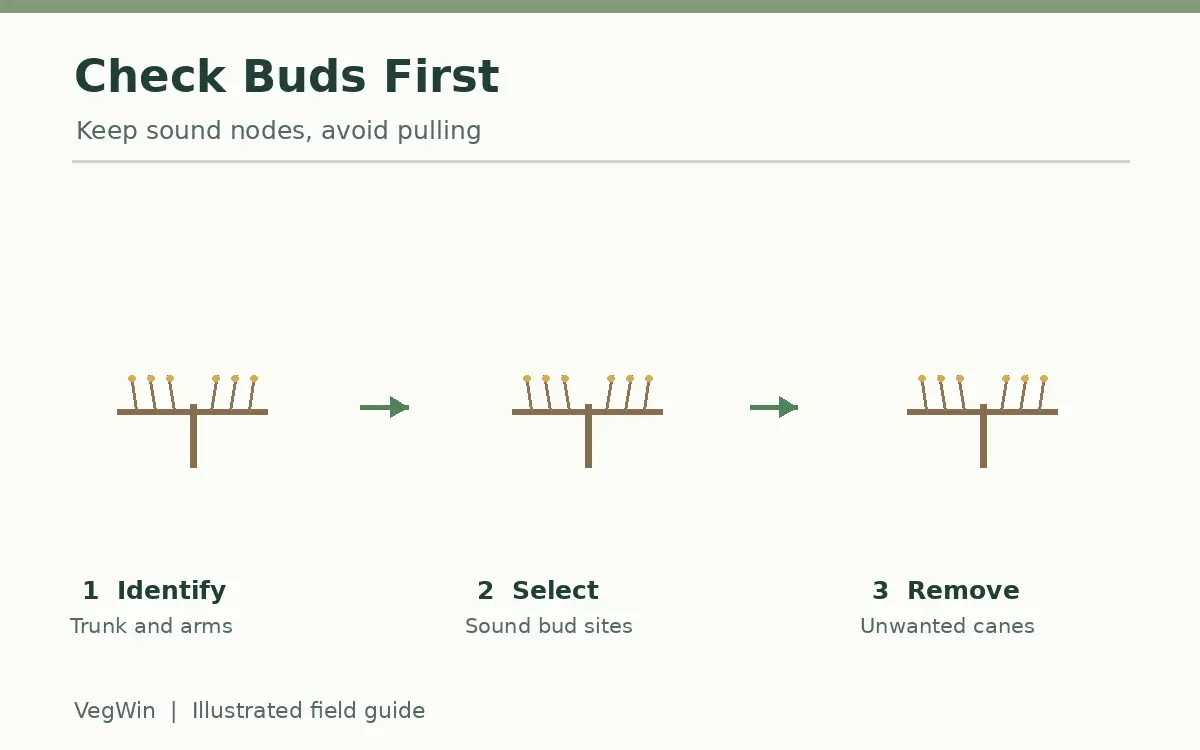
Make clean cuts without shortening every live cane
Begin by removing dead or broken material that obscures the permanent structure. Then select productive positions and prune the unwanted growth according to the training system. Keep pruners sharp, support long canes as you remove them, and avoid pulling a severed branch through retained buds. Tying a chosen cane in place before clearing the rest can prevent accidentally cutting the best replacement. Work on one side of a fence or trellis at a time.
Do not confuse the high percentage of winter growth commonly removed from established vines with permission to remove the same percentage from every new or injured plant. Young vines are still building trunks and arms. Severely winter-damaged vines may need to rebuild. Unmanaged arbor grapes grown for shade can have different priorities than a backyard fruiting fence. The best cut is the one that leaves an identifiable structure and the bud sites needed for the next growing season.
Check the vine again when shoots start growing
Dormant pruning is only half the training process. As green shoots emerge, compare them with the positions you meant to retain. Look for crowded shoots, misplaced suckers arising below the desired trunk and long empty sections of cordon. Those observations help improve next winter’s pruning choices. On mature vines with an established fruiting system, sunlight and airflow around shoots and clusters are useful goals, but remove growth conservatively until the vine’s response is clear.
Record the date you pruned, the number and position of fruiting structures retained, any dead or damaged wood, and the following season’s crop. A simple photograph of each side of the trellis is often more valuable than a notebook full of exact bud counts without context. If the plant remains unproductive after a sound pruning plan, investigate light exposure, weather during flowering and cultivar suitability rather than pruning harder by reflex. Our guide “Prune Wisteria in Summer and Winter Without Losing Flowering Spurs” adds more detail on this.
Choose the next step from visible evidence
If the vine is dormant, healthy and clearly trained, work from its known spur or cane plan. If buds are breaking, handle wood delicately and consider deferring nonessential cuts. Also, if the woody framework is confusing, identify a main trunk and cordon before touching any candidate fruiting cane. If winter injury is suspected, seek a regional bud assessment method. These different observations lead to different actions; pruning is not a single universal haircut.
Keep stakes, trellis ties and pruning equipment out of the way of swelling buds. Do not tie canes so tightly that growth will be girdled later. Dispose of visibly diseased material according to local horticultural guidance and clean tools as appropriate. The objective is a healthy vine whose spring shoots arise where there is room and sunlight, not an ornamental skeleton that matches a photograph but ignores the vine in front of you.
| What you notice | Practical next step |
|---|---|
| Leaves gone, buds closed | Plan dormant pruning using the existing training system. |
| Permanent cordon and short fruiting positions | Use a cultivar-appropriate spur-pruning guide. |
| Renewed fruiting canes, no fixed spurs | Select replacement and fruiting canes before removing others. |
| Suspected winter-killed buds | Check a regional bud-damage protocol before final cuts. |
| New plant still building its frame | Prioritize sound trunk and arm development over a large crop. |
How We Research and Verify These Garden Decisions
Research checked October 23, 2026. We compared specific growing advice from university Cooperative Extension and/or the Royal Horticultural Society. This article separates the biological principle from timing or planting choices that depend on cultivar, growing environment and local climate. The diagrams are simplified instructional drawings rather than measured botanical plates, and readers should use their own observations before cutting or planting.
References reviewed: extension.umn.edu; extension.oregonstate.edu; extension.umn.edu. These sources support the main horticultural decisions described above; use regional Extension guidance to resolve unusual symptoms or conditions not covered by general recommendations.
Editorial disclosure: This is independent educational content. We are not claiming a verified paid partnership or affiliate recommendation for these steps. See the site affiliate disclosure for additional information.
Light work may still be possible, but swollen buds break readily. Avoid rough handling and obtain regional advice if you need major late pruning.
Clusters grow on the current season’s shoots that originate from buds on last season’s mature canes; permanent cordons support those sites.
No. Cane or spur choices depend on cultivar and training method. Copying the wrong system can remove fruitful buds.
Not automatically. First identify permanent structure and which one-year canes are meant to carry fruiting buds or renew the canopy.
Often yes, but recovery can take more than one season. Assess the trunk, winter damage and your support before staging renovation cuts.